








Introduction:An in-depth exploration of Panama’s three renowned coffee-growing regions, an examination of the unique flavors and evaluation system of the Geisha variety, along with practical pour over brewing tips for the washed process. By thoroughly introducing the geographical conditions and planting history of areas such as the Boquete Valley, this guide helps you fully grasp the essence of high-quality Panamanian coffee.
Although not the birthplace of coffee cultivation, Panama holds an unshakable position in the specialty coffee world. From the initial introduction of coffee seeds in 1742 to today’s fame through renowned estates like La Esmeralda and Hacienda Hartmann, this small Central American country has carved out an industry path centered on small-batch, high-precision production. This article will take you deep into Panama’s three main coffee-growing regions, analyze the origins of the Best of Panama (BOP) competition, and provide practical pour over parameters and flavor profiles for washed Boquete Geisha.

The story of coffee in Panama began in the 18th century. It is recorded that coffee was first introduced by a ship departing from French Martinique in 1742, but actual cultivation did not begin until after 1780. At that time, Pedro Antonio de Alarcón attempted to grow coffee in Portobelo but was unsuccessful due to limitations in climate and soil conditions. It wasn’t until the 1820s that coffee gradually became widespread in other parts of Panama, even briefly competing with Europe’s then-popular tea drinking culture.
Panama enjoys a uniquely advantageous geographical location, bordered by Costa Rica to the north and Colombia to the south—both renowned coffee-producing countries. The nation lies at the crossroads of the Caribbean Sea and Pacific Ocean currents, especially within the Boquete Valley at elevations exceeding 6,500 feet, where the microclimate is highly variable and the volcanic soil is rich and fertile, creating an ideal environment for coffee cherries to develop complex aromas. In addition, the construction of the Panama Canal in the late 20th century attracted numerous North American elites to relocate southward, including bankers and engineers who turned to coffee farming. They brought with them rigorous cultivation and post-harvest philosophies that significantly contributed to Panama’s international coffee reputation.
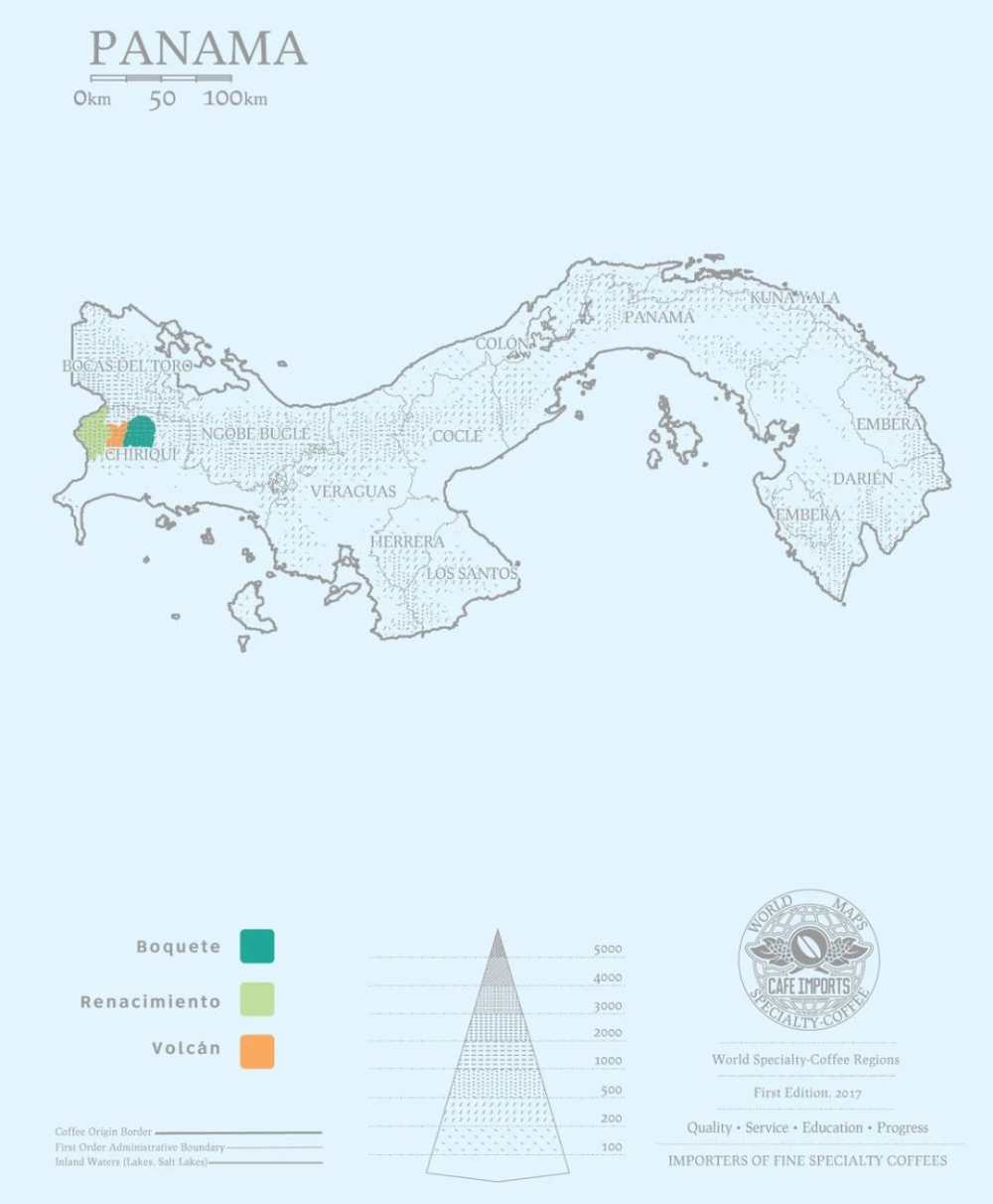
Currently, Panama’s coffee cultivation area spans over 20,000 hectares, with more than 16,000 hectares dedicated to Arabica varieties. The main growing regions are concentrated in the western Chiriquí Province, including the three key areas of Boquete, Volcán, and Renacimiento—all situated at the foothills of the Barú Volcano, where elevation and climatic conditions are extremely suitable for coffee growth. Among these, the Boquete Valley is regarded as the cradle of Panama’s coffee industry. Since the end of the 19th century, European immigrants have settled here and developed coffee plantations. To this day, the region still retains over 50 to 75 coffee farms and about 15 processing facilities.
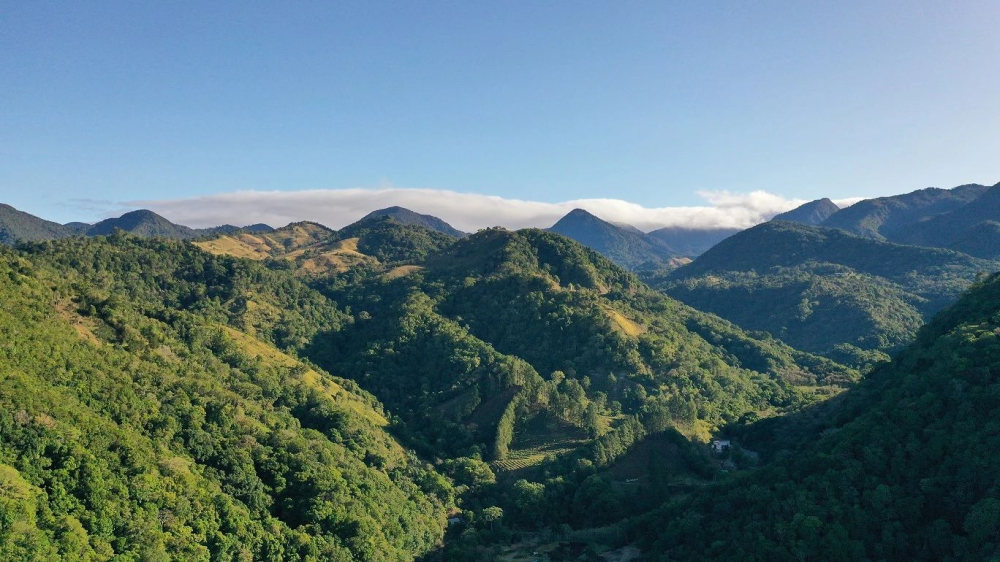
The Boquete region covers an area of 514 square kilometers, with a population of approximately 15,000. In addition to coffee, the area also thrives in the production of flowers, citrus, strawberries, and a variety of vegetables. Most coffee plantations are located at around 1,600 meters above sea level, with volcanic-rich soil, cool and relatively dry climates, and frequent thin fog in summer—all of which help coffee cherries mature slowly and accumulate richer flavors and acidity. The coffee harvest season here runs from September to December each year, during which members of the indigenous Gnobe Bugle group (often referred to as the Guaymí) are known to participate in harvesting. They are reputed for their skilled techniques and high efficiency, and thus command relatively higher wages. The Guaymí people still maintain distinctive clothing and handicrafts, adding cultural richness to the local area.
Before 1989, Panamanian coffee prices were regulated under the International Coffee Agreement. However, after the agreement collapsed, international market prices plummeted—from $1.20 per pound down to $0.74. Facing this crisis, in 1996 Panama saw seven coffee estate owners jointly establish the Specialty Coffee Association of Panama (SCAP), which held its first coffee green bean competition and online auction aimed at promoting high-quality coffee and helping smallholder farmers expand their markets. This move not only reversed the decline of the local coffee industry but also laid the foundation for the later Best of Panama (BOP) competition.
The Best of Panama (commonly abbreviated as BOP) is regarded as one of the world’s earliest specialty coffee green bean competitions and a highly anticipated auction event. Participants submit their finest coffee lots, which are then blindly scored by a professional panel of judges based on flavor, cleanliness, sweetness, and overall performance. The lots are eventually auctioned to global buyers. In recent years, BOP champion lot auction prices have repeatedly hit record highs, with some batches even surpassing $1,000. During judging, the Geisha variety is typically grouped separately and further subdivided according to different processing methods such as natural or washed, ensuring fair comparison. In 2022, the natural Geisha from Guava Yara Estate won the Geisha group championship with a score of 95.96, while the washed Geisha from Aurora Estate claimed the washed group title with 96.15.
When talking about Panamanian coffee, one cannot overlook the Geisha (or Gesha) variety. Originating from Ethiopia, this variety, under Panama’s unique microclimate and refined post-harvest processes, exhibits unparalleled aroma and complexity. One coffee shop’s offering of washed Boquete Geisha is a classic example. The washed process removes the fruit skin and pulp, ferments to eliminate mucilage, washes with clean water, and dries the beans—preserving the purest flavor characteristics of the coffee while enhancing overall cleanliness and freshness.
The washed processing procedure generally includes: first using a depulper to remove the outer skin and part of the fruit pulp of the coffee cherry, then soaking the mucilage-covered beans in water for approximately 24 hours of fermentation until the mucilage breaks down. Afterward, the beans are thoroughly rinsed with clean water, and finally, the parchment-covered coffee beans are evenly dried or machine-dried to reach a moisture content of about 12%. This process enhances the expression of the coffee’s acidity and overall balance, allowing the Geisha to showcase delicate floral notes and fruity tones.
The most distinctive characteristics of Geisha flavors lie in its rich layers of floral notes and diverse fruit profiles. Common descriptors include white florals, citrus, lemony acidity, and subtle hints of green tea aroma. To fully highlight these traits, some producers recommend medium-light roasting to preserve the inherent flavors and bright acidity of high-altitude beans. During extraction, pairing fine grind size with slightly higher water temperature can elevate overall flavor expression and extraction efficiency, avoiding flat or overly thin tastes.
Below are the recommended pour over parameters for the Emerald Red Label Natural Geisha, suitable for use with a V60 dripper:
- Dripper: V60
- Water temperature: 91–92°C
- Coffee dose: 15g
- Coffee-to-water ratio: 1:15
- Grind size: Fine sugar-like (approximately 80% passing through a #20 sieve)
The pour over steps follow a three-stage extraction method: First, pour 30g of water for a 30-second bloom, circling from the center outward to ensure even saturation of the coffee bed; second, pour 120g of water with a slightly higher flow rate, lifting the coffee bed and keeping the stream vertical, reaching a total of 150g at around 55 seconds; third, pour 90g of water using a small stream and gentle circular motion to avoid disrupting the coffee bed, with a total dripping time controlled around 2 minutes and 10 seconds, for a total water volume of approximately 240g. After completion, gently shake the server to evenly distribute the coffee liquid before serving.
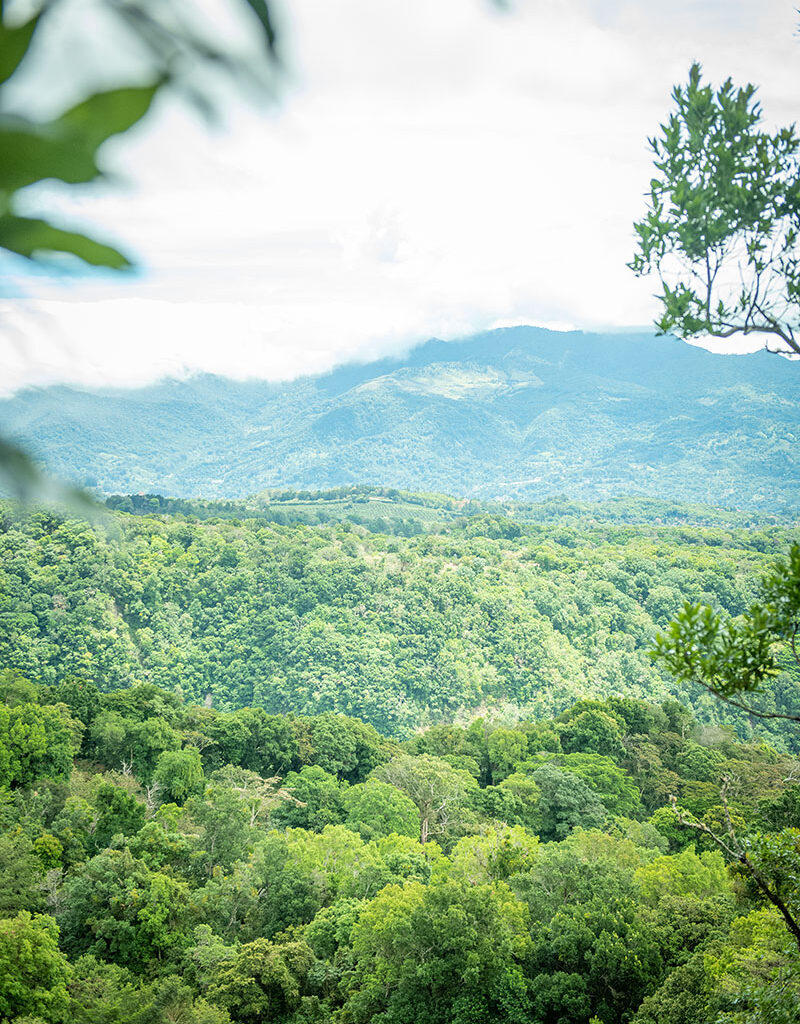
Coffee brewed with these parameters results in a Panamanian washed Geisha that delivers a bright acidity of citrus, lemon, and bergamot upon entry, followed by a creamy mouthfeel in the mid-palate, and a lingering finish of gentle sweetness with green tea and honey notes—a classic specialty coffee that balances complexity and harmony.
The above content is compiled by CoffeeHunters, a coffee news website.


