







Introduction:Guatemala, with its volcanic soil and high-altitude environment, produces specialty coffees with distinctive flavors. Its eight major producing regions each have unique characteristics — from the floral and fruity acidity of Antigua to the rich and bold body of Huehuetenango — all showcasing strong regional profiles. This article delves into the geographical conditions, variety traits, and washed processing details of each region, and provides practical pour over and cold brew parameters to help you more precisely appreciate the multi-layered expressions of Guatemalan coffee.
As an important origin for specialty coffee in Central America, Guatemala benefits from active volcanic geology, diverse highland microclimates, and generally high cultivation altitudes exceeding 1500 meters. These factors contribute to its coffee beans commonly exhibiting bright fruit acidity and captivating smoky aftertastes. The country is divided into eight main producing regions, which not only vary significantly in terrain and microclimate, but also differ in processing methods and variety selection, making it an excellent choice for coffee enthusiasts seeking to explore flavor depth.
Geographic and Climatic Advantages of Guatemala
Located in the northwest of Central America, Guatemala borders Mexico to the north, Honduras and El Salvador to the south, the Caribbean Sea to the east, and the Pacific Ocean to the west. Its mountainous geography and active volcanic activity have endowed the land with rich natural volcanic ash soil. Coupled with significant diurnal temperature variations and ample rainfall, these conditions provide ideal growing environments for high-altitude coffee trees. The country’s main coffee-growing areas are mostly located at elevations above 1500 meters, making it one of the few regions in the world capable of consistently producing Strictly Hard Beans (SHB). As a result, the beans are dense, have concentrated flavors, and are resistant to aging.
Guatemala Coffee Bean Grading System
Based on cultivation altitude, Guatemala classifies its coffee beans into six grades. The higher the altitude, the greater the bean density and the better the flavor potential:
- SHB (Strictly Hard Bean, 极硬豆): Altitude 1500–1700 meters. The beans are firm with intense flavors, and this is the most common specialty-grade classification.
- HB (Hard Bean, 硬豆): Altitude 1350–1500 meters. The flavors are noticeable but slightly less pronounced than SHB.
- SH (Semi-Hard Bean, 稍硬豆): Altitude 1200–1350 meters. The quality is stable but the complexity is somewhat more limited.
- Extra Prime (特优水洗豆): Altitude 1000–1200 meters.
- Prime (优质水洗豆): Altitude 850–1000 meters.
- Good Washed (良质水洗豆): Altitude 700–850 meters. This is considered an entry-level grade.
Key Steps in the Washed Processing Method
Guatemalan coffee is predominantly processed using the washed method, accounting for up to 45% of specialty-grade production. The focus is on removing the mucilage through fermentation while preserving the clean and bright inherent flavors. The processing steps include:
- Harvesting and Initial Selection: Only red, ripe coffee cherries are selected, with unripe or defective beans removed, along with floaters.
- Depulping: A pulper is used to remove the skin and pulp. Unripe cherries are naturally eliminated at this stage, leaving behind mucilage, parchment, and seeds.
- Fermentation to Remove Mucilage: The seeds with mucilage are soaked in water tanks, where microbial fermentation breaks down the mucilage over approximately 16 to 36 hours, with constant stirring required. The organic acids produced during this phase, such as citric acid and malic acid, are the main reasons for the clear acidity in washed beans.
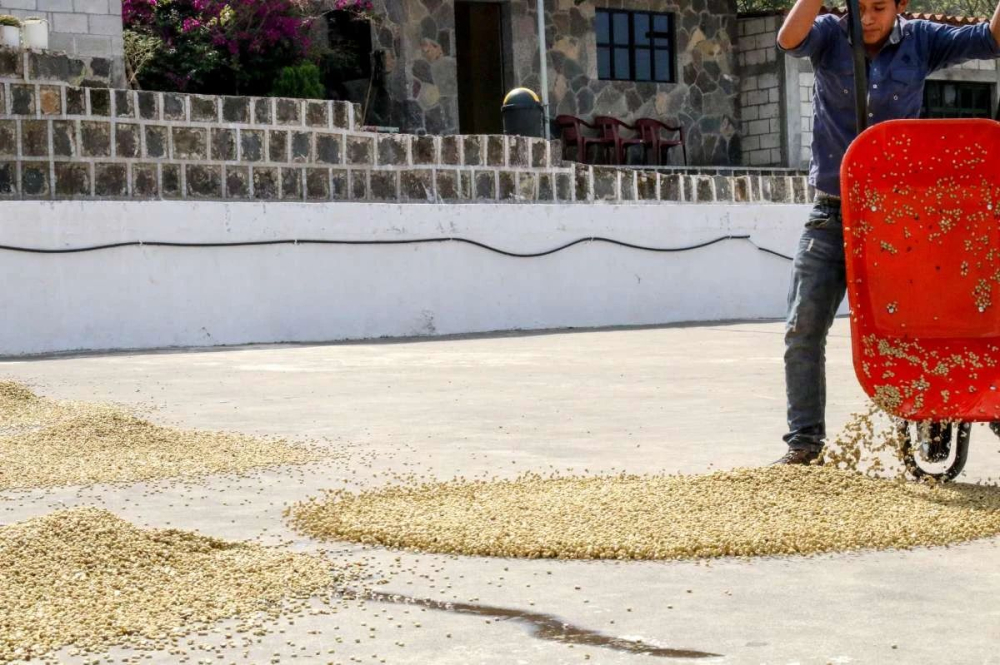
- Washing and Drying: After fermentation, the seeds are rinsed, then dried either by sun drying or mechanical means until the moisture content is reduced to 12%. Since the pulp has been removed, this drying process is less prone to mold compared to the natural method, and the resulting green beans are better suited for hulling.
Variety Diversity and Selection
Guatemala grows a wide range of coffee varieties, mainly including classic ones such as Bourbon, Typica, Catuai, and Caturra, as well as smaller amounts of Yellow Bourbon, Geisha, Pacamara, and newly bred Maragogype. Among them, Bourbon and Caturra are the mainstream: the former offers soft acidity and prominent sweetness, while the latter has a fresh citrus tone, suitable for consumers who prefer a crisp taste.
Analysis of the Eight Major Producing Regions
Guatemala’s eight major producing regions can be divided into five volcanic regions and three non-volcanic regions, each producing distinctly different flavor profiles due to variations in geographic environment and microclimate.
Antigua Region: Classic Floral Notes and Smoky Aftertaste
Located in central Guatemala, the Antigua region features fertile volcanic ash soil and a subtropical monsoon climate, suitable for cultivating Bourbon and Caturra varieties. The coffee here is known for its bright acidity, rich floral notes, and unique smoky finish, making it one of the country’s most representative regions.SHB-gradecoffee beans typically exhibit clear citrus tones and elegant sweetness, and are best suited to light-to-medium roasts to highlight their complexity.
Huehuetenango Region: High-Altitude Rich Fruit Aromas
Huehuetenango is located in the western border area of the country, meaning “Land of the Ancients.” It is one of the highest-altitude regions in the nation, ranging from 1500 to 2000 meters. Influenced by Mexican hot winds, even at high altitudes, frost damage is rare, allowing the cultivation of rich and layered coffee. Common varieties include Bourbon, Caturra, and Catuai. The coffee generally has a strong juice-like character and solid body, with light roasting enhancing its citrus and berry tones.
Nuevo Oriente Region: Sweet Aromas of Emerging Geisha
As the youngest of the eight regions, Nuevo Oriente is remote and receives abundant rainfall. Its soil consists of metamorphic rock, rich in minerals. In recent years, it has gained fame for its Geisha variety, which offers complex aromas such as sweet orange, citrus, magnolia, and toffee. Light roasting can fully present its fresh fruit notes and honey-like sweetness, making it ideal for pour over enthusiasts who enjoy floral and fruity profiles.
Acatenango Region: Bold Flavors from Volcanic Soil
Adjacent to the Fuego and Pacaya volcanoes, Acatenango has sandy, mineral-rich soil and significant diurnal temperature variations, resulting in coffee with high sweetness and a strong body. Although its acidity is slightly lower than that of Antigua, it offers pleasant dry and wet aromas and a clean aftertaste. Light-to-medium roasting can balance the acidity, sweetness, and body, suiting those who seek a full-bodied cup.
In summary, Guatemala’s eight major producing regions each possess unique terroir conditions and variety characteristics. Whether you prefer bright acidity, rich body, or delicate floral notes and smoky finishes, you can find your ideal choice in this Central American coffee kingdom. With the right extraction parameters, the full potential of each bean can be fully unlocked.
The above content is compiled by CoffeeHunters, a coffee news website.


