







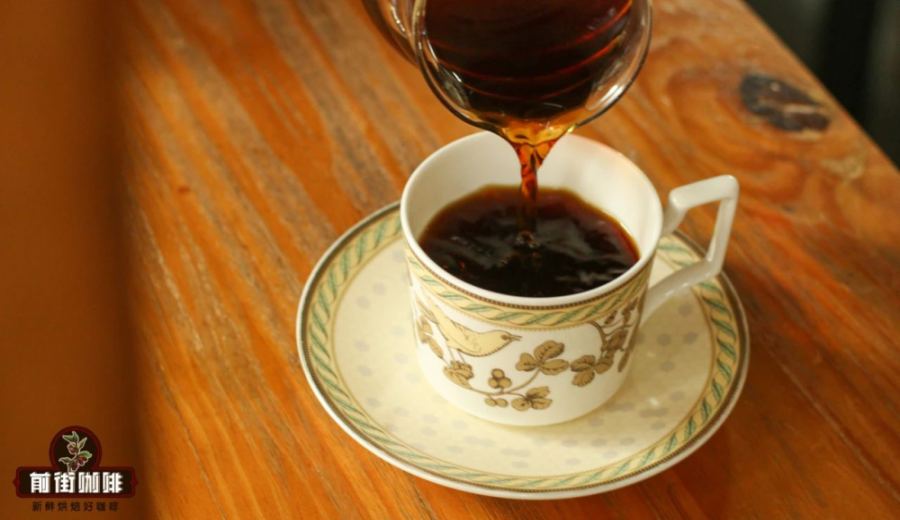
Introduction:Honduran coffee has garnered significant attention in recent years due to specialty processed beans such as Sherry and Lychee Orchid, becoming a focal point for pour over enthusiasts. This article provides an in-depth analysis of the geographic and climatic characteristics of Honduras’ six major coffee-growing regions, explores how Sherry and Lychee Orchid develop their unique flavors through barrel fermentation, and offers expert-level extraction parameters and brewing recommendations to help you fully appreciate the allure of this rising star in Central American coffee.
In recent years, a Honduran coffee bean known for its wine-like aroma—“Sherry”—has rapidly risen to fame, gradually bringing this long-overlooked Central American coffee-producing nation into the spotlight of global specialty coffee enthusiasts. In fact, Honduras has long been the world’s seventh-largest coffee producer and one of the largest coffee exporters in Central America, yet its single-origin beans have not received the recognition they deserve. This article will begin with an overview of the producing regions, gradually dissect how Honduras’ geographic conditions contribute to high-quality coffee, and take an in-depth look at the characteristics of its six main producing areas—including Copan, Montecillos, and Comayagua—before introducing two popular offerings from the brand’s lineup: Sherry and Lychee Orchid. From processing methods and flavor profiles to optimal brewing approaches, get everything you need to know in one go.
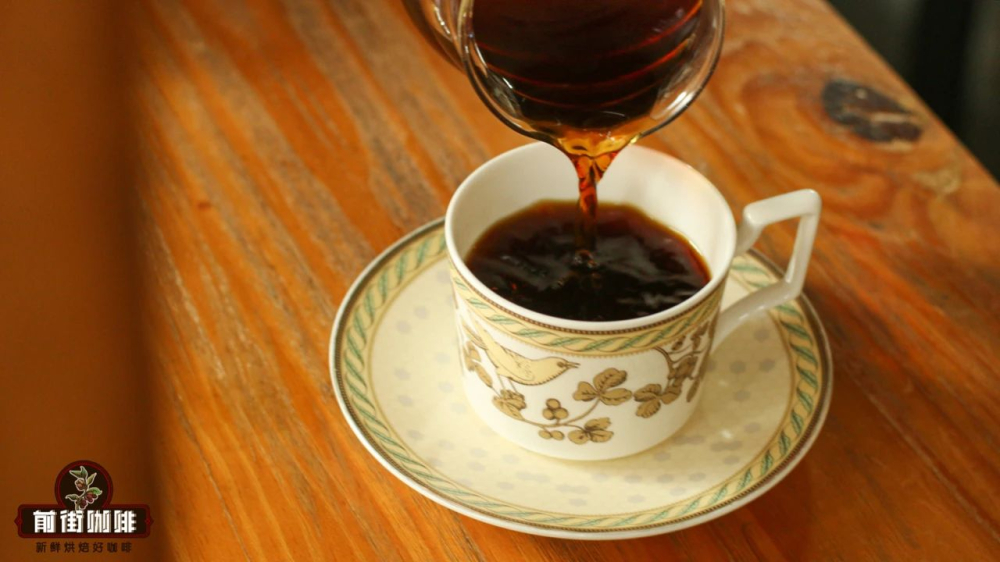
Many consumers are beginning to explore cross-boundary combinations of coffee with other beverages, such as tea-infused cocktails and coffee-based drinks, among which coffee with wine-like aromas has gained particular favor—and “Sherry” is a standout in this trend. Prior to this, Honduran coffee beans had limited visibility in the global market, but with the launch of this specialty processed variety, it has gradually built a solid fan base. Honduras is not only the largest coffee producer in Central America but also leapt into the international spotlight in 2011 by surpassing the combined production of Costa Rica and Guatemala. From 2017 to 2019, its annual output exceeded 450,000 metric tons, and even in 2020, it maintained a high level of 336,000 metric tons.
Tracing back to the history of coffee cultivation in Honduras, it dates as early as the 18th century when merchants introduced coffee seedlings, but it wasn’t until the 19th century that formal documentation appeared. It was not until the 20th century that coffee truly became an important economic crop for the country. In the 1970s, the Honduran Coffee Institute (IHCAFE) was established to enhance quality and international competitiveness. Although it suffered a major blow from a hurricane in 1998, by 2011, Honduras’ coffee production had surpassed the combined total of its two neighboring major producers, cementing its position in the international market.
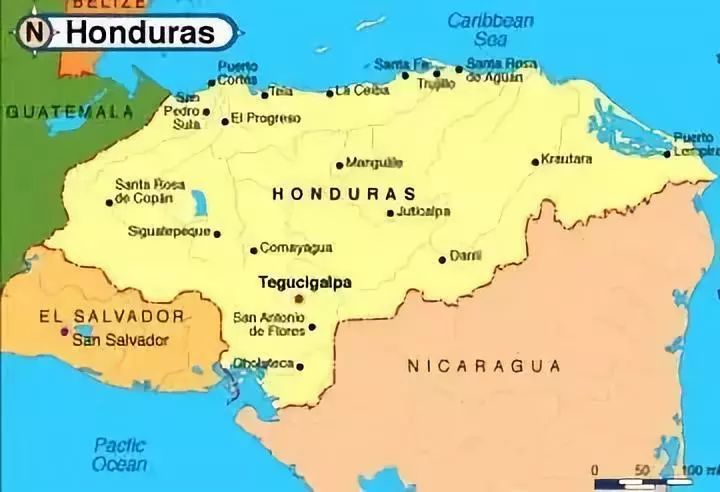
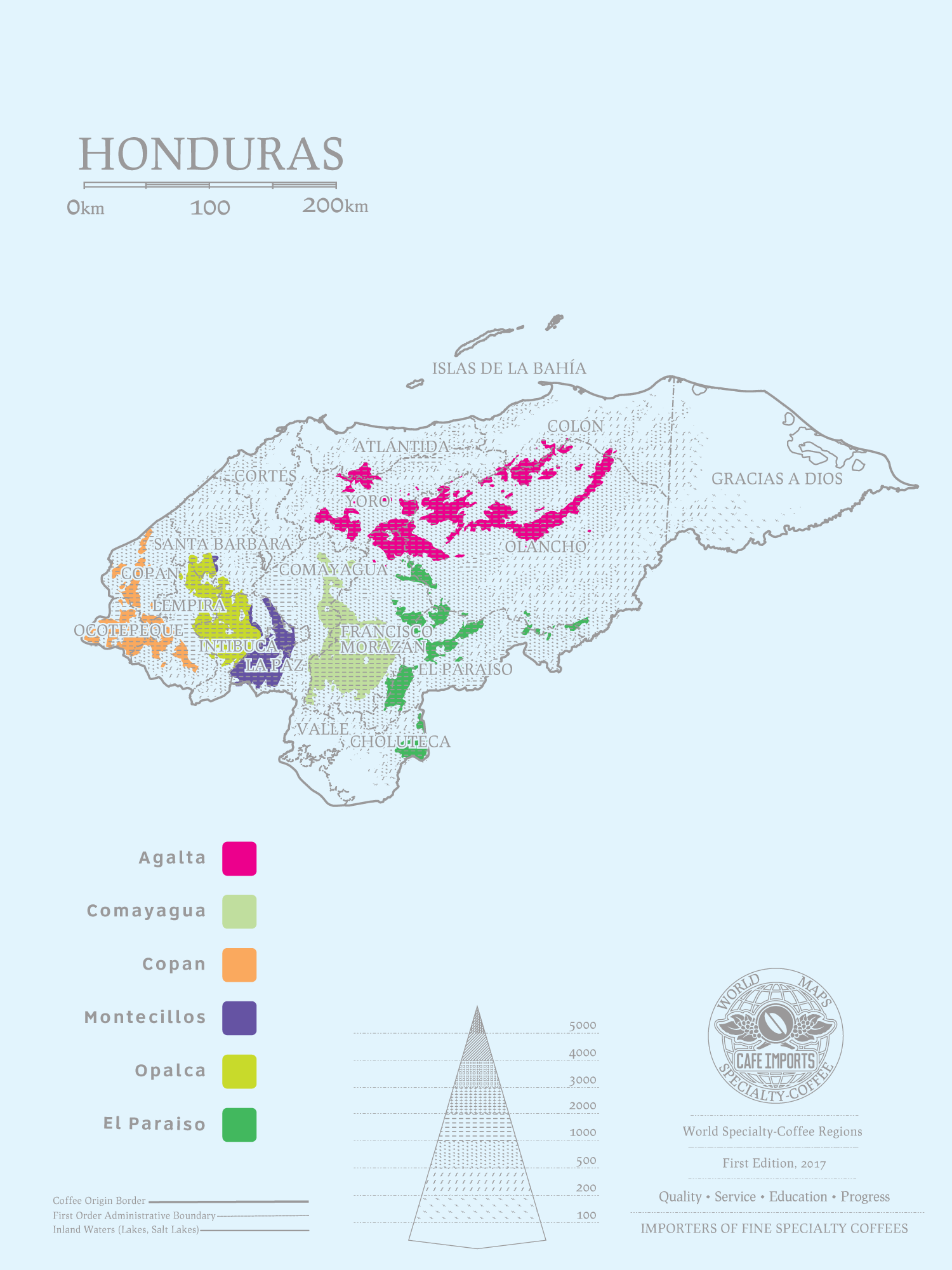
Honduras boasts a uniquely advantageous geographic environment, bordering the Caribbean Sea to the north and the Pacific Ocean to the south, with mountainous terrain throughout the country. Most coffee-growing regions are located at high altitudes, enjoying a mild and stable climate that not only facilitates the slow maturation of coffee cherries but also effectively reduces the incidence of pests and diseases, resulting in coffee beans with rich flavors and layered complexity. The country has six main coffee-producing regions: Copan, Opalaca, Montecillos, Comayagua, Agalta, and El Paraiso. Each region, due to differences in microclimate and altitude, produces distinctly unique flavor profiles.
【Copan Region】 Located at the border between Honduras and Guatemala, this is a well-known high-altitude coffee zone, with planting elevations generally exceeding 1,000 meters. The region experiences significant climate variations and large diurnal temperature differences, often yielding coffee with intense aromas, pronounced sweetness, and a full-bodied mouthfeel—making it one of the preferred origins for many specialty coffee buyers.
【Montecillos Region】 Bordering El Salvador, this area has some of the country’s highest-altitude potential, with certain sections reaching up to 1,600 meters. Due to relatively low nighttime temperatures, the ripening process of coffee cherries slows down, aiding in the accumulation of flavor compounds, resulting in coffee that often exhibits bright fruity acidity and delicate layers.
【Comayagua Region】 Situated in the central mountainous region of Honduras, this area set the national record for highest coffee production in 2016. The coffee here is known for its citrus notes and honey-like sweetness, with an elegant balance of acidity and sweetness, and a smooth mouthfeel—making it representative of the balanced-profile region.
【Agalta Region】 Mostly part of forest reserves, this region enjoys excellent ecological conditions, but has slightly lower elevations, ranging between 1,000 and 1,400 meters, and features a tropical climate. The coffee from this area often displays rich fruit and chocolate flavors, making it ideal for drinkers who prefer sweet and intense profiles.
【El Paraiso Region】 The oldest and most extensive coffee-growing region in Honduras, adjacent to Nicaragua, with elevations ranging from 1,000 to 1,400 meters. In the 2017 Honduran Cup of Excellence (COE) competition, a coffee bean from this region won the championship, showcasing its great potential.
【Opalaca Region】 Connected to the western part of Copan, this region has slightly higher elevations, giving rise to coffee with strong aromas and tropical fruit notes. The Mazagualá sub-region under this zone is also quite well-known.
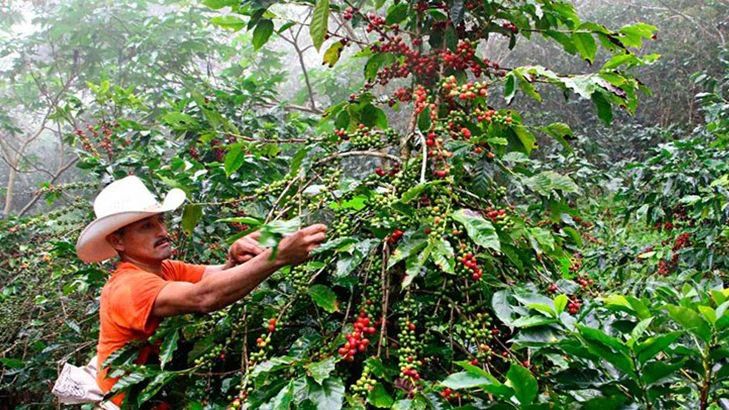
In a certain brand’s lineup, Honduras is represented by two beans: “Sherry” and “Lychee Orchid.” The former belongs to the everyday-drinking series but has become a market talking point due to its special processing method. Honduras itself has excellent conditions for growing high-quality Arabica coffee, and with its high altitudes and diverse microclimates, it offers great value for experimentation with processing methods—among which barrel fermentation has been a highlight in recent years.
Honduras · Sherry Coffee Beans(Everyday-Drinking Series)
Region: Mazagualá Region
Farm: Mocha Farm
Elevation: 1,500–1,700 meters
Variety: Caturra, Catuai, Pacas
Processing Method: Premium Washed + Whisky Barrel Fermentation
Flavor Description: Vanilla, Cream, Fermented Wine Aroma, Honey
This Sherry coffee employs a barrel fermentation process. After harvesting ripe cherries, the farm performs a washed process to remove the pulp and skin on the same day, then places the parchment-covered green beans into a Sherry whisky barrel for low-temperature fermentation lasting 30 to 40 days, before finally taking the beans out to dry in the shade. It’s important to note that the drying process should avoid direct sunlight to prevent the evaporation of the wine aroma and the development of unwanted fermented acidity. Sherry barrels are considered one of the barrel types that impart the most sweet and rounded flavors to coffee, compared to others like Port or Brandy barrels, their profile is more mellow and sweet.
Additionally, Mocha Farm also offers a “Lychee Orchid” coffee that undergoes the same barrel fermentation process but uses a Brandy barrel. Both come from Mazagualá, share the same elevation conditions, and have similar varieties, though their flavor directions differ slightly—recommended to try both for comparison.
Honduras · Lychee Orchid Coffee Beans
Region: Mazagualá Region
Farm: Mocha Farm
Elevation: 1,500–1,700 meters
Variety: Caturra, Catuai
Processing Method: Washed + Brandy Barrel Fermentation
A certain roaster used medium roasting for both of these coffees, aiming to balance sweetness and aroma expression. Sherry focuses on sweetness and body, while Lychee Orchid emphasizes overall balance and delicate fruity notes.
To fully highlight the aroma and layered complexity of these two barrel-fermented coffees, it is recommended to use a high water temperature of 92°C for pour over, paired with a fast-flow filter cone such as Hario V60 to avoid over-extraction. Specific parameters are as follows:
Filter Cone: Hario V60
Water Temperature: 92°C
Coffee Dose: 15 grams
Coffee-to-Water Ratio: 1:15
Grind Size: 80% passing through a #20 sieve (medium-coarse)
It is recommended to use the three-pour method to enhance extraction layering: first pour 30 grams of hot water for a 30-second bloom; then slowly pour in a circular motion up to 125 grams; once the water level drops to half the filter cone, slowly pour the third phase up to 225 grams. Remove the filter cone after all the coffee has dripped through, with a total extraction time of about 2 minutes. This method helps bring out the details of the wine aroma, sweetness, and fruity notes, making it ideal for pour over enthusiasts seeking deep flavor profiles.
The above content is compiled by CoffeeHunters, a coffee news website.


