







Introduction:Jamaica Blue Mountain coffee is renowned for its balanced acidity, sweetness, and bitterness, as well as its rich and mellow mouthfeel. However, its grading system, regional restrictions, and authenticity identification often confuse consumers. This article delves into the Blue Mountain coffee grading standards set by the CIB, explains the differences between Blue Mountain No. 1, High Mountain coffee, and Prime coffee, and introduces the flavor profile of Blue Mountain No. 1 along with recommended pour over parameters to help you better understand the true nature of this top-tier coffee.
Blue Mountain coffee has always held a prestigious status among coffee enthusiasts, known for its harmonious balance of acidity, sweetness, and bitterness, coupled with a rich and full-bodied taste. Yet, many have heard of its fame even before trying it, and in films and TV shows, it’s often portrayed as a daily indulgence for the elite. Unlike current mainstream coffee varieties that pursue bold individuality, Blue Mountain coffee emphasizes overall flavor harmony, which is why opinions about it tend to be polarized: some view it as the perfect archetype, while others find it lacking in distinct character.
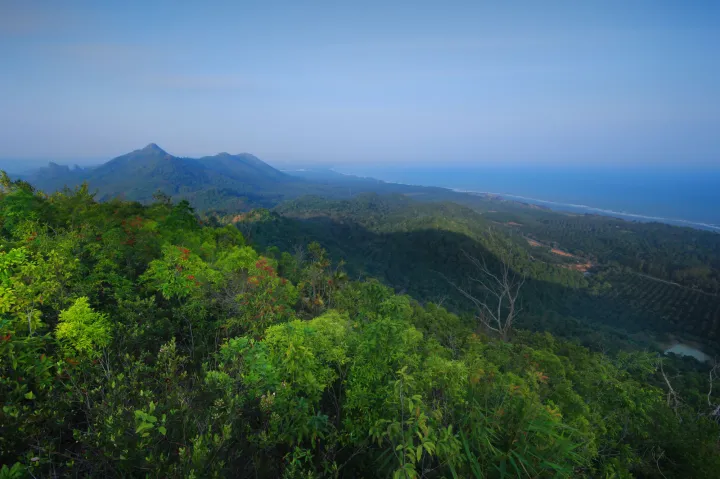
 The uniquely exquisite flavor of Jamaica Blue Mountain coffee is closely tied to its exceptional growing environment. The name “Blue Mountain” comes from the Blue Mountains in eastern Jamaica, a region surrounded by the Caribbean Sea. When sunlight filters through the thin clouds and reflects off the azure sea onto the mountain slopes, the entire range appears bathed in a dreamy blue hue—hence the name “Blue Mountain.”
Coffee trees in the Blue Mountain region are mostly planted within native forests, where the dense canopy shields the plants from overly intense sunlight. Coupled with the frequent cloud cover and abundant rainfall brought by the tropical rainforest climate, these conditions provide an ideal environment for growth. The fertile and moist soil all contribute to the outstanding quality of Blue Mountain coffee beans.
Despite Jamaica’s naturally advantageous geography, the history of coffee cultivation actually began during the European colonial period. In the late 18th century, then-Jamaican Governor Sir Nicholas Lawes introduced descendants of the Typica variety from Martinique, planting them at the foot of the mountains in the Saint Andrew area. This marked the origin of Blue Mountain coffee. Later, these coffee trees gradually adapted and thrived in the Blue Mountain region.
Currently, Blue Mountain coffee cultivation has expanded to four main administrative regions: Saint Andrew, Saint Thomas, Saint Mary, and Portland. However, even if grown within these areas, the beans may not necessarily meet the strict definition of “Blue Mountain coffee.” The key lies in the grading system established by the CIB (Coffee Industry Board of Jamaica).
According to CIB regulations, Jamaican coffee beans are first categorized into three major types based on their growing altitude: Blue Mountain coffee, High Mountain coffee, and Jamaica Prime coffee. Among them,Blue Mountain coffee must be grown at altitudes above 1,000 meters;High Mountain coffee is cultivated between 500 and 1,000 meters in altitude; andJamaica Prime coffee is grown at altitudes below 500 meters, and is not necessarily limited to the Blue Mountain region.
Within these three categories, beans are further subdivided into No. 1, No. 2, No. 3, and PB (peaberry) based on green bean size and defect rate. Only beans with a defect rate of no more than 2% and meeting specific screen sizes can be classified as higher grades. For example,Blue Mountain No. 1 beans have a size of 17/18 mesh, making them the highest-quality grade among all classifications, and also relatively rare in production.
It’s worth noting that due to historical climate disasters in the Blue Mountain coffee region that drastically reduced yields, the industry was later revived with funding from the Japanese government. As a result, Japan has long purchased over 90% of Blue Mountain coffee, making Blue Mountain No. 1 extremely rare on the market. However, in recent years, as Japanese demand has slowed, more Blue Mountain coffee has become available to other markets. Still, caution is advised regarding products marketed as “Blue Mountain blends” or “Blue Mountain flavor,” as most of these are not truly from the Blue Mountain region.
To identify genuine Jamaica Blue Mountain coffee, pay attention to its packaging: Jamaica is one of the few countries that still ships green beans in wooden barrels, and each export batch comes with an official certificate of origin. These wooden barrels and documentation are important proofs of the coffee’s authenticity.
Among them, Blue Mountain No. 1 coffee beans are not only the highest grade but also the most representative. Take Clifton Mount Estate as an example—this historic estate near Catherine’s Peak was once rented out by its owner after a personal tragedy but was taken over by the Sharp family in 1978. The family has been dedicated to coffee cultivation, and in the 2017/2018 harvest season, it was rated as one of the top-quality coffee-producing regions by the Jamaican Ministry of Agriculture. Its Blue Mountain No. 1 beans have also earned Rainforest Alliance certification, demonstrating a commitment to sustainable practices.
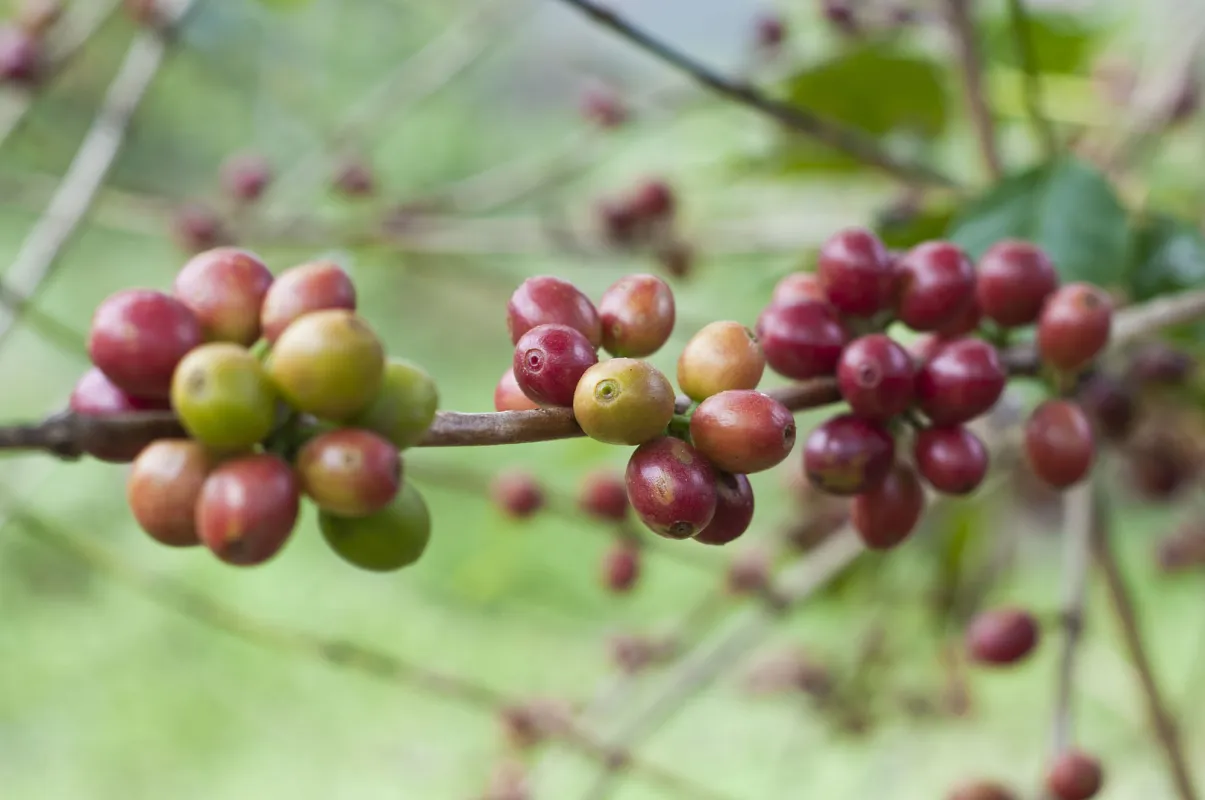
Industry cuppings of various Blue Mountain No. 1 beans have found that the washed-process Blue Mountain No. 1 from Clifton Mount Estate exhibits rich aromas of nuts and dark cocoa, with a full-bodied and balanced taste, making it one of the classic representatives of the region.
If you want to brew the essence of Blue Mountain No. 1 at home, here are professional pour over recommendations: use a KONO filter, control the water temperature at 88°C, use 15 grams of coffee, with a 1:15 coffee-to-water ratio, and grind size roughly equivalent to 75% extraction through a Chinese standard No. 20 sieve. Since freshly roasted beans may still retain a lot of gas within 4–7 days after opening, start with a 30-second bloom, then pour 30 grams of hot water in a small stream from the center. Slowly circle outward to 125 grams, then continue pouring until reaching 225 grams as the water level drops. The total extraction time should be around 2 minutes. This way, you’ll be able to savor the distinctive rich nutty and cocoa flavors of Blue Mountain No. 1, with a smooth mouthfeel and a balanced combination of acidity, sweetness, and bitterness.
The above content is compiled by CoffeeHunters, a coffee news website.


