








Introduction:Although Hawaiian Kona coffee is not grown at high altitudes, it owes its complex and premium flavor profile to the unique volcanic soil, gentle sea breeze, and meticulous cultivation. This article provides an in-depth exploration of Kona’s geographical distribution, the characteristics of the Typica variety, the washed processing method, and its rigorous grading system. We also offer practical pour over parameters and flavor profiles for five brewing methods—Hario V60, siphon, AeroPress, French press, and KONO—to help you understand this renowned specialty coffee from origin to cup.
In the global landscape of specialty coffee, Hawaiian Kona holds a distinctive place. Despite its generally low growing elevation, the coffee benefits from volcanic soil, stable maritime climate, and intensive manual management, allowing it to deliver exceptional flavor. Typically aromatic with notes of cashew, milk peanut, mulberry, and tropical fruits, Kona coffee offers a smooth, bright mouthfeel with a crisp and elegant acidity—making it a classic favorite among many coffee enthusiasts.
Kona coffee is primarily cultivated on the volcanic slopes of the southwestern Big Island of Hawaii, especially around the foothills of Hualalai and Mauna Loa, at elevations between 800 and 1,100 meters—the golden zone for coffee tree growth. The region features a cool climate with notable day-night temperature variations, abundant and well-defined rainy and dry seasons, and mineral-rich volcanic soil, providing ideal conditions for coffee cultivation. Only beans grown within this specific area and certified through strict standards can be labeled and sold as ‘Kona,’ contributing to its image of rarity and high quality.
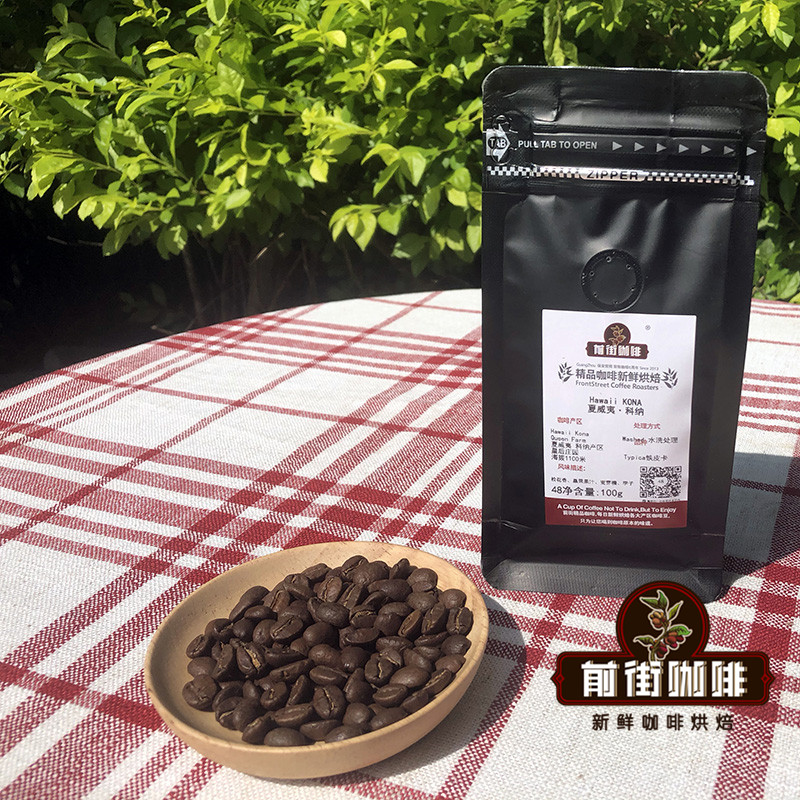
The history of coffee cultivation in Hawaii dates back to the early 19th century. Records indicate that the first coffee seeds were introduced by Spanish advisor Don Francisco de Paula Marin in 1817 during the reign of King Kamehameha, but they failed to thrive at the time. It wasn’t until 1825, when Oahu governor Chie Boki brought coffee seedlings from Brazil and successfully planted them in Manoa Valley, that the foundation for Hawaii’s coffee industry was laid. Planting gradually expanded to Maui, the Big Island, Oahu, Molokai, and Lanai. Today, the state is home to about 950 coffee farms, most of them small family-run operations, covering a total of 7,900 acres.
Distribution of Major Coffee-Growing Regions in Hawaii
MauiKa’anapali is one of the main coffee-growing areas. Formerly a sugarcane plantation, it focused on sugarcane production from 1860 to 1988 before transitioning to coffee farming. The growing elevation ranges from 100 to 550 meters, with the main harvest period from September to January each year. Varieties grown include Catuai, Caturra, Typica, and Mocha.
Waikapu (Maui)is a relatively newer growing region, currently hosting only one coffee farm owned by a Molokai-based enterprise. The elevation is approximately 500 to 750 meters, with the harvest season also from September to January. The main varieties planted are Typica and Catuai.
Kau (Big Island)The coffee industry here began after the closure of a sugar mill in 1996, and it wasn’t until 2010 that a local processing facility was established—ending the previous need to transport coffee cherries elsewhere for processing. The harvest season is similarly concentrated from September to January.
Hamakua (Big Island)has been cultivating coffee since 1852. It once had eight coffee farms, but these gradually declined with the rise of the sugar industry. The region saw a revival in the mid-to-late 1990s. The growing elevation ranges from 100 to 600 meters, with the harvest season from August to January. The main varieties are Typica and Catuai.
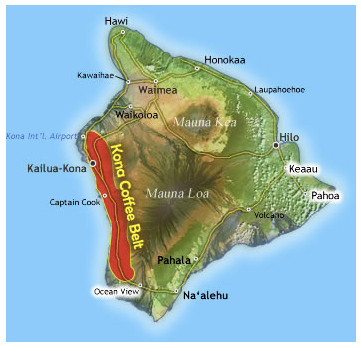
And when it comes to Hawaiian coffee, none is more renowned than Kona (Big Island). Located in the southwestern part of the Big Island, this long and narrow region stretches only about 20 miles in length and 2 miles in width, nestled along the slopes of Hualalai and Mauna Loa. Home to over 630 small, family-run coffee farms—most no larger than 2 hectares—the region’s compact size and strict certification system contribute to the high quality and value of Kona coffee. Growing at elevations of 800 to 1,100 meters, the area enjoys stable climate and moderate sunlight, making it ideal for Arabica coffee.
Every November, the Kona region also hosts the ‘Hawaii Kona Coffee Cultural Festival,’ a nearly 10-day event featuring over 40 coffee-related exhibitions and competitions. Beyond celebrating the harvest, the festival promotes the culture and history of Kona coffee, offering an excellent opportunity to deeply explore its heritage.
Typica Variety: Classic Yet Challenging
Kona coffee primarily uses the Typica (Typica) variety—one of the oldest Arabica varieties in the world, originating from Ethiopia and southern Sudan. Typica plants have a conical shape and can grow up to 5 meters tall, with long branch intervals. The leaves and green beans are elongated, and the top leaves are usually reddish-copper in color, hence also called ‘red-top coffee.’ This variety is known for its clean and balanced flavor, with soft acidity and pronounced sweetness. However, it relatively yields less and is more susceptible to diseases, particularly coffee leaf rust.
Though challenging to cultivate, Typica serves as the base variety for many top-tier coffees, including the famous Jamaican Blue Mountain and Hawaiian Kona, both descendants of Typica. Its elegant flavor profile ensures its continued importance in the specialty coffee market.
Washed Processing: Creating Pure Flavor
Coffee processing in Hawaii mainly employs the washed method . This approach first removes the mucilage layer through fermentation, then thoroughly washes the beans with clean water to prevent fermentation residues from affecting flavor, and finally dries the beans naturally in the sun. Thanks to Hawaii’s clean, mineral-rich mountain water, washed coffee beans exhibit a glossy appearance and a fresh, pure flavor with distinct characteristics.
Kona Coffee Grading System
Kona coffee is graded based on bean size and shape, divided into four main grades: Extra Fancy (highest), Fancy, Select, and Prime. There is also a Type 1 and Type 2 classification, where Type 1 refers to regular coffee beans and Type 2 to peaberry beans. Due to their unique shape and higher density, peaberries often deliver more concentrated flavors during roasting and brewing.
Five Pour Over Methods & Optimal Parameters
Below are five recommended pour over brewing methods for Hawaiian Kona coffee, along with their parameter settings—ideal for coffee enthusiasts looking to explore the bean’s full flavor potential:
Hario V60Hario V60: 15g coffee / 1:15 brew ratio / 88°C water / grind size like fine sugar (75% passing through #20 sieve). Bloom with 28g water for 30 seconds, then pour in stages to 227g total. Total brew time ~1 minute 50 seconds. Flavor notes: walnut, caramel, berries—layered and clear.
Siphon: 20g coffee / 1:10 brew ratio / BG-6M grind (80% passing through #20 sieve). Add 210g water to the lower chamber, pour coffee grounds when water reaches 90°C, stir, turn off heat after 1 minute. Total brew time ~1 minute. Flavor: chestnut, caramel, almond—smooth and rounded.
AeroPress: 10g coffee / 1:15 brew ratio / 88°C water / grind size like fine sugar (78% passing through #20 sieve). Pour 147g water, stir at 50 seconds, press at 1 minute 30 seconds. Flavor: sandalwood, chocolate, plum—silky and delicate.
French Press: 17g coffee / 1:13 brew ratio / 88°C water / grind size like fine sugar (75% passing through #20 sieve). Pour 223g water, press after 1 minute. Total brew time 1 minute 31 seconds. Flavor: brown sugar, nuts, dark chocolate—sweetness stands out.
KONOKONO: 17g coffee / 1:13 brew ratio / 88°C water / BG-6M grind (70% passing through #20 sieve). Bloom with 31g water for 30 seconds, then pour in stages to 222g. Total brew time 1 minute 53 seconds. Flavor: berries, cream, spices—bright and lively acidity.
The above content is compiled by CoffeeHunters, a coffee news website.


