







Introduction:Dive into the high-altitude cloud forest estate in Costa Rica’s Los Santos region to explore the origins and characteristics of two premium coffee varieties—Geisha and Sudan Rume. From geography and climate to processing methods and pour over techniques, gain a comprehensive understanding of how to appreciate the unique flavors of these top-tier coffees, along with expert pour over recommendations to enhance your tasting and brewing experience.
In the higher-altitude mountainous areas of Costa Rica lies a coffee farm named Finca Las Nubes (Cloud Forest Estate), which produces a variety of specialty coffees—including Geisha and Sudan Rume—through meticulous cultivation and processing. Nestled on the Pacific slope, this treasured land leverages its exceptional natural conditions and farming expertise to create beans with distinct flavors and rich layers, making it a dream origin for many coffee enthusiasts.
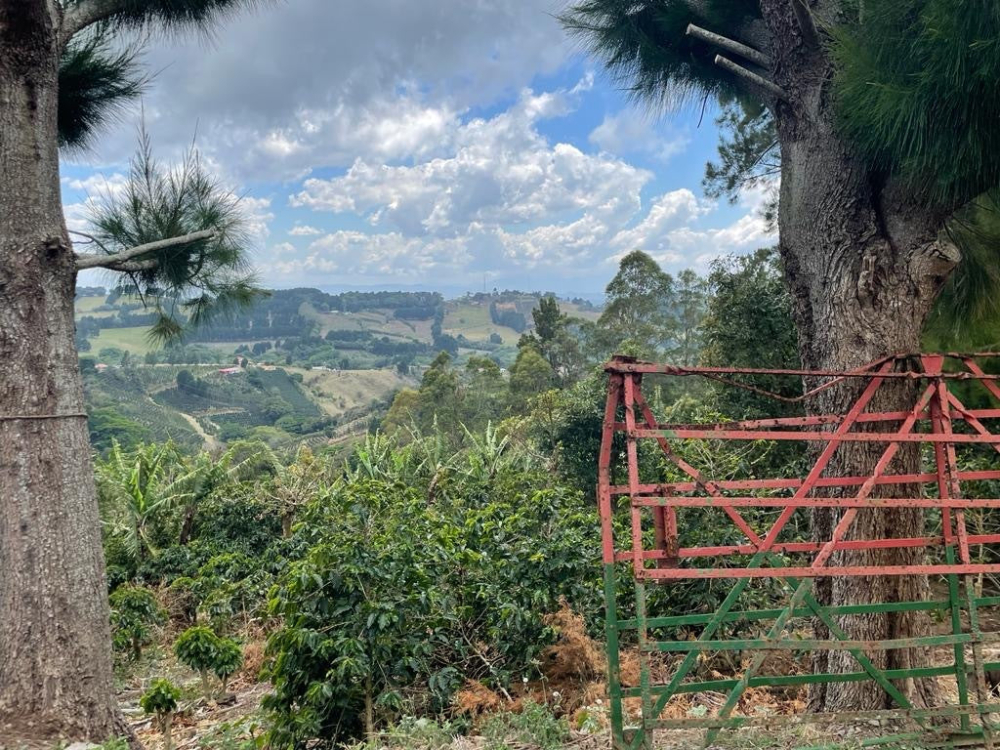
The Los Santos region is located in western Costa Rica, shielded by the mountains of the Pacific slope. This not only creates a stable microclimate but also serves as an important habitat for birds and forest wildlife. Since the mid-19th century, many immigrants from the Central Valley have settled in this area of alternating hills and mountains, beginning to cultivate coffee. The coffee-growing area here spans approximately 22,000 hectares, with over 95% of the beans classified as SHB (Strictly Hard Bean), signifying high bean hardness and superior quality.
High altitude is one of the key factors behind the exceptional flavors of Los Santos coffee. At elevations above 1,400 meters, the significant diurnal temperature variation extends the coffee fruit growth cycle, resulting in denser beans that can accumulate more flavor compounds and nutrients. Additionally, the distinct wet and dry seasons here are beneficial for coffee growth and harvesting: the rainy season from May to November aids in coffee tree flowering and early fruit development, while the dry season from December to April—especially the harvest period from November to March—provides ideal conditions for sun-drying with its dry weather.
Finca Las Nubes (Cloud Forest Estate), located in the Santa María de Dota region of San José Province, stands out within this region. Situated at an altitude exceeding 2,000 meters, the estate covers only about one hectare due to its rugged terrain and rocky surface, yet it symbolizes high-altitude specialty coffee. The estate’s name “Las Nubes” means “clouds,” originating from its first-generation owner, Isidro Batlle, who named it in the 1920s due to its high elevation and frequent cloud cover. Even after more than a century, Finca Las Nubes continues to be renowned for its innovative processing methods and experiments with diverse varieties.
In addition to the renowned Geisha variety, the estate also cultivates Typica Mejorado, Kenya, and Castillo, among others. This diverse planting helps research disease resistance and maintain ecological diversity, especially in the face of challenges such as leaf rust. In terms of processing, Finca Las Nubes employs traditional methods such as washed, natural, and honey processes, and has recently experimented with anaerobic fermentation, such as the 2022 release “Juicy Natural.” Its coffee cherries underwent 72 hours of anaerobic enzymatic fermentation, delivering unique fruity aromas and a rich mouthfeel. The harvested beans are typically sun-dried on greenhouse racks at an altitude of 2,100 meters to ensure flavor concentration and consistent quality.
The Geisha variety (Geisha T2722), sharing lineage with the famous Geisha of Panama, is known for its bright citrus notes, delicate floral aromas, and refreshing finish. This variety was first discovered in the coffee forests of Ethiopia in the 1930s, later transported through Tanzania, and cataloged as T2722 by the Costa Rican Tropical Agricultural Research and Higher Education Center (CATIE) in 1953. By the 1960s, research found that Geisha had certain resistance to leaf rust, leading to its promotion in places like Panama. However, due to its fragile branches, it was not widely planted for a time. It wasn’t until 2005, when the Peterson family in Panama entered Geisha into competition and won the top prize in the “Best of Panama” contest, that the variety gained fame and gradually gained recognition in producing regions like Costa Rica.
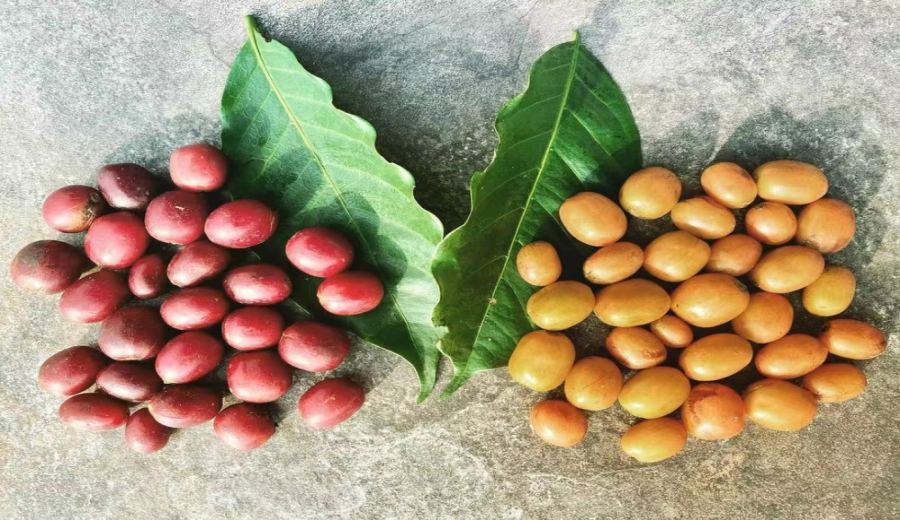
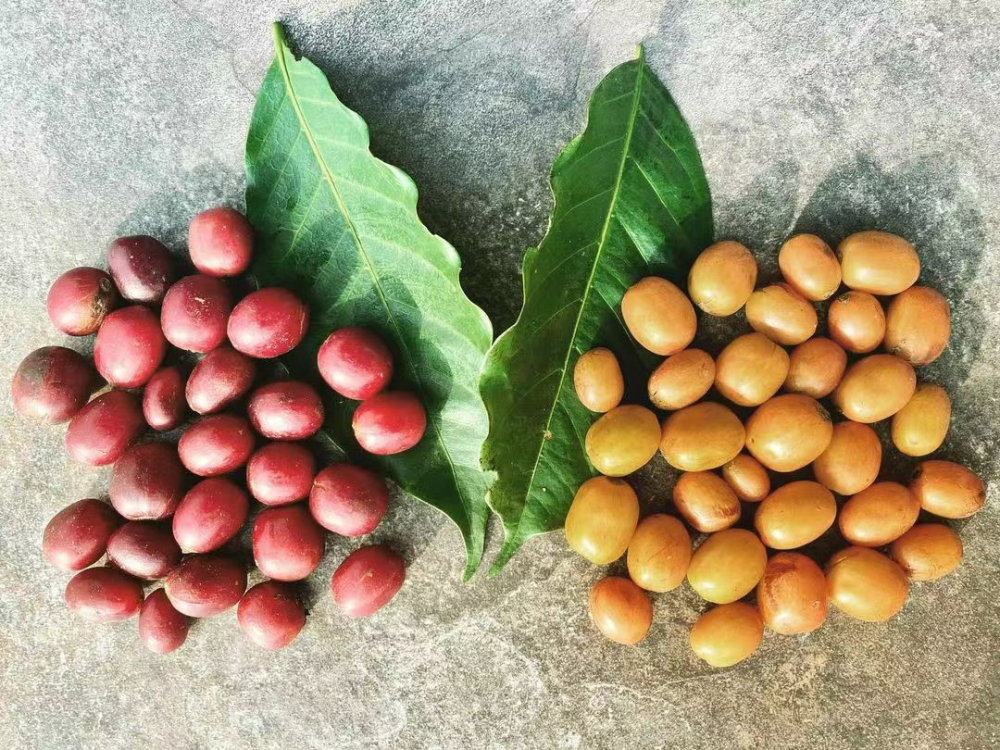
Sudan Rume is a rare variety originating from Africa, first discovered in the Boma Plateau in southeastern Sudan, near the Rume Valley close to the Ethiopian border—now part of South Sudan’s Boma National Park. Its name combines the geographic background of Sudan and the Rume Valley. The variety was officially recorded in 1942 as number “RS-510” and is a wild coffee variety initially noted for its copper-colored leaves. Over the following half-century, Sudan Rume was mainly used as a disease-resistant parent for coffee breeding, particularly showing some resistance to coffee berry disease (CBD). However, its low yield and tall plant stature made commercial cultivation difficult, and today most available batches come from small-scale production by a few farms in Central and South America.
Sudan Rume coffee trees require regular pruning to control their height. They have medium branching and fruit distribution, and the beans produced are generally larger and more elongated compared to typical Ethiopian beans. Although it has excellent flavor potential, its high cultivation and management requirements make it primarily used for breeding rather than large-scale production.
Speaking of processing methods, Costa Rica introduced washed processing technology in the 1830s, and by 1905 nearly 200 washing stations were in operation. Washed processing involves removing the skin, pulp, and mucilage layer, followed by controlled fermentation and drying, effectively reducing defect rates and enhancing flavor stability. Compared to natural processing, washed coffee usually offers a cleaner acidity and a purer flavor profile. The washed Geisha from Finca Las Nubes introduced here showcases intense fruit acidity, such as the richness of mango, complemented by yellow apricot, jasmine floral notes, and coconut sweetness, with layers that are vivid and unforgettable.
If you’d like to try pour over brewing this uniquely flavored Geisha coffee at home, here are expert-level recommended parameters: Use a V60 dripper, with about 15 grams of coffee grounds, a coffee-to-water ratio set at 1:15, and a grind size recommended to pass around 78% through a 20-mesh sieve. Control water temperature between 90–91°C. During brewing, use a three-stage circular pouring method: First, wet the coffee grounds with 30 grams of water and bloom for about 30 seconds until the coffee bed expands into a “hamburger” shape; then, in the second stage, pour steadily until reaching 125 grams, and once the water level drops to two-thirds of the coffee bed, proceed to the third stage to reach a total of 225 grams. The overall extraction time is recommended to be around 2 minutes and 20 seconds to fully bring out the delicate flavors and aromatic layers of the Geisha.
The above content is compiled by CoffeeHunters, a coffee news website.


