







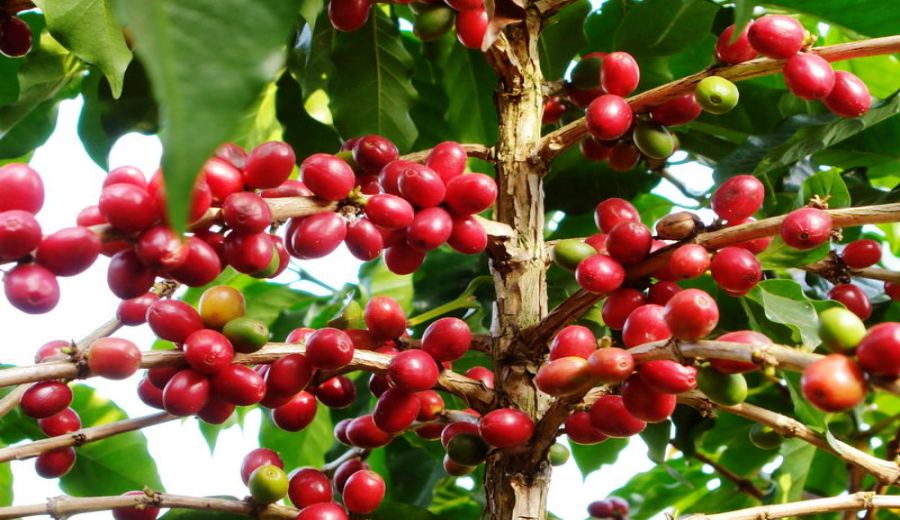
Introduction:Explore how San Cristóbal Island in the Galápagos Islands, with its unique geography and microclimate, cultivates highly regarded organic Arabica coffee. This article delves into the region’s geographical conditions, historical background, coffee cultivation characteristics, and flavor profile, while also offering practical roasting and brewing recommendations to help you better understand this rare coffee bean from the equatorial seas.
Among the islands on the eastern edge of the Pacific—the Galápagos—San Cristóbal Island stands out as one of the few areas capable of successfully growing coffee, thanks to its stable freshwater supply and special microclimate. Not only is it the only island in the archipelago with abundant freshwater, but it also maintains a natural ecological balance due to Ecuador's strict environmental protection policies, resulting in pure, organically grown Arabica coffee. It is considered a coffee-growing region with great potential for producing specialty beans.
San Cristóbal Island is one of the largest in the archipelago and the only one with ample freshwater. At an elevation of about 410 meters lies a small lake called El Junco. The water from this lake flows down along the volcanic rock formations and rocky terrain on the southern side of the island, forming several natural streams that gradually moisten the surrounding soil. This mineral-rich freshwater not only provides a stable water source but also continuously maintains soil moisture and fertility, creating an ideal environment for coffee plants to thrive.
Additionally, the area is influenced by the Humboldt Current, which contributes to its distinctive local climate. Daytime temperatures can reach up to 43°C under the direct equatorial sun, but as the altitude rises to around 275 meters, the temperature drops sharply to between 10–16°C. The significant diurnal temperature variation, combined with the interaction of humid air and volcanic soil, forms a microclimate system that is extremely well-suited for cultivating high-quality coffee.
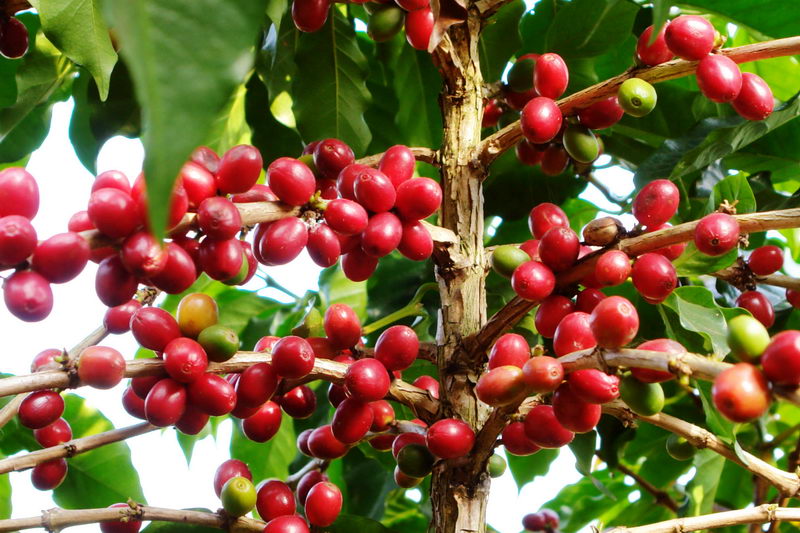
When it comes to coffee produced in the Galápagos Islands, its exceptional quality and unique cultivation background cannot be overlooked. Since the islands were designated as a national park by the Ecuadorian government in 1959, development has been strictly limited, with a complete ban on opening new farmland and the use of chemical agents such as fertilizers, pesticides, and herbicides. As a result, coffee produced here is widely regarded as a natural, pesticide-free green product with significant ecological and sustainable value.
In the history of coffee cultivation, 1875 was a pivotal year. That year, Ecuadorian Manuel J. Cobos founded Hacienda El Cafetal on San Cristóbal Island and introduced approximately 100 hectares of Arabica Bourbon coffee trees. These trees were primarily planted at elevations between 140 to 275 meters—an altitude range whose climate conditions are similar to those found at 915 to 1830 meters in inland regions, perfectly matching the requirements for growing Strictly Hard Bean (SHB) coffee known for its high acidity. This also contributed to the rich and layered flavor profile characteristic of the region’s coffee.
Coffee from the Galápagos Islands is known for its distinct layers, bright acidity, and natural sweetness. It is well-suited to medium roasting, which can fully highlight its fruity aroma and balanced, rich body. On the international market, this type of coffee often receives high praise and is considered a premium bean variety with great value for both collection and enjoyment.
In terms of varieties, the early-introduced Arabica Bourbon is the main cultivated variety. Its beans are larger and denser, with good flavor potential and storage and transport resilience. The coffee beans produced in this region typically fall under Ecuador’s Grade A quality, enjoying strong sales in European and American markets and gradually attracting attention from pour-over enthusiasts and coffee professionals alike.
It is worth mentioning that although the coffee cultivation area in the Galápagos Islands is limited, its strict production standards and unique geographical conditions mean that every coffee bean encapsulates the essence of the islands’ nature. Moreover, all processing procedures—including drying and packaging—are carried out locally, further preserving their original flavor and uniqueness. It is one of the few coffee-producing regions in the world that balances ecological conservation with high-quality output.
For coffee lovers who enjoy pour-over or refined extraction methods, it is recommended to choose freshly roasted beans within five days of roasting, and allow the beans to rest for 4 to 7 days after opening to reach their optimal flavor period. If purchasing coffee powder, note that oxidation accelerates upon exposure to air, so it is advisable to brew it as soon as possible for the best taste. Generally speaking, choosing whole beans and grinding them fresh with a grinder just before brewing can best showcase the delicate and layered aroma and flavor of San Cristóbal coffee.
The above content is compiled by CoffeeHunters, a coffee news website.


