








Introduction:Delve into Colombia’s six most iconic specialty coffee regions—from Santander to Nariño—exploring their unique geographical conditions, cultivation altitudes, processing techniques, and how microclimates influence flavor. Not only does this cover the sensory characteristics of each region’s coffee, but it also includes main harvest seasons, variety selections, and differences in processing methods, along with practical pour over recommendations and reference parameters to help you better grasp the essence of Colombian coffee.
Colombia is not only the world’s second-largest coffee producer but also renowned for its stable and balanced Arabica beans, often hailed as “green gold.” The country’s coffee is predominantly grown in the high-altitude regions of the Andes Mountains, where fertile volcanic soils and meticulous family-run farming practices yield beans rich in complexity and exceptional quality. This article will take you through Colombia’s six major specialty coffee regions—including Santander, Antioquia, Tolima, Huila, Cauca, and Nariño—offering a comprehensive analysis of each area’s uniqueness, from regional background and microclimate to cultivation altitude, processing techniques, and cupping flavors.
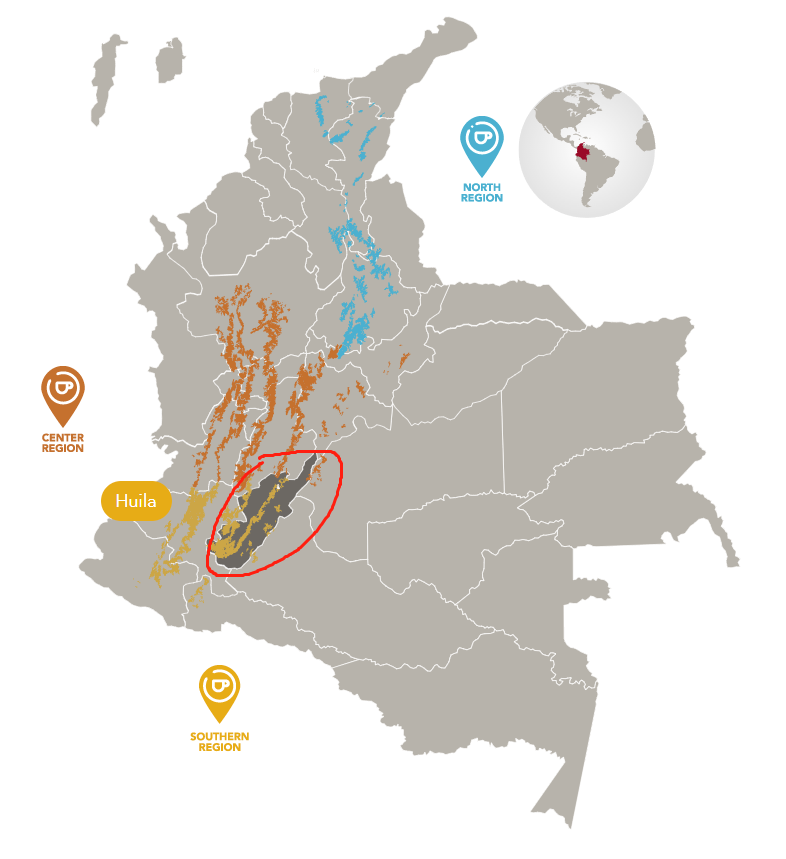
Colombia’s coffee regions can be broadly divided into three zones: northern, central, and southern. Due to variations in latitude, altitude, and climate, these areas exhibit distinctly different harvest seasons and flavor profiles. Generally, the main harvest season runs from October to January of the following year, while the secondary season falls between April and July, ensuring fresh beans are available year-round. The harvest seasons in the south and north are offset, and the central region, due to its geographical diversity, features some areas with both primary and secondary harvests, enabling Colombia to supply fresh coffee continuously throughout the year.

Coffee in Colombia is mostly cultivated at altitudes between 1200 and 2000 meters, with regions above 1500 meters particularly noted for their vibrant flavors. The high-altitude environment slows the ripening of coffee cherries, facilitating the accumulation of flavor compounds and resulting in richer acidity and aroma. Additionally, the widespread use of shaded cultivation and natural organic land management allows coffee trees to thrive in a stable and fertile environment, enhancing the overall balance and refinement of the beans.
In terms of processing methods, the vast majority of Colombian coffee is washed processed. Small, homemade depulpers (such as Ecomill or Eco-Pulper) are used to remove the fruit pulp and part of the mucilage, followed by overnight fermentation and thorough washing with clean water, and finally natural sun drying or shaded drying on patios. In rainy weather, low-temperature dryers are used, with temperatures controlled around 50°C to maintain green bean quality. This meticulous processing approach is a key factor in preserving the clean flavors and consistency of Colombian coffee.
In terms of varieties, besides common ones like Caturra, Bourbon, Typica, and Pacamara, Colombia has also developed several disease-resistant, high-quality varieties such as Castillo, Tabi, and the nationally representative Colombia variety. These varieties not only adapt well to the local high-altitude environment but also bring diverse flavor variations, especially in high-altitude micro-regions, where they can showcase delicate berry, nut, and caramel notes.
Next, we’ll introduce Colombia’s six representative specialty coffee regions one by one:
Santander (and Northern Santander)
Located in northern Colombia, with planting altitudes of around 1400–1600 meters, this region is known for its distinct herbal notes, rich aftertaste, and unique refreshing flavors. Recently, the rise of anaerobic processing methods has further highlighted the region’s captivating floral and fruity acidity. For example, the anaerobic double-enzyme washed beans from Granja La Esperanza, grown at an altitude of 1700 meters with the Caturra variety, present cupping notes of rose, strawberry, and liqueur chocolate—perfect for those who enjoy fruity and winey profiles.
Antioquia
Situated in north-central Colombia, it is the country’s second-largest coffee-producing region, covering an area of 126,000 hectares and accounting for 18% of national production. The terrain is mountainous, but moderated by the warm Caribbean Current, resulting in a balanced climate. The beans here tend to have balanced flavors, often featuring medium acidity and a smooth body, making them suitable for everyday drinking and large-scale roasting needs.
Tolima
Named after the ancient Pijao people, meaning “covered in snow,” this region features rugged terrain with farms typically ranging from 10–15 hectares, mostly operating under cooperative models. Coffee is often processed in small-scale mills or on-farm, yielding clear and layered flavors. It’s a rising star region that has garnered significant attention in recent years.
Huila
Recognized as the hub of Colombia’s specialty coffee, with cultivation altitudes exceeding 1500 meters, surrounded by mountains and abundant water sources. The region promotes micro-region and micro-lot systems, excelling in bright acidity and berry profiles. For instance, the Sidra variety processed via double anaerobic natural method showcases layered flavors of passionfruit, citrus, honey, and spices. Suitable for pour over, cold brew, and various brewing methods, it’s a highly versatile representative in terms of flavor expression.
Cauca
As Colombia’s certified coffee origin region, it has an average altitude of 1758 meters, reaching up to 2100 meters. With steep terrain, distinct rainfall distribution, and fertile volcanic soils, it’s conducive to producing coffee with high acidity, brightness, and outstanding sweetness. For example, the Castillo variety processed with double anaerobic washed method delivers an intense berry juice-like profile, with unforgettable mint tea and mugwort undertones.
Nariño
Located in southwestern Colombia, bordering Ecuador, with planting altitudes of 1600–2300 meters, it’s one of the highest-altitude regions in the country. The beans produced here are small yet dense, with vivid green color and extremely concentrated flavors. Due to limited production, most specialty beans are directly purchased by international buyers, making it a must-try for coffee enthusiasts seeking ultimate quality.
Colombian coffee is primarily graded by bean size, categorized into Supremo (largest), Excelso (medium), and Extra (smaller), with Supremo being the highest grade. Lastly, when brewing Colombian coffee using pour over, it’s recommended to use freshly roasted beans within five days, with a medium roast level. Grind to about 75% passing through a #20 sieve, with water temperature controlled at 90°C, using a 1:15 coffee-to-water ratio. Employing a three-stage pouring technique can better highlight its delicate sweetness and complex aromas.
The above content is compiled by CoffeeHunters, a coffee news website.


