







Introduction:Brazil is the world’s largest coffee-producing country, renowned for its coffee’s low acidity, full body, and balanced flavor profile. The three most representative producing regions are Minas Gerais Southern (Sul de Minas), São Paulo, and Cerrado. This article delves into the geography, altitude, common processing methods, and unique cup characteristics of these three regions, helping you better understand the diverse flavor layers of Brazilian coffee and how to choose the right beans.
As the country with the highest coffee output globally, Brazil has 17 states that grow coffee, with those in the southeastern region standing out in the market due to their stable quality and large-scale production. Compared to other Central and South American countries, Brazilian coffee is mostly grown at altitudes below 1000 meters, on flat terrain highly suitable for mechanized operations. As a result, production efficiency is extremely high, and the coffee often features low acidity, round body, and balanced flavors.
This article will focus on three representative Brazilian coffee regions: Sul de Minas, São Paulo, and Cerrado. We’ll explore their geographical conditions, altitude, variety distribution, primary processing methods, and actual flavor profiles in cupping, taking you deep into the uniqueness of each region. Additionally, we’ll introduce Brazil’s unique semi-washed (pulped natural) processing method and how it enhances the sweetness and cleanliness of the beans.
When it comes to coffee, people often think of Ethiopia’s floral and fruity notes, Jamaica’s Blue Mountain, or Panama’s Geisha. But in terms of production volume, Brazil is undoubtedly the leading player. However, the appeal of Brazilian coffee lies not just in quantity—its diverse regions also showcase a rich spectrum of flavors. Next, let’s start with the three most representative regions and uncover what makes them unique.
Brazilian coffee cultivation is production-oriented, often choosing to plant on low-altitude flatlands, generally below 1000 meters. Coffee trees are usually planted in large farms. During harvest, mechanical picking is widely used for large-scale harvesting, significantly reducing labor costs and improving efficiency. The harvested coffee cherries are sent to large processing facilities for post-harvest treatment following commercialized procedures.
Due to the terrain and production methods, Brazilian coffee varieties are mainly those that can thrive under direct sunlight without shading, such as Red Bourbon, Yellow Bourbon, Mundo Novo, and Catuai. Among these, Red Bourbon is the most widely planted due to its stable yield and decent aromatic expression. Compared to other countries that pursue complex flavors through specialty cultivation, Brazil focuses more on balanced flavors. As a result, its coffee tends to have low acidity and a soft mouthfeel, making it easily approachable even for beginners.
Next, let’s focus on the three major regions and learn about their individual characteristics:
Sul de Minas (Southern Minas) — The Representative of High Altitude and Fruity Notes
Sul de Minas is part of Minas Gerais state and one of Brazil’s oldest coffee-growing regions. Located at an altitude of about 1400 meters, while not the highest in Brazil, it is noticeably higher than other major producing areas. The climate here is mild, and the terrain mostly consists of gently sloped woodlands with distinct wet and dry seasons—abundant rainfall in the rainy season and relatively dry winters—which help with the ripening of coffee cherries and the stability of quality.
The region has relatively well-developed infrastructure and research investment. Many large exporters operate exclusive estates here, running them under commercialized models. Coffee from Sul de Minas is mostly processed via washed and semi-washed (pulped natural) methods, resulting in clear flavors with pronounced fruitiness and floral notes, clean acidity, and a rich yet smooth mouthfeel.
Thanks to its altitude and processing techniques, Sul de Minas has become a classic choice for coffee lovers who enjoy bright acidity paired with a full-bodied base.
São Paulo — Port Advantage and Diverse Micro-Regions
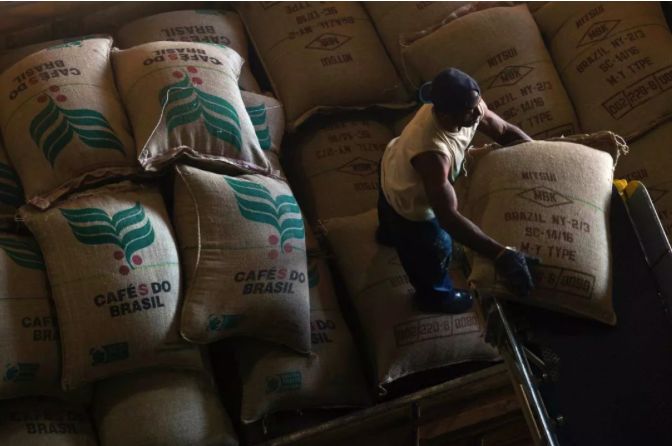
São Paulo state, located in southeastern Brazil, is another important coffee-growing area. The climate here is humid and mild, facing fewer drought issues compared to northern regions, so additional irrigation is generally unnecessary. Notably, the world’s largest coffee export port—Santos—is situated here, and the “SANTOS” marking seen on many export sacks originates from this location.
Within São Paulo state, there are two main coffee-producing areas: Centro-Oeste (West-Central) and Mogiana. Mogiana borders Sul de Minas, and coffee is often grown among shrubs, grasslands, and native vegetation. The soil is nutrient-rich red volcanic earth, which provides ample nourishment to coffee cherries and aids in aroma development.
Coffee production here combines traditional and modern management practices, with quality seeing significant improvement in recent years. The coffee often carries a sweet note reminiscent of sugarcane, complemented by soft fruitiness and chocolate undertones—a rather unique expression among Brazilian coffees.
Cerrado — Classic Balance from the Central Savanna
The Cerrado region is located in the central savanna of Brazil, characterized by flat and open terrain, with numerous large coffee estates and processing facilities. It is the first Brazilian coffee region to receive origin certification, and its coffee holds an iconic status in the domestic market.
Coffee in Cerrado is grown at an altitude of around 1000 meters, with soil rich in organic matter and minerals. Coupled with the prevalent use of washed and semi-washed processing, the coffee’s flavor profile is more refined and clean. In cupping, one can often detect distinct notes of nuts, cream, and caramel, with an overall balanced and smooth mouthfeel—making it an ideal entry point for those new to Brazilian coffee.
Cerrado is not only highly regarded domestically but is also commonly used in blends as a stable base for consistent flavor.
Semi-Washed / Pulped Natural Processing Method — Brazil’s Flavor Secret Weapon
Given Brazil’s massive coffee production, it is impractical to use washed processing exclusively. In some areas where water is scarce or the climate is humid, a unique semi-washed (also called pulped natural) method has been developed. This approach combines characteristics of both washed and natural processing, effectively removing defects while preserving sweetness and aroma.
The process typically involves: soaking the coffee cherries in water tanks to remove unripe or overripe defective beans via buoyancy; mechanically removing the pulp to reduce the chance of manual defect handling; and then spreading the parchment-covered beans on drying patios until the ideal moisture content is reached. This method results in Brazilian coffee generally exhibiting high cleanliness and consistent sweetness, making it more suitable for large-scale production.
In summary, while Brazilian coffee is primarily produced for commercial purposes, its three representative regions—Sul de Minas, São Paulo, and Cerrado—still showcase their own unique terrain, varieties, and processing characteristics, creating a diverse range of flavor profiles. Whether you prefer rich and balanced, fresh and fruity, or classic sweet-toned coffee, you’ll find a fitting choice from Brazil.
The above content is compiled by CoffeeHunters, a coffee news website.


