







Introduction:Jamaica Blue Mountain coffee is hailed as the pinnacle of the coffee world, and among its most renowned offerings, the Clifton Estate Blue Mountain No. 1 is the dream choice for enthusiasts. This article delves into the authentic growing regions of Blue Mountain coffee, its strict grading system, cultivation conditions, and provides a detailed introduction to the varieties, washed processing methods, and flavor characteristics of the Clifton Estate. Additionally, it offers practical pour over brewing suggestions and flavor profiles to help you fully understand this legendary coffee from the Caribbean.
Jamaica Blue Mountain coffee has long been regarded as the finest in the coffee world, and the foundation of its myth lies on a misty, volcanic-soil-rich island in the Caribbean. The unique geographical and climatic environment here endows Blue Mountain coffee with its deep and captivating flavors, but the area that can truly be called “Blue Mountain coffee” is actually extremely limited. This article will take you deep into the authentic growing regions, certification standards, and historical background of Blue Mountain coffee, with a focus on analyzing the popular Clifton Estate Blue Mountain No. 1 — covering its variety, processing method, grade specifications, and pricing characteristics to help you grasp the core information of this classic coffee.
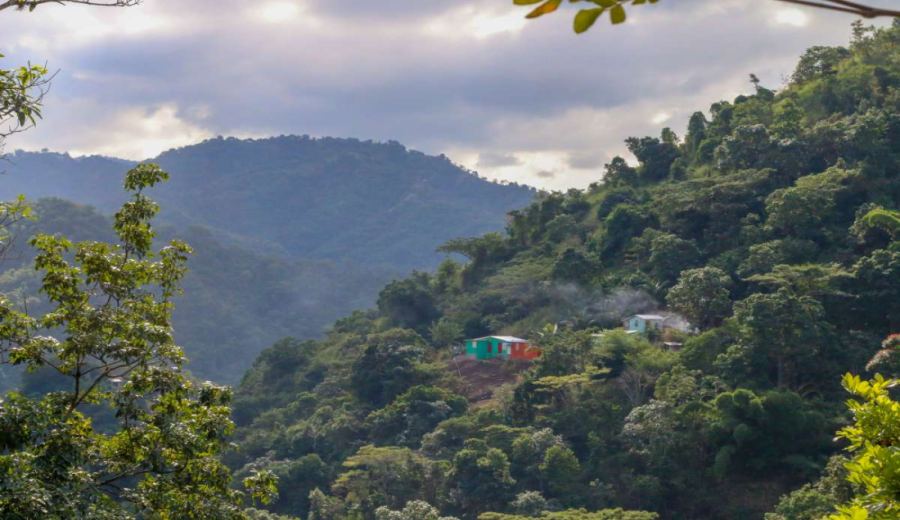
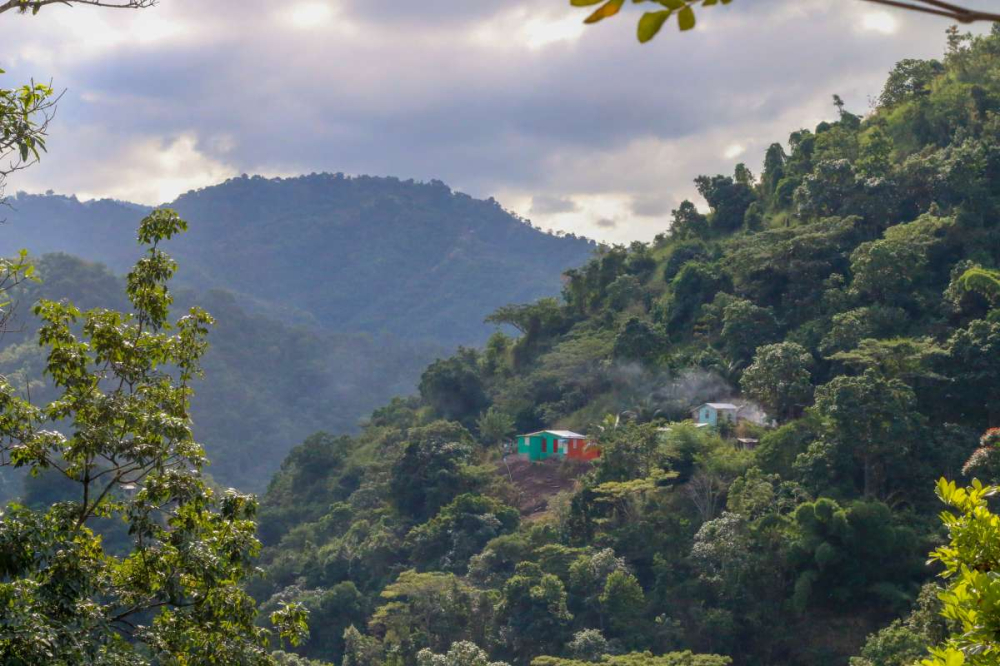
Jamaica is located in the picturesque Caribbean Sea, and its exceptional natural conditions have created an ideal environment for coffee cultivation. In particular, northeast of the capital Kingston lies an area known as the Blue Mountains, which is the core production region of the world-famous Blue Mountain coffee.
The reason Blue Mountain coffee enjoys such a high reputation is inseparable from its geographical location. The Blue Mountains happen to lie within the coffee belt near 25 degrees north latitude. Here, there is fertile volcanic soil, fresh and unpolluted air, coupled with evenly distributed abundant rainfall throughout the year and a climate characterized by significant day-night temperature differences, providing excellent growing conditions for coffee trees. Especially the clouds that are commonly seen at the mountaintop in the afternoon not only provide natural shading but also maintain high humidity, allowing the coffee trees to thrive in a stable environment, thus producing delicate and balanced coffee flavors.
However, the “authenticity” of Blue Mountain coffee comes not only from natural conditions but is also closely related to altitude. Although the highest peak of the Blue Mountains reaches 2,256 meters, areas above 1,700 meters are designated as nature reserves where farming is prohibited. Meanwhile, coffee grown at altitudes below 900 meters exhibits flavors that are comparatively inferior to those grown at higher elevations. Therefore, only coffee grown ataltitudes between 910 and 1,700 metersqualifies as “Blue Mountain coffee.” Coffee grown at altitudes below 900 meters is classified as “Jamaica High Mountain Coffee” or “Jamaica Prime Coffee.” The total legal planting area for Blue Mountain coffee is only about6,100 hectares, making it extremely rare.
According to the regulations of the Jamaica Industrial Development Corporation, only coffee grown within the four administrative regions of St. Andrew, St. Mary, St. Thomas, and Portland qualifies to be called “Jamaica Blue Mountain Coffee.” In addition,the Jamaica Coffee Industry Board (CIB), established in 1952,is responsible for formulating and enforcing strict production and export standards, playing a key role in industry development and quality control.
It is worth noting that after Hurricane Gilbert struck in 1969, Japan’s UCC Ueshima Coffee introduced ecological technology to help Jamaica revive its coffee industry. In gratitude, the Jamaican government signed an agreement with Japan in 1971, agreeing to prioritize exporting 90% of its annual Blue Mountain coffee production to Japan. As a result, prior to 2012, it was extremely difficult for other regions to purchase Blue Mountain coffee, adding an air of mystery to its reputation.
To combat counterfeit products on the market, the Jamaican government has designed and registered the “Blue Mountain Coffee” trademark and established a complete set of certification and export standards. All authentic Blue Mountain coffee green beans must be exported in wooden barrels, and buyers can apply to the CIB or relevant estates for certification documents to verify their authentic origin.
Currently, the most common Blue Mountain No. 1 grade coffee on the international market mainly comes from the Clifton Estate and Wallenford Estate under the Sharpe family. The specifications for these Blue Mountain No. 1 beans must be17 to 18 mesh, with a defect rate not exceeding2%[percentage missing], and the beans are uniformly plump and semi-oval in shape — representing a relatively stable and high-quality grade.
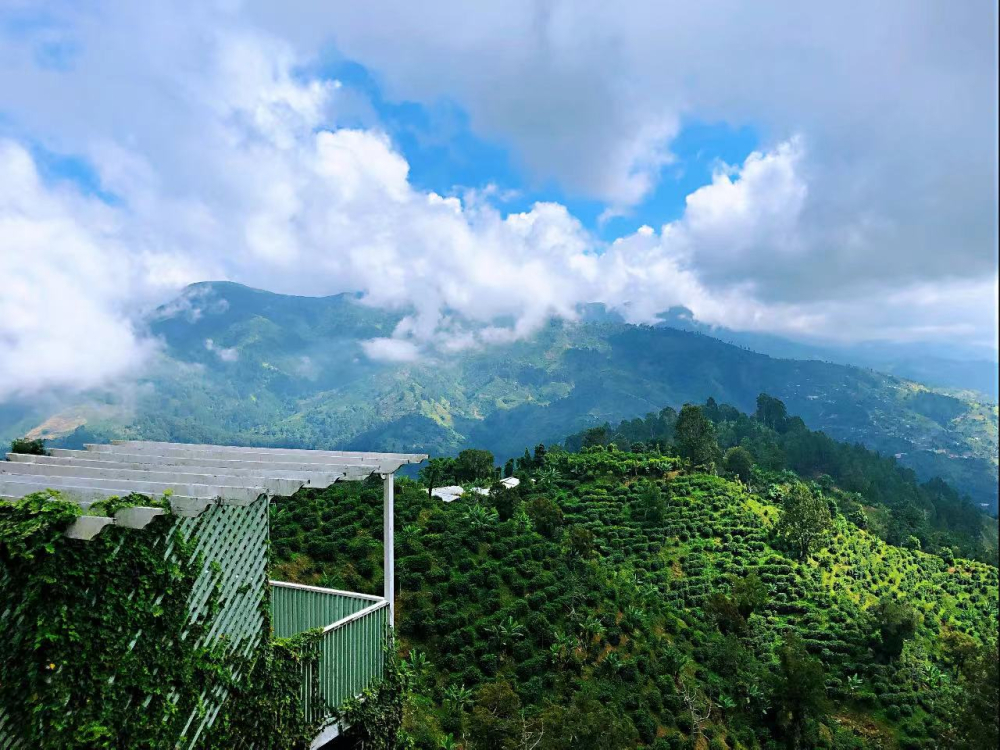
Among them, the Clifton Estate is the oldest coffee plantation in the Blue Mountains, with a planting history of over200 years, situated at an elevation of1,310 meterson a mountaintop plateau. The Blue Mountain No. 1 produced here is beloved by coffee enthusiasts for its rich, well-balanced flavors of acidity, sweetness, and bitterness.
The estate cultivates the Typica variety, the most traditional Arabica strain, which has been rooted in the Blue Mountain region for over two hundred years since its introduction in the 18th century. Through long-term adaptation and varietal improvement, it now possesses outstanding disease resistance and a unique regional flavor — a refined expression that is difficult to replicate elsewhere.
In addition to the variety, the meticulous washed processing method that the Clifton Estate has used for centuries is also key to the stability of its flavors. The processing procedure includes: first manually selecting and removing defective cherries, then mechanically removing the outer skin, followed by placing the mucilage-covered coffee beans into water tanks for12 to 18 hours of fermentationto remove the pulp layer. The beans are then moved to clean water tanks for multiple rinses, with substandard beans further removed, and finally, the clean parchment beans are evenly spread on drying racks to dry until the moisture content reaches10 to 12%. The dried beans are stored in temperature- and humidity-controlled wooden barrels until just before shipment, when they are hulled and undergo final quality control.
This rigorous and traditional processing and storage model ensures that Blue Mountain coffee maintains relatively consistent flavor profiles each year. To allow coffee enthusiasts to also experience the “calm and restrained” character of Blue Mountain coffee, it is recommended to usemedium-dark roastingto enhance body while retaining gentle acidity, achieving an excellent balance of acidity, sweetness, and bitterness.
For brewing, it is recommended to use freshly roasted (ideally within 5 days of roasting) Blue Mountain No. 1 beans to fully appreciate its delicate flavor nuances. Specific pour over parameters can be referenced as follows: water temperature88°C[temperature missing], coffee dose15 grams, brew ratio1:15[ratio missing], grind sizemedium-coarse (70% through a #20 sieve). Begin with a 30-second bloomusing double the coffee dose (about 30 grams) of waterto release CO₂ and promote stable extraction. Then, pour water in small circles until reaching125 grams for the first pour, continue pouring until reaching225 grams and then stop. Once dripping from the filter has finished, remove the filter. The total brew time is approximately2 minutes and 10 seconds. Finally, swirl the coffee and pour it into your cup for tasting.
The Clifton Estate Blue Mountain No. 1 typically presents intense aromas of dark chocolate and nuts in pour over brewing, with a silky-smooth mouthfeel, balanced acidity, sweetness, and bitterness, and a long-lasting aftertaste — making it a classic choice for experiencing authentic Blue Mountain flavor.
The above content is compiled by CoffeeHunters, a coffee news website.


