







Introduction:An in-depth exploration of the historical roots of Hawaiian Kona coffee, the evolution of the Typica variety, and the five-grade classification criteria for Type 1 standard beans. This article details the regional characteristics of the Queen’s Estate Extra Fancy grade, the design of its roast profile, and offers professional pour over recommendations to help you master the refined flavors and brewing techniques of this island-style coffee.
Hawaiian Kona coffee and Jamaican Blue Mountain were once considered the two flagship island specialty coffees, often hailed as the “king and queen” of the genre. Although most plantations in the Kona region sit at elevations between 200 and 700 meters—below the typical 1200-meter altitude benchmark for specialty coffee—Kona coffee still ranks among the world’s top-tier brews thanks to its exceptional terroir and rigorous grading system.
The name “Kona coffee” originates from its birthplace: the Kona district on Hawaii’s Big Island. In fact, coffee is not native to Hawaii. The history of coffee cultivation dates back to 1817, when Don Francisco de Paula Marin attempted to introduce it but was unsuccessful. It wasn’t until 1825 that the governor of Oahu brought coffee plants from Brazil and successfully planted them in the Manoa Valley. Then, in 1828, missionary Samuel Ruggles introduced the Bourbon variety from Brazil to Hawaii’s Big Island, laying the foundation for local coffee farming. However, coffee diseases in the 1850s led many farmers to switch to sugarcane. It wasn’t until 1892, when German judge and sugarcane plantation owner Hermann A. Widemann imported the Typica variety from Guatemala, that the golden age of Kona coffee began.
Notably, coffee varieties often develop unique regional expressions, or “local adaptations,” in different growing areas—a phenomenon known as “terroirization.” The Typica variety of Blue Mountain coffee is a classic example. By the 1990s, the Typica grown in the Kona region had also developed distinct regional traits, becoming known as “Kona Typica,” with a flavor profile all its own.
Kona coffee beans are renowned for their nearly perfect appearance—plump, glossy beans with a distinctive cinnamon and spice aroma, balanced and gentle acidity. Although Hawaii was once an independent kingdom, overthrown by an American-led coup in 1893, became a U.S. territory in 1898, and officially joined the Union as the 50th state in 1959, Kona coffee remains the only top-tier coffee variety produced in the United States and one of the most beloved specialty coffees in the American market.
Coffee cultivation in Hawaii is primarily concentrated in what’s known as the “Kona Coffee Belt.” This prime growing region lies along the west coast of Hawaii’s Big Island, running roughly parallel to the island’s main tourist area. Stretching approximately 30 miles in length and about 2 to 3 miles in width, the belt extends from Makalei southward to Oceanview, at elevations between just 200 and 700 meters within a low-altitude, humid climate zone. The coffee trees are mainly planted on the slopes of Mauna Loa, a volcano located to the west of the Kona region. Though initial land clearing required significant labor and operations were relatively challenging, the volcanic soil is rich in minerals, providing an ideal environment for coffee tree growth.
True Kona coffee is quite rare. Hawaiian coffee beans are mainly divided into two categories: Type 1 standard beans and Type 2 peaberry beans. This article focuses on the selected Type 1 standard beans, particularly the Queen’s Estate Extra Fancy grade. Within Type 1, beans are further classified into five grades: Extra Fancy, Fancy, Number One, Select, and Prime. Among these, the Extra Fancy grade features the largest bean size, the lowest yield, and an extremely low percentage of defective beans. These beans undergo strict manual sorting, making them the crème de la crème of specialty coffee.
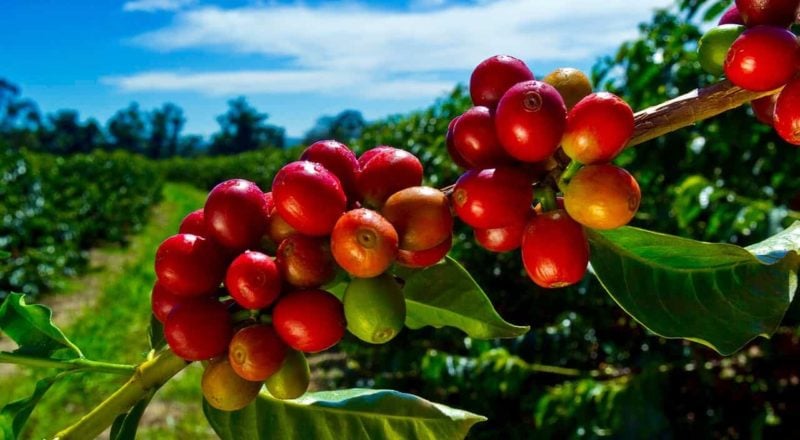
The Queen’s Estate is located on the grassy hills of Waiōno in the Kailua-Kona region of Hawaii’s Big Island. “Waiōno” means “delicious water” in the local language. The estate sits in the heart of the Kona Coffee Belt, adjacent to the village of Holualoa, and boasts stunning views of the Kona coastline. The selected Extra Fancy grade Kona coffee beans come from this estate, situated at an elevation of around 1100 meters, and are processed using the washed method, showcasing the pure flavors of the Typica variety.
To fully highlight the floral and sweet characteristics of washed Kona coffee beans, the roaster adopted a medium roast strategy. The specific roast parameters are as follows: using a Yangjia 800N roaster, with a green bean charge of 550 grams and an inlet temperature set at 200°C; the yellowing point occurred at 5 minutes and 35 seconds, at which time the temperature was 150.1°C; first crack appeared at 9 minutes and 30 seconds, with the temperature reaching 187°C; first crack development continued for 1 minute and 50 seconds, and the final discharge temperature was 193.4°C. This roast curve helps preserve the coffee’s acidity and aroma while bringing out moderate sweetness and body.
For brewing recommendations, it is suggested to use a Hario V60 dripper, with water temperature controlled at 90°C and a coffee-to-water ratio set at 1:15. The grind size is recommended to be medium, achieving an 80% extraction rate through a Chinese standard No. 20 sieve. The specific steps are as follows: begin with a 30-gram bloom using hot water for about 30 seconds; then slowly pour water in small streams in a circular motion from the center out to 125 grams for the first pour; continue pouring in circles up to 225 grams, stopping just before the coffee bed is fully exposed, then wait for all the drip-through to finish before removing the dripper. The total brew time is approximately 2 minutes. This brewing method fully brings out Kona coffee’s walnut and nutty tones, paired with soft acidity reminiscent of berries and plums, as well as a caramel-like sweet aftertaste. The mouthfeel is silky smooth with distinct layers.
The above content is compiled by CoffeeHunters, a coffee news website.


