







Introduction:Jamaican Blue Mountain coffee is one of the most esteemed specialty coffees in the world, renowned for its unique flavor profile and scarce production. This article delves into its historical background, regional characteristics, and focuses on the most representative origin—Clifton Estate—to analyze the performance of its Typica variety, washed processing method, and flavor under medium-dark roasting. It also provides professional pour over parameters and actual cupping evaluations to help you better appreciate the charm of authentic Blue Mountain coffee.
When it comes to Jamaican coffee, the first thing that comes to mind for most people is Jamaican Blue Mountain coffee. This top-tier coffee from the Caribbean island, known for its delicate and balanced flavor and extremely low yield, holds an unshakable position in the global specialty coffee market. Among them, Blue Mountain coffee from Clifton Estate is not only the highest-altitude and oldest single estate in the region, but also holds Rainforest Alliance certification. It adheres to traditional washed processing and 100% Typica variety, showcasing the purest expression of Blue Mountain coffee.
The history of Jamaican Blue Mountain coffee dates back to the early 18th century. In 1717, French King Louis XV once ordered the cultivation of coffee locally; by the mid-1720s, Sir Nicholas Lawes, then Governor of Jamaica, introduced Arabica seeds from Martinique and promoted their cultivation in the Saint Andrew area, laying the foundation for Jamaica’s coffee industry. Over time, these coffee trees gradually took root in the Blue Mountains, developing into several grades including Blue Mountain, High Mountain, and regular Jamaican coffee, among which Blue Mountain became the most premium representative due to its growing altitude and strict quality control.
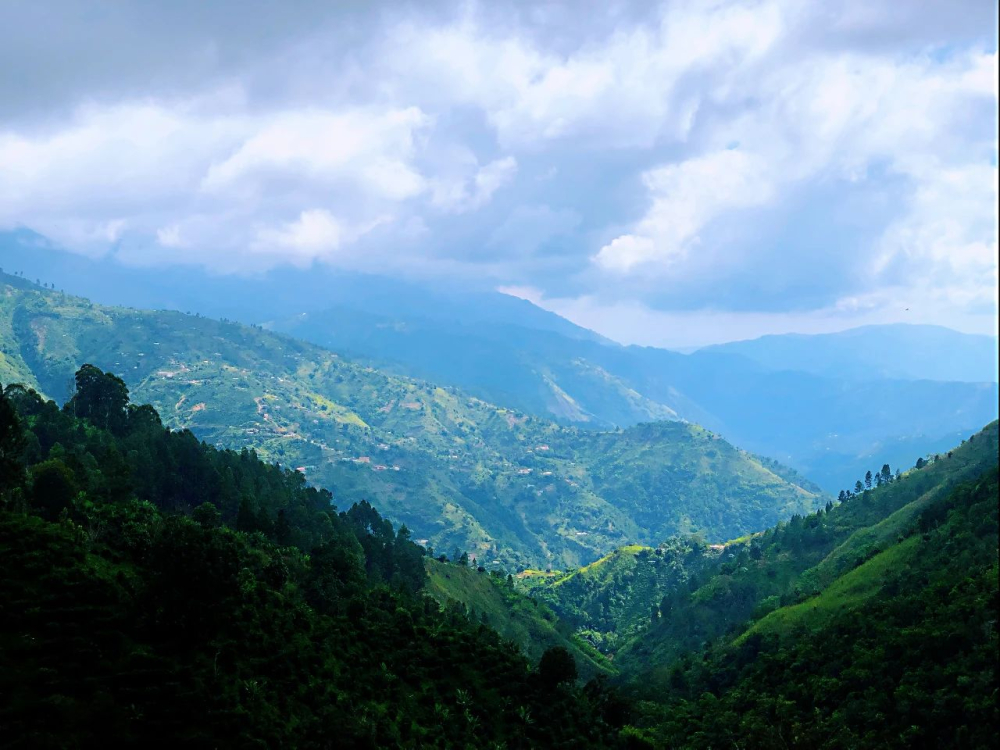
The Blue Mountains are located in eastern Jamaica, a mountainous region with uniquely favorable geographical and climatic conditions. Surrounded by the Caribbean Sea, when the weather is clear, sunlight reflecting off the sea surface casts a captivating blue haze over the mountaintops, hence the name "Blue Mountains." The highest peak reaches 2,256 meters, but only areas below 1,700 meters above sea level are suitable for coffee cultivation, with higher elevations designated as protected natural forests. This region falls within the typical coffee belt, featuring fertile volcanic soil, high humidity, and abundant rainfall, with an annual precipitation of nearly 2,000 mm and temperatures consistently around 27°C. These factors collectively contribute to the delicate and layered flavors of Blue Mountain coffee.
Authentic Blue Mountain coffee is defined as being grown at altitudes above 800 meters, and the Clifton Estate Blue Mountain sold by a certain well-known coffee shop, for instance, is grown at an altitude of 1,310 meters, right in the golden zone of Blue Mountain coffee production. Currently, almost all Blue Mountain coffee on the market is processed using the washed method. While sun-dried versions of Blue Mountain may emerge in the future, to date, washed remains the mainstream and the processing method that best showcases the intrinsic flavors of Blue Mountain coffee.
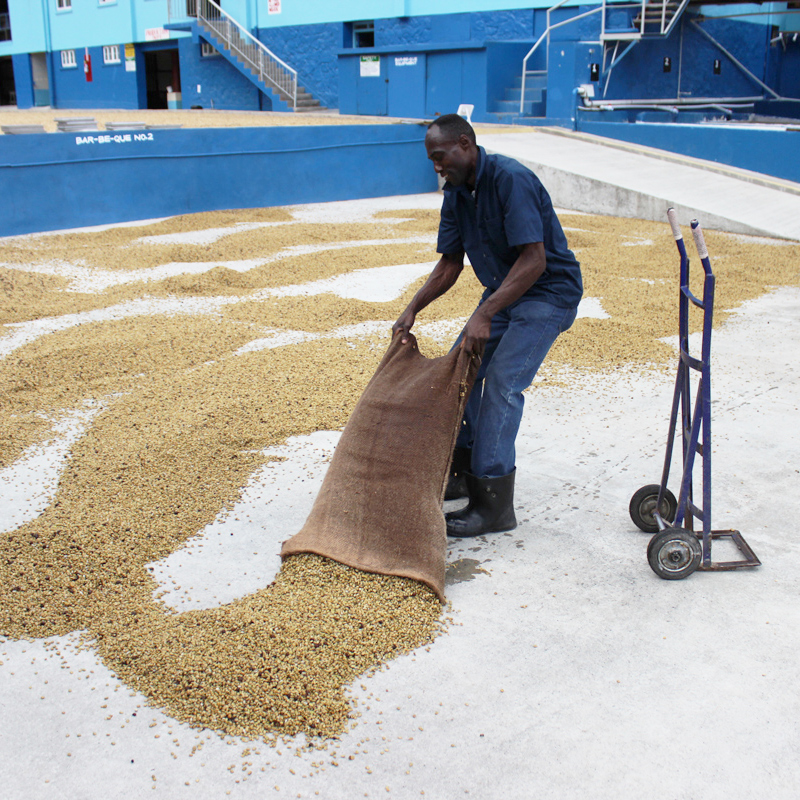
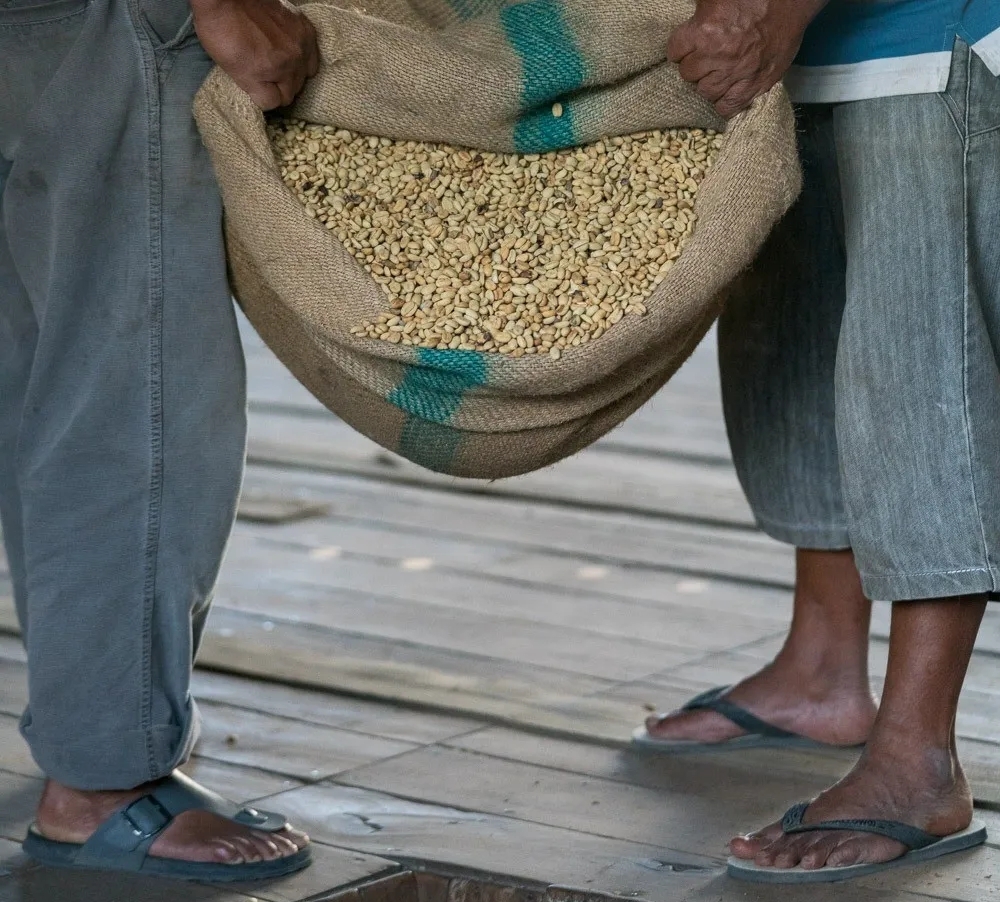
The washed processing procedure for Blue Mountain coffee is quite meticulous. First, coffee cherries are hand-selected to remove unripe or overripe fruits, after which the skins are quickly removed, and fermentation begins within 12 hours. Once fermentation is complete, the beans are moved to cement platforms for prolonged sun drying to preserve flavor details. After drying to a moisture content of 11%–13%, the beans are stored for aging for about 2 to 3 months, during which the warehouse temperature is controlled at 24–25°C, and humidity is strictly managed. Finally, after manual sorting for defective beans, hulling and polishing, packaging into barrels, and passing inspection by the Jamaica Coffee Industry Board (CIB), the coffee is approved for export.
Clifton Mount Estate (Clifton Estate) is one of the most iconic symbols of Blue Mountain coffee, with a history dating back to the 1790s, making it one of the earliest estates in the entire Blue Mountain region to cultivate coffee. The estate is operated by the Sharp family, covering a plantation area of 250 acres, of which 180 acres are dedicated to coffee cultivation, at an altitude of 1,310 meters—the highest single estate in the Blue Mountains. The area often experiences gentle afternoon mist, which shields excessive sunlight while providing moderate humidity, coupled with mineral-rich volcanic soil, offering an ideal growing environment for coffee trees. Clifton Estate is not only part of the Secteur Réglementaire (designated region), but also the only Blue Mountain coffee estate to obtain Rainforest Alliance certification, representing that it meets international standards in environmental sustainability, social responsibility, and agricultural management.
Rainforest Alliance certification encompasses ten core principles, such as reducing water pollution, minimizing pesticide hazards, maintaining biodiversity, and ensuring farmers’ income and labor rights, forming a comprehensive set of sustainable agriculture indicators. Farms that obtain this certification mean that their production processes balance environmental protection and social responsibility, delivering higher-quality and safer coffee products.
The current processing and packaging of Blue Mountain coffee remain quite traditional. Manual sorting of defective beans is limited in speed—one skilled worker can only process about 75 pounds of green beans per day—and wooden basins are used during transportation to prevent bean damage. The final product is sealed in the distinctive wooden barrels unique to Jamaican Blue Mountain coffee to ensure flavor stability during transit. Every batch of exported Blue Mountain coffee undergoes rigorous flavor inspection by the Jamaica Coffee Industry Board (CIB) before export to ensure compliance with Blue Mountain certification standards.
In terms of roasting, Jamaican Blue Mountain, due to its use of the traditional Typica variety, has relatively soft beans that do not tolerate high temperatures. A certain well-known coffee shop recommends medium-dark roasting to highlight its rich mouthfeel and the chocolatey, caramel aftertaste. The suggested roasting curve is as follows: charge temperature 170°C, yellowing point at approximately 5 minutes 10 seconds at 153°C, first crack starting at 8 minutes 12 seconds at 182.5°C, first crack development lasting about 4 minutes, and dropping at 201.3°C. This roasting method balances the sweetness, acidity, and bitterness of Blue Mountain coffee, bringing out a smooth and layered flavor profile.
In cupping, Blue Mountain coffee exhibits extremely high purity and complexity. The dry aroma carries notes of roasted peanuts, hazelnuts, melon, and chocolate; the wet aroma emits sweet scents of oolong tea, caramel, honey, and almond skin, with a silky mouthfeel. Upon entry, the flavor is very mild, with distinct chocolatey sweetness, gently balanced acidity, and a long-lasting fruity aroma in the aftertaste. The overall performance is exceptionally balanced, with almost no noticeable bitterness.
For brewing recommendations, given that it is a medium-dark roasted Blue Mountain coffee, the KONO filter is recommended. This filter’s lower rib design effectively restricts airflow, prolonging the contact time between water and coffee grounds, allowing for more thorough and even extraction, thereby enhancing the rich mouthfeel. Suggested parameters are: 15 grams of coffee, 1:15 coffee-to-water ratio, 87°C water temperature, BG#5J grind size, total extraction time of about 2 minutes, and yield of 225 grams. These parameters fully bring out the chocolatey sweetness and gentle acidity of Blue Mountain coffee, while preserving the fruity aroma in the finish.
The above content is compiled by CoffeeHunters, a coffee news website.


