







Introduction:Want to understand the differences between Guatemalan and Mandheling coffee? From growing environments and bean characteristics to processing methods and roasting strategies, this article provides an in-depth analysis of the flavor profiles of these two classic coffees and helps you master the best pour over parameters. Whether you prefer bright fruity acidity or rich, sweet aftertastes, this guide will help you find the right choice.
In the world of specialty coffee, Guatemala and Mandheling are often compared, yet their flavor performances are vastly different. The former showcases clear fruit acidity, soft sweetness, and smoky notes in the aftertaste, presenting a delicate and elegant character; the latter is known for its bold richness, low acidity, and pronounced sweetness, with layers of complexity and a long finish. If we’re talking about which is more bitter, the answer is usually Mandheling—especially for beginner coffee lovers, its strong taste may take some time to get used to.
However, bitterness is not the only criterion for judging the quality of coffee. Understanding their respective growing backgrounds, variety traits, and processing techniques is key to truly appreciating their unique charms. This article will comprehensively compare Antigua, Huehuetenango, and Sumatra Lintong from Guatemala, along with PWN Golden Mandheling, covering their growing environments, eight major producing regions, bean structures, processing technologies, as well as roasting and pour over recommendations. Practical brewing tips are also included to help you make the most suitable choice based on your personal preferences.
Take Guatemalan SHB (Strictly Hard Bean) as an example—this type of coffee is typically grown at altitudes above 1500 meters, resulting in a rich and well-structured flavor profile. If we liken Mandheling to a calm and reserved man, Guatemalan coffee is more like a delicate and particular woman, often carrying caramel and chocolate-like sweetness, accompanied by bright fruit acidity from blueberries or raspberries, with no obvious bitterness. When brewed properly, it can display a highly layered sense of balance. However, in terms of bitterness, Mandheling is noticeably more prominent, but its richness and complexity have also won the favor of many coffee professionals, including myself.
The formation of coffee flavors is closely related to the geographical environment, climate conditions, and processing methods of the origin. This also leads to Guatemalan and Mandheling developing distinctly different flavor profiles, representing two highly representative directions of coffee taste.
Guatemalan coffee is mainly characterized by bright fruit acidity and a smoky aftertaste. The country’s unique geography—bordering Mexico to the north, Honduras and El Salvador to the south, the Caribbean Sea to the east, and the Pacific Ocean to the west—features diverse terrains including tropical rainforests, highland valleys, volcanic geology, and varied microclimates. These conditions collectively shape the unique personality of Guatemalan coffee, and its aftertaste often carries a hint of distinctive smokiness.
As the heart of Central America, Guatemala covers an area of approximately 108,899 square kilometers with diverse terrain, including highland volcanoes, lowland tropical jungles, volcanic sand plains along the Pacific coast, and pristine areas of the Caribbean. The country’s Motagua Fault runs east-west, and with about 34 volcanoes nationwide, along with rivers, lakes, and equatorial forests, it creates an environment highly suitable for coffee cultivation. Especially the high-altitude volcanic regions provide ideal conditions for growing strictly hard beans, earning Guatemalan coffee a reputation for being a premium product with unique spicy notes. The appearance of giant coffee beans has also made it particularly eye-catching in the international market.
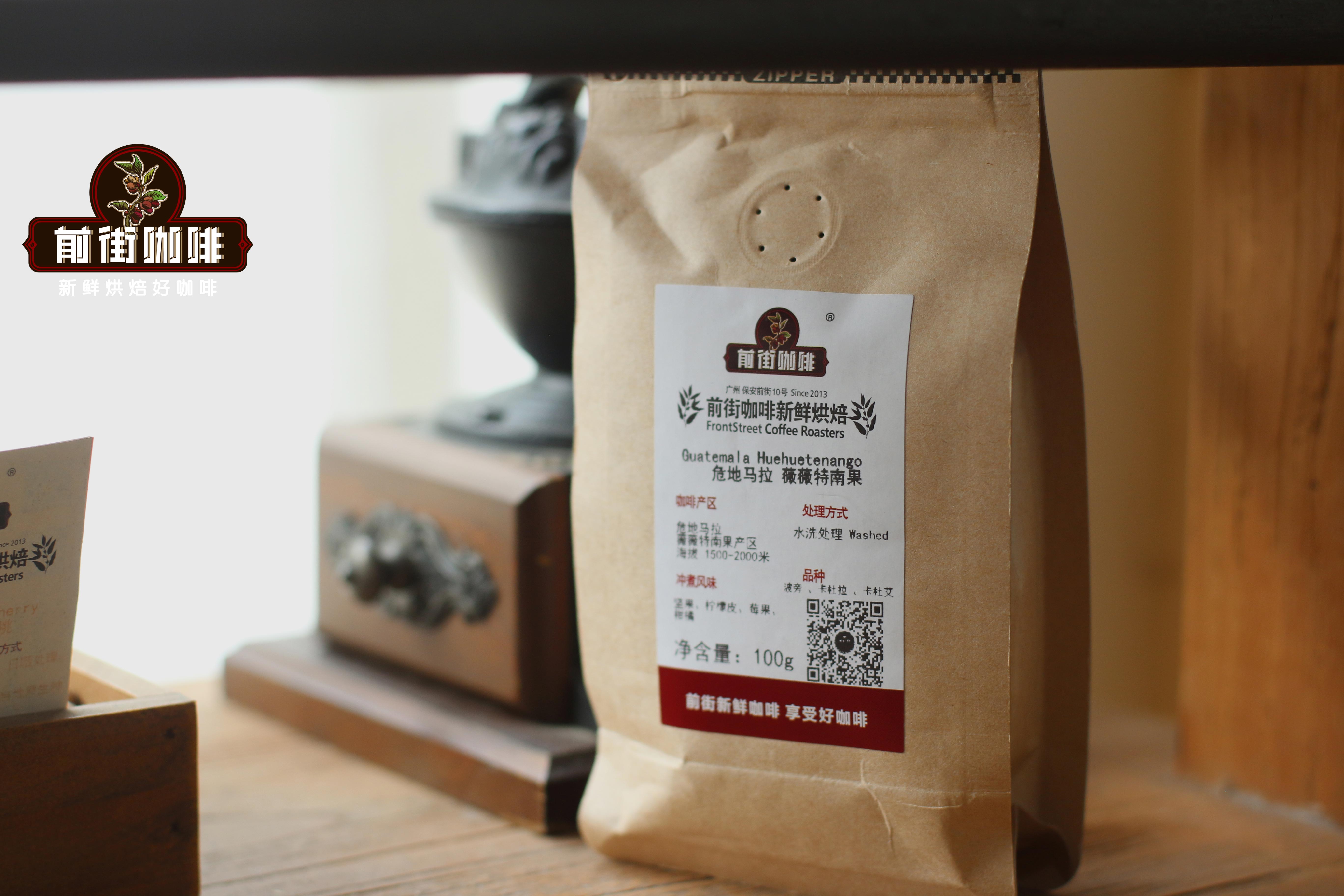
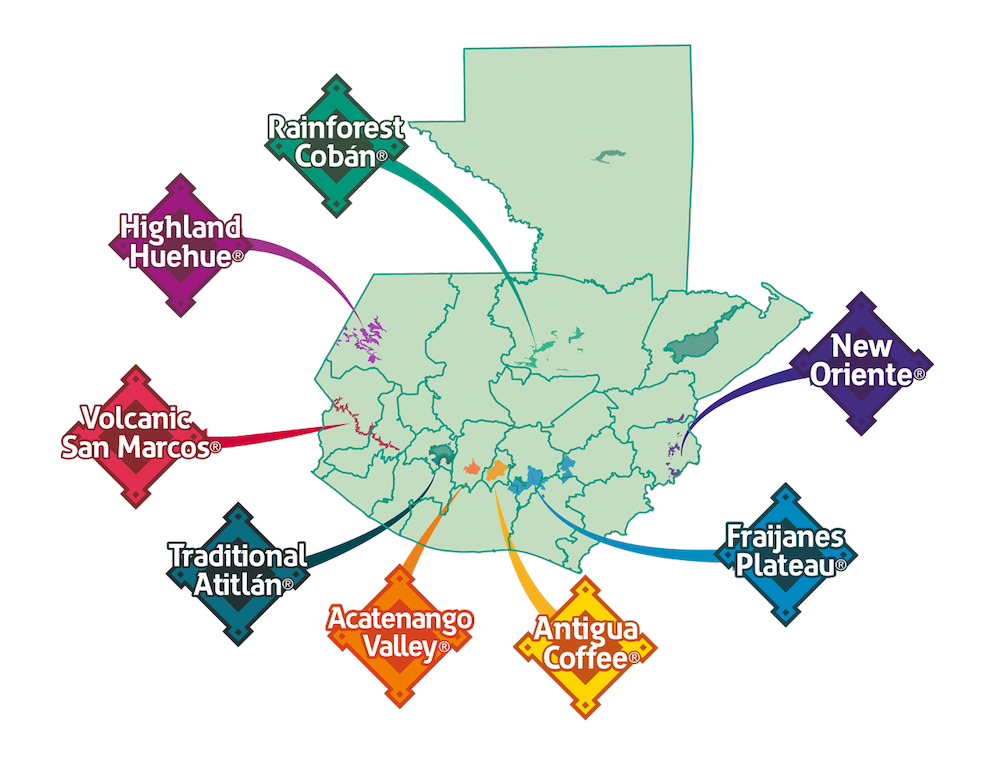
Guatemala has eight major coffee-growing regions, five of which are located in volcanic zones: Antigua, Acatenango, Atitlán Lake, San Marcos Volcano, and Fraijanes Plateau; the other three are non-volcanic: Huehuetenango, Cobán, and Nuevo Oriente. Among these eight, Antigua and Huehuetenango have historically received the most attention. In the past, Antigua coffee commanded the highest prices nationwide due to its superior quality, until the rise of the specialty coffee trend, when Huehuetenango gradually emerged and broke the previous monopoly.
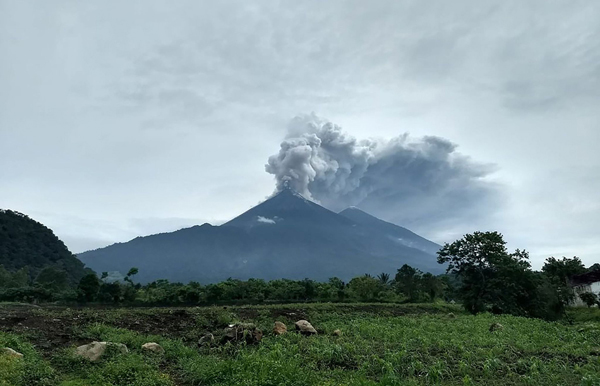
The Antigua region benefits from fertile volcanic soil, a dry climate, abundant sunshine, and cool valley breezes in the evenings, creating ideal conditions for coffee cultivation. The area is surrounded by three volcanoes—Agua, Acatenango, and Fuego—which form a unique valley landscape. Fuego occasionally erupts, spreading volcanic ash, and experiences a major eruption roughly every 30 years, replenishing the soil with rich nitrogen elements. Coupled with ample rainfall and sunlight, this results in Antigua coffee’s rich, balanced flavor with a distinctive smoky character.
Many of Antigua’s renowned coffees come from the Finca Kamachá estate, with the bourbon variety called El Pulcal being the most highly regarded. This coffee is not only of exceptional quality and complex in layers, but also known for its rich body and captivating tobacco aroma. It is considered one of the “most perfect coffee beans,” with an overall flavor profile that is deeper and more stunning compared to other Latin American coffees.
Guatemala cultivates a wide variety of coffee cultivars, primarily including Bourbon, Typica, Catuai, Caturra, as well as smaller amounts of Yellow Bourbon, Geisha, Pacamara, and newly developed Maracaturra. Different regions choose the most suitable varieties to plant based on altitude, climate, and microenvironments, further influencing the final flavor profiles.
In terms of processing methods, Guatemala mainly uses washed processing, accounting for about 45% of specialty-grade coffee, with a small portion employing natural (sun-dried) processing. Washed processing clearly highlights the basic flavor characteristics of the region and serves as an excellent starting point for understanding a coffee’s flavor profile; whereas natural processing adds more sweetness and fermentation layers on top of the washed base, delivering a distinctly different taste experience. Many consumers’ first exposure to entry-level beans often involves washed-processed options, which is why this is common.
Turning to Sumatra, the world’s sixth-largest island located in northwest Indonesia, it is the primary origin of Mandheling coffee. The island is home to over 90 volcanoes and numerous volcanic lakes, providing extremely fertile soil. Sumatra’s terrain is higher in the northwest and lower in the southeast, with the Lintong region situated in the central-northern part of the island, near Lake Toba, at an altitude of about 900 to 1200 meters—a classic Mandheling coffee-producing area. This region primarily uses semi-washed or natural (sun-dried) processing methods, cultivated by the Batak ethnic farmers. Its coffee beans are known for being plump and full-bodied, making it a significant representation of Mandheling flavors.
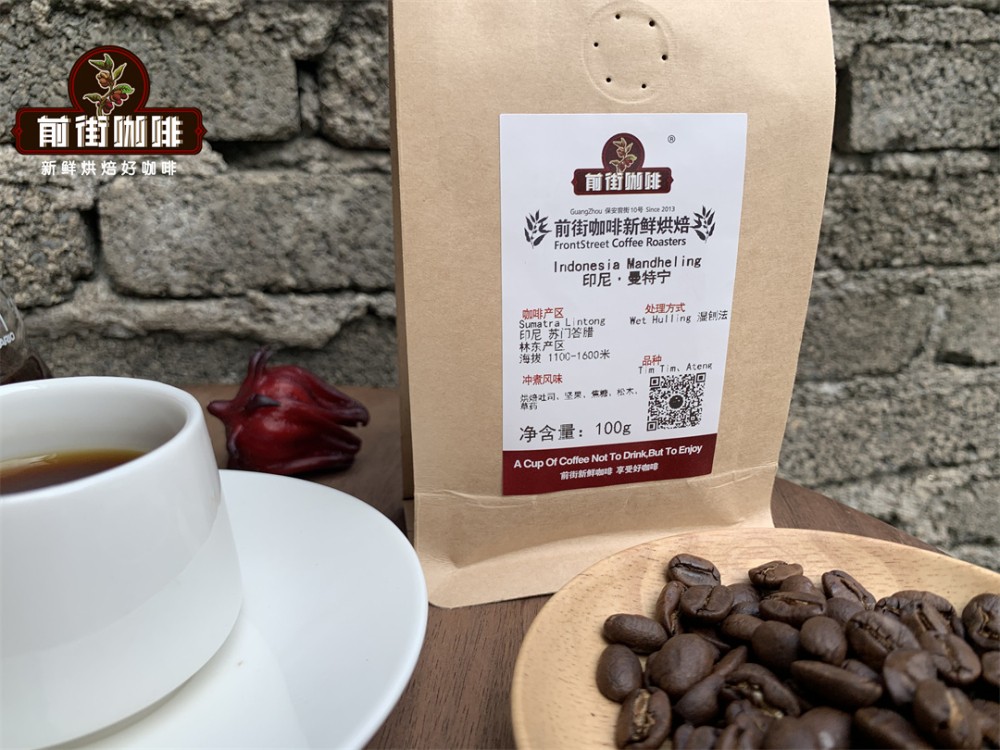
Lintong Mandheling is a common type of Sumatran Mandheling, once regarded as one of the world’s fullest-bodied coffee beans. The PWN Golden Mandheling offered here offers a cleaner, richer body, with a more pronounced sweetness and fewer of the woody or piney notes commonly found in typical Mandheling. It’s worth noting that about 90% of coffee beans exported from Indonesia are Robusta, with only 10% being Arabica. The Lintong Mandheling sold here is of the TimTim variety (i.e., a hybrid with Robusta lineage), while Golden Mandheling is labeled as Ateng (i.e., Catimor, a hybrid of Caturra and Timor). Although the names differ, they both reflect local nomenclature conventions for the varieties.
Mandheling processing primarily uses the wet-hulled (Giling Basah) method. Due to Sumatra’s consistently hot and humid climate—with insufficient sunlight for prolonged sun drying and difficulty ensuring consecutive sunny days required for washed processing—the wet-hulled method was developed locally. This not only solves the drying issue but also incidentally gives Mandheling its rich, thick, and low-acidity unique character.
In terms of roasting strategies, to highlight Mandheling’s full-bodied characteristics, roasters often opt for darker roast levels; whereas Guatemalan coffee, with its inherent notes of nuts, cocoa, and soft fruit acidity, is mostly medium-light roasted to preserve its floral and fruity aromas and bright acidity. This also means that the two require different strategies and parameter settings for extraction and pour over brewing.
For medium-dark roasted Mandheling, it’s recommended to use a KONO filter cone, which can enhance the rich body and smoothness. Suggested parameters are: water temperature 88°C, coffee dosage 15 grams, coffee-to-water ratio 1:15, grind size medium-fine (75% passing through a 20-mesh sieve in China). The KONO filter cone has fewer drainage ribs, creating an extraction effect similar to a siphon, which helps release more aromatic compounds, resulting in a rounder mouthfeel.
【Lintong Mandheling Flavor Profile】: Rich nutty tones, sweet melon aroma in the aftertaste, herbal notes emerging as it cools, with layers of complexity.
【Golden Mandheling Flavor Profile】: Dominated by nuts and dark chocolate, pronounced sweetness, a clean and soft aftertaste, with hints of spices and caramel.
As for Guatemala’s medium-light roasted coffee, it’s recommended to use a fast-flowing V60 filter cone, paired with higher water temperature and finer grind size to fully showcase its fruit acidity and aroma. Recommended parameters are: medium-fine grind (80% passing through a 20-mesh sieve), 15 grams of coffee, water temperature 91°C, coffee-to-water ratio 1:15, using a three-pour method: first blooming with 30 grams of water for 30 seconds, then pouring in small streams up to 125 grams for the first stage, followed by pouring up to 225 grams to finish, with a total extraction time of about 2 minutes. This method helps enhance the clarity of fruit acidity and overall layering.
【Guatemala Santa Eduviges (Flor de Cafe) Flavor Profile】: Berry acidity, citrus tones, mild chocolate, smooth mouthfeel with distinct layers.
Finally, a reminder: the freshness of coffee beans greatly impacts flavor. It’s recommended to choose coffee shipped within 5 days of roasting, and allow the beans to degas for 4 to 7 days upon arrival to achieve optimal flavor. If grinding is needed, it’s best to use the beans immediately after receiving them, as oxidation accelerates significantly after grinding, leading to quicker flavor loss. Therefore, for the most authentic coffee flavor, grinding whole beans and brewing immediately is always the best option.
The above content is compiled by CoffeeHunters, a coffee news website.


