







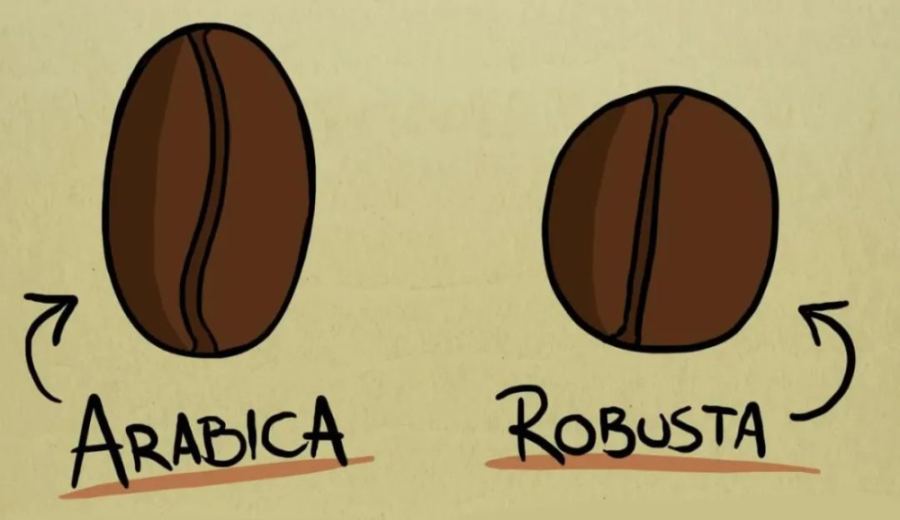
Introduction:Arabica and Robusta are the two mainstream coffee varieties in the world, commonly seen in everything from pour over to espresso. These two types of coffee beans differ greatly in flavor profile, chemical composition, and suitable brewing scenarios. A deeper understanding of their characteristics can help coffee enthusiasts choose the most suitable beans based on brewing methods, and also enable commercial baristas to make more accurate judgments when blending.
In the world of coffee, Arabica and Robusta are the two pillars, dominating different consumer markets and application scenarios. Statistics show that Arabica accounts for about 70% of global coffee production and is the preferred choice for most specialty coffee shops and pour over enthusiasts; whereas Robusta makes up about 20%, commonly found in instant coffee, canned coffee, or used as the base bean in espresso blends.
These two types of coffee beans not only differ in appearance and cultivation altitude, but also vary greatly in their internal components such as caffeine, fat, and sugar content, resulting in distinctly different flavor profiles. Arabica typically exhibits a soft, sweet tone, accompanied by bright acidity and a variety of floral and fruity aromas; in contrast, Robusta is known for its rich, full-bodied taste, featuring deep notes of nuts and grains, and exuding a strong, bold body.
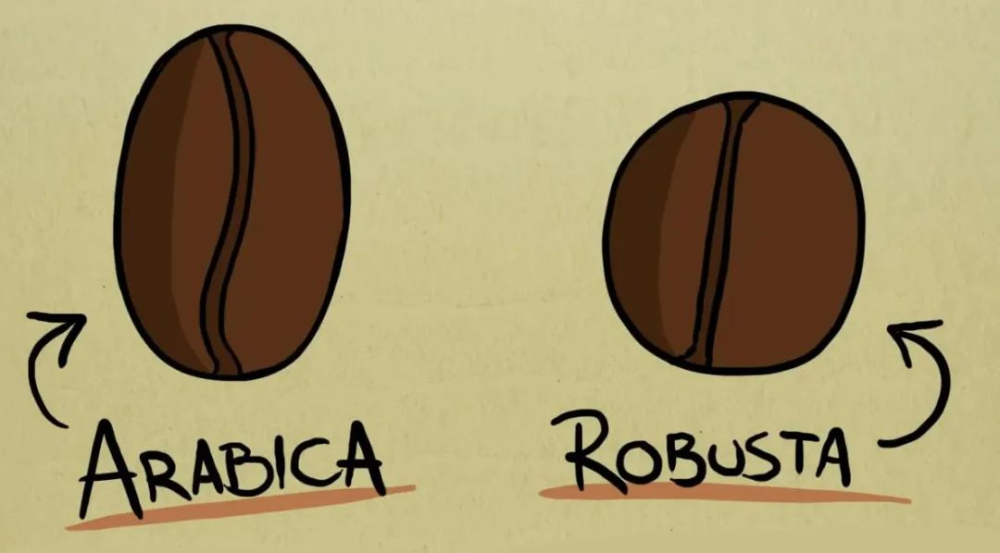
From a botanical classification perspective, there are three main species of coffee: Arabica, Robusta, and Liberica. Among them, Arabica, with its delicate flavor and more demanding growing conditions, is the most commercially significant variety globally, accounting for about 70% to 75% of total production, with notable cultivars including Typica and Bourbon. Robusta accounts for about 20% to 25%, is highly adaptable to various environments, and is mostly grown at low altitudes. It has good disease resistance but a coarser flavor. As for Liberica, it makes up only about 3%, is mainly found in parts of Asia, and holds an extremely small market share.
Analyzing from a chemical composition standpoint, Arabica has a relatively lower caffeine content, ranging between 0.9% and 1.2%, while Robusta generally exceeds 2%. At the same time, Arabica contains about 60% more fat and more than twice the sugar content of Robusta. These compositional differences directly affect the taste experience after extraction: due to its higher sugar and fat content, Arabica often delivers a sweet and fruity acidity with relatively mild bitterness; whereas Robusta, because of its high caffeine and chlorogenic acid content, tends to have a bold, slightly herbal and woody flavor, with pronounced bitterness and less prominent acidity.
In addition, chlorogenic acid is an important component that affects coffee bitterness and antioxidant properties. Robusta contains far more chlorogenic acid than Arabica, which is one of the reasons for its heavier flavor. As a result, Robusta often lacks the ethereal floral and fruity notes and delicate acidity of Arabica, but offers a more grounded profile of nuts, grains, and even chocolate tones, along with richer crema, which is particularly important for espresso.
It’s worth mentioning that Arabica has many cultivated varieties, such as Typica, Bourbon, Geisha, and Gesha, each exhibiting unique acidity, sweetness, and aroma layers due to differences in regional climate, altitude, and processing methods. To explore the classic flavor profile of Arabica, one can look out for examples like Jamaican Blue Mountain (a Typica variety) that delivers a balanced profile of nuts, cream, and chocolate, Panamanian Gesha known for its jasmine, citrus, oolong tea notes, and honeydew sweetness, or the Hana Oji (sun-dried) beans showcasing intense strawberry, berry, and tropical fruit tones.
In contrast, Robusta, due to its limited variety options and inherently bold flavors, is generally not recommended for direct pour over or drip brewing, as it can easily highlight coarse bitterness resembling barley tea, unpolished rice, or peanuts, along with flat acidity. But this does not mean Robusta lacks value—precisely because of its rich, full-bodied, and crema-rich characteristics, it becomes an indispensable part of many espresso blends, helping to enhance the body and crema performance of the coffee.
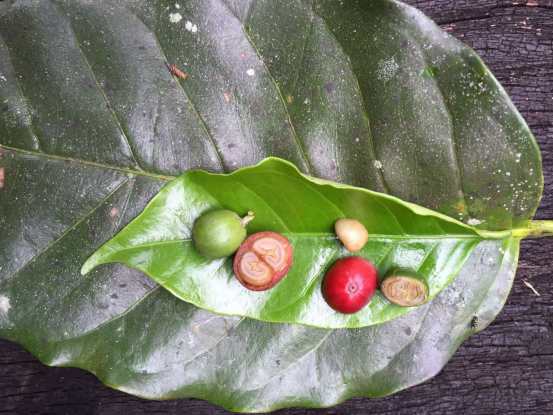
For example, a classic medium-to-dark roasted espresso blend often combines Brazilian Red Bourbon, Indonesian Mandheling, and a small amount of Vietnamese Robusta. With appropriately adjusted roast levels, it can release aromas of butter, roasted hazelnuts, caramel, and dark chocolate during espresso extraction. The taste is solid with a clean aftertaste, and when milk is added, it showcases a silky and nuanced flavor layer, making it very suitable for home moka pot or semi-automatic coffee machines.
For commercial coffee shop operators or beginner baristas, there are also specially designed blend formulas tailored for shops. These use Brazilian and Colombian beans as the base, delivering prominent nutty notes (such as almond, peanut, and apricot kernel) and chocolate aftertaste, complemented by a small amount of Robusta to adjust the crema performance. This allows even those new to espresso to easily extract a rich and crema-filled shot, meeting customers’ dual expectations for texture and taste.
The above content is compiled by CoffeeHunters, a coffee news website.


