








Introduction:Although Tanzania may not be the first choice for African coffee, its Kilimanjaro region’s high-altitude volcanic soil produces AA-grade washed Typica with notes of citrus, berries, and honey. This article delves into its growing environment, varietal characteristics, washed processing techniques, and grading standards, while also providing expert pour-over recommendations and actual flavor profiles to help you appreciate this uniquely flavored yet often overlooked specialty coffee.
In the landscape of African specialty coffee, Ethiopia and Kenya often take the spotlight, but Tanzania’s Arabica beans are equally noteworthy. The country uses the same green bean grading system as Kenya, where bean size determines the grade, andAA is the highest quality, indicating the largest bean size and the best quality. The Tanzanian Kilimanjaro AA introduced in this article comes from volcanic regions at elevations of 1,300 to 2,000 meters, using the Typica variety and washed processing method, with a clear flavor profile showcasing citrus, berries, honey, and tea-like qualities.
Tanzania’s coffee cultivation history dates back to the early 20th century, when the German colonial government promoted Arabica coffee as a cash crop, particularly around Mount Kilimanjaro. Although the country’s coffee is not as well-known as Kenya’s, its annual production is similar, reaching about 50,000 tons. The earliest Arabica seeds were introduced from Réunion Island (French territory) and successfully trial-planted in the Bayamoyo and Mogoro regions. In 1893, the plantings on the slopes of Kilimanjaro showed particularly outstanding performance, and in the 1950s, varieties from neighboring Burundi were subsequently introduced to the western regions. Currently, most of Tanzania’s coffee-growing areas are located at high altitudes, accounting for 75% of the nation’s total planting area, with wild coffee resources also still present.
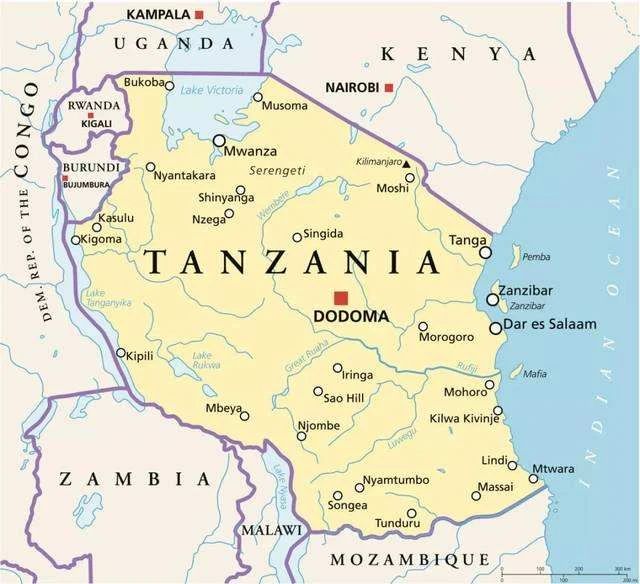
The Kilimanjaro region is one of Tanzania’s most important coffee sources and also the country’s highest volcano. Coffee-growing areas are mainly concentrated on mountain slopes at elevations of 1,300 to 2,000 meters, where the volcanic soil is fertile and rich in minerals, providing an ideal growing environment for Arabica coffee. The high altitude not only extends the ripening time of the coffee cherries but also aids in the accumulation of flavor compounds, resulting in the unique flavor of this AA-grade coffee.
The main Arabica varieties grown in Tanzania include Bourbon and Typica, with Typica being the variety featured in this article—Kilimanjaro AA. Typica is one of the most important varieties in the global Arabica genetic lineage. It has tall plants but low yields and is susceptible to diseases, so it is mostly found in high-altitude regions. In contrast, the Bourbon variety has wider leaves, denser growth, and yields about 30% more than Typica. Its beans are slightly rounder and shorter, with pronounced berry acidity, creamy texture, and outstanding aroma, though it also has weaker disease resistance. Bourbon was first introduced to the Kilimanjaro region of Tanzania by Catholic missionaries in 1898, followed by the Kent variety in the 1920s, which became one of the country’s main varieties.
This Tanzanian AA coffee is processed using the washed method, which is also the most commonly used processing technique by local farmers. Washed processing highlights the coffee’s bright and clean characteristics, resulting in a cleaner and more layered flavor. The processing steps include: first removing impurities, then stripping the pulp and outer skin, followed by placing the mucilage-covered coffee beans in a fermentation tank for 18 to 36 hours to remove the parchment layer, and finally washing and drying them. This method effectively reduces interference from impurities and undesirable flavors, making the coffee’s intrinsic flavors purer.
Tanzania’s coffee bean grading standards are the same as Kenya’s, both based on the size of the green beans passing through sieves—the higher the sieve number, the larger the bean size. Among them,AA grade has a sieve size of 17–18 mesh (approximately 7.20 mm), which is the highest grade; AB grade is 15–16 mesh (6.8 mm–6.2 mm); PB grade consists of beans that are nearly round in shape, accounting for about 10% of total production; C grade is smaller, with a sieve size of 12–14 mesh (4.8 mm–5.6 mm). The Tanzanian Kilimanjaro AA introduced in this article is the country’s highest-grade coffee bean, with large, high-quality beans.
For this Tanzanian AA coffee, it is recommended to use a V60 cone dripper for pour-over. The V60’s wide mouth and spiral ribs facilitate airflow, improving extraction efficiency. Although the body may not be as heavy, it can fully showcase the acidic sweetness and aromatic qualities of Kilimanjaro coffee. Recommended parameters are as follows: water temperature is90-91°C, grind size isfine sugar-sized (approximately 20-mesh sieve, sifted to 80%), brew ratio is1:15, coffee dosage is15 grams. The pour-over method uses a pulse pouring technique: start with 30 grams of water for a 30-second bloom, then slowly pour in a circular motion until reaching 125 grams and pause, wait for the water level to drop, then continue pouring until reaching 225 grams to finish. Total extraction time is approximately2 minutes and 03 seconds (including bloom). The actual flavor profile features berry aromas, a gentle citrus acidity upon entry, a nutty mid-palate, and a honey-like sweet aftertaste.
The above content is compiled by CoffeeHunters, a coffee news website.


