







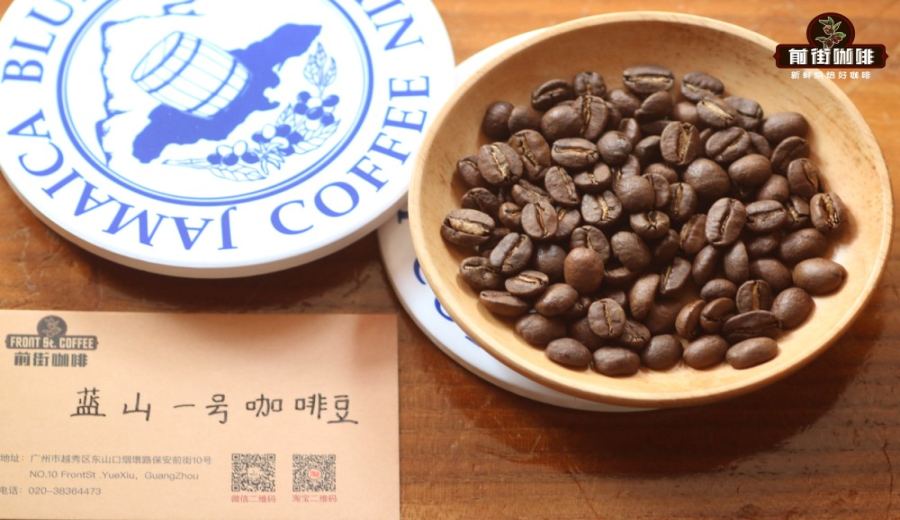
Introduction:Jamaican Blue Mountain No. 1 coffee is renowned as one of the world’s premier specialty coffees, celebrated for its delicate, balanced flavor profile and rarity. This article delves into the region’s history, rigorous grading system, cultivation environment, processing methods, and offers practical pour over parameters along with a flavor comparison between two processing methods—natural and washed—to help you better understand the unique charm of this legendary coffee.
As a representative of global specialty coffee, Jamaican Blue Mountain coffee is highly esteemed by coffee enthusiasts for its smooth, rich mouthfeel and distinctive aroma. Among them, Jamaican Blue Mountain No. 1 stands out even more, with its scarce production and exceptional quality making it a coveted choice for many coffee collectors. This article will provide a detailed introduction to the origin background, grading standards, growing conditions, and processing methods of Blue Mountain No. 1. Drawing from real pour over experiences, it also offers brewing recommendations and flavor analysis, allowing you to gain a more comprehensive understanding of this legendary-grade coffee.
The story of Blue Mountain coffee dates back to the early 18th century. In 1717, King Louis XV of France ordered the introduction of coffee cultivation to Jamaica. Then, in the mid-1720s, Sir Nicholas Lawes, then Governor of Jamaica, introduced Arabica seeds from Martinique and promoted their cultivation in the Saint Andrew area. To this day, Saint Andrew remains one of the main producing regions of Blue Mountain coffee, with the other two major regions being Portland and Saint Thomas. In the 1930s, Blue Mountain coffee exports once exceeded 15,000 tons, showcasing its former production scale. In 1950, the Jamaican government established the Coffee Industry Board to oversee quality control and issue official certification stamps, ensuring high standards for exported coffee. Currently, there are six official insignias that represent the authentic identity of the Blue Mountain region, each originating from historic coffee estates and associations.
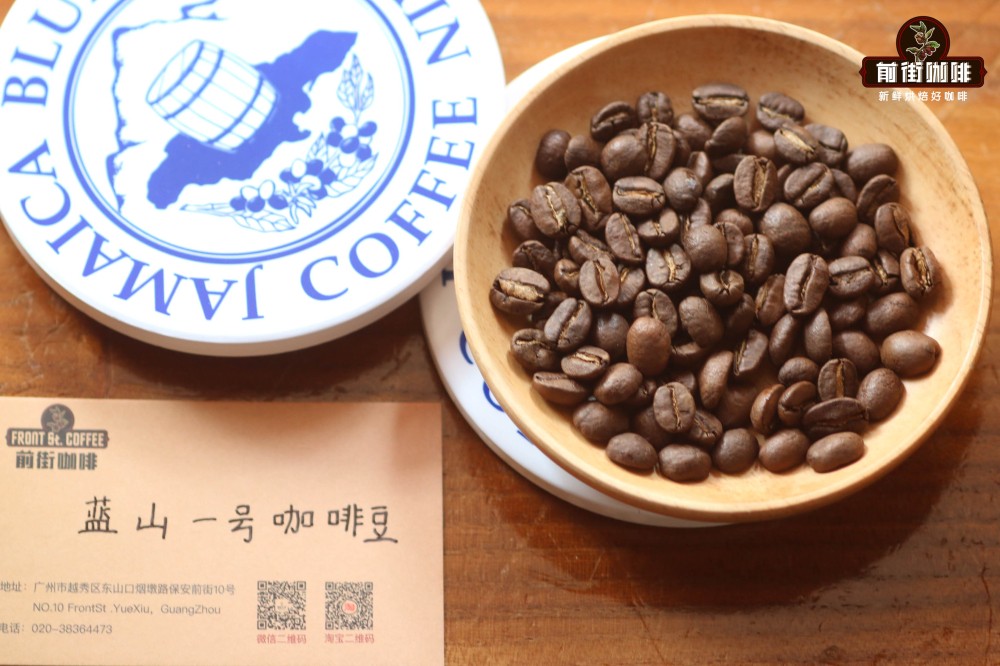
In 1981, the Jamaican government further expanded coffee cultivation by opening up over 7,500 hectares of new coffee farms. However, the actual area of the Blue Mountain growing region is only about 6,000 hectares, with the rest of the land primarily used for cultivating other high-altitude coffee varieties. As a result, not all products labeled as "Blue Mountain" on the market necessarily come from the core Blue Mountain area, so consumers should pay special attention to origin information and certification labels when purchasing. Additionally, since 2009, Japan no longer holds exclusive first-right-of-refusal for Blue Mountain coffee, enabling more genuine beans to enter international markets including China, giving consumers a higher chance to taste authentic Blue Mountain No. 1 coffee.
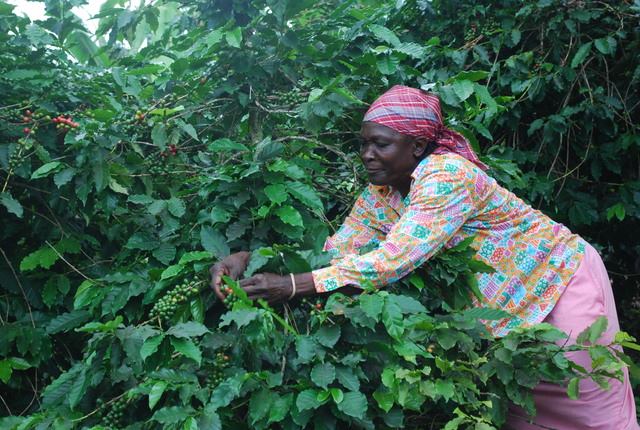
The unique flavors of Blue Mountain coffee are inseparable from its exceptionally favorable growing environment. The Blue Mountains are located in eastern Jamaica, within the coffee belt around 15 degrees north latitude, and are surrounded by the Caribbean Sea year-round. The mountains reflect a bluish hue under sunlight, hence the name "Blue Mountain." This region not only features fertile volcanic soil but also enjoys a warm and humid climate, with an average annual temperature of about 27°C, annual rainfall reaching up to 1980 millimeters, and constant cloud cover, providing ideal growing conditions for coffee trees.The Blue Mountain coffee harvest season lasts from June to November.During this time, female workers familiar with the local terrain hand-pick ripe coffee cherries on steep slopes, ensuring that only fruits at optimal ripeness are harvested—an essential step in maintaining the high quality of Blue Mountain coffee.
It is worth mentioning that Jamaica is one of the few regions in the world that still uses wooden barrels to ship green beans. Compared to the jute sacks commonly used elsewhere, wooden barrels better protect the beans, reducing impacts and absorption of foreign odors.Authentic Blue Mountain green beans are packed in wooden barrels stamped with the name of the Clayton Estate and the green "Rainforest Alliance Certified" frog logo.This serves as one of the key identifiers of genuine product. The Blue Mountain No. 1 green beans from this region come precisely from the Clayton Estate, whose rigorous environmental measures—including the use of solar energy and wastewater recycling systems—also reflect the sustainable farming philosophy of the coffee.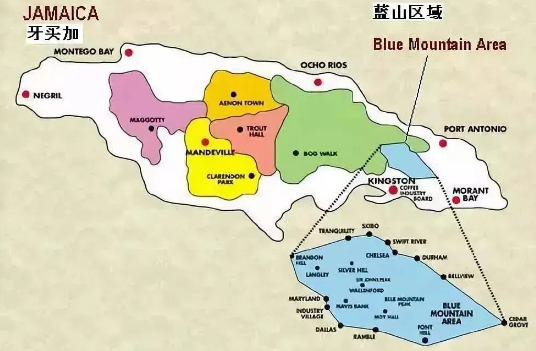
Blue Mountain coffee is strictly graded based on cultivation altitude and bean size. It is mainly divided into three categories: Jamaican Blue Mountain coffee, Jamaican High Mountain coffee, and regular Jamaican coffee. Among them,Jamaican Blue Mountain coffee is limited to beans grown at altitudes between 1000 and 1700 meters.It is categorized by quality into NO.1, NO.2, NO.3, and peaberry (PB). NO.1 is the highest grade, featuring large beans with a defect rate below 2%, selecting only 17/18 screen size; NO.2 and NO.3 are 16/17 and 15/16 screen sizes respectively; peaberry (Peaberry) is 10MS size, also with a defect rate requirement below 2%. Blue Mountain No. 1 belongs to the NO.1 grade and is globally recognized as a top-tier coffee, with a rich aroma and well-balanced acidity, sweetness, and bitterness, also commanding the highest price among the Blue Mountain series.
Jamaican Blue Mountain coffee belongs to the Typica variety, one of the oldest and finest Arabica types. Typica boasts a unique pure dark chocolate flavor, rather than the common milk chocolate tone found in commercial markets, a trait that stems directly from its pure lineage. Typica trees are tall, often exhibiting reddish-copper-colored top leaves, hence also referred to as "red-top coffee." Although this variety has weak disease resistance, it adapts well under Jamaica’s unique island microclimate, especially showing stronger resistance to common coffee berry diseases, helping Blue Mountain maintain consistently stable cultivation quality.
In terms of processing methods, Blue Mountain coffee initially only used the washed process until a small number of natural process experimental batches emerged in 2019. The washed process highlights the intrinsic flavor of the coffee more clearly, with bright and layered acidity; whereas the natural process imparts richer fruitiness and fermentation notes, resulting in a creamier and sweeter mouthfeel. Practical testing of both methods shows that washed Blue Mountain reveals intense dark chocolate and creamy smooth textures, with an elegantly balanced acidity, sweetness, and bitterness; natural Blue Mountain carries slight berry acidity and fermentation aromas, with a pronounced sweet aftertaste, making it suitable for drinkers who prefer a fuller-bodied cup.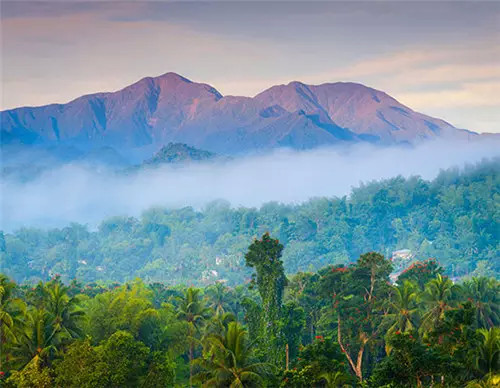
To brew high-quality Blue Mountain coffee at home, it is recommended to use freshly roasted green beans and pay attention to storage conditions to preserve flavor. Generally, it is advised to use the beans within 5 days post-roast and allow a 4–7 day resting period to achieve optimal flavor. When brewing,it is suggested to use a 1:15 coffee-to-water ratio, with a grind size passing through a 20-mesh sieve at 75%, and water temperature controlled around 88°C.For filter type, the KONO dripper is preferable due to its slower flow rate, which reduces the risk of over-extraction—especially suitable for medium to dark roasted Blue Mountain coffee. In practice, start with a 30-second bloom using 30 grams of water, then pour in a circular motion until reaching 125 grams before pausing. After the liquid level drops, continue pouring to 225 grams to complete extraction, with a total brew time of about 2 minutes, fully highlighting the rich and refined flavors of Blue Mountain coffee.
Overall, Jamaican Blue Mountain No. 1 coffee demonstrates its status as a top-tier specialty coffee in terms of origin, quality control, and flavor performance. Whether you prefer the crisp balance of the washed process or the rich intensity of the natural process, Blue Mountain offers an ultimate taste experience. If you wish to explore more diversity in coffee flavors, consider trying specialty beans from other regions to experience the unique characteristics shaped by different terroirs.
The above content is compiled by CoffeeHunters, a coffee news website.


