







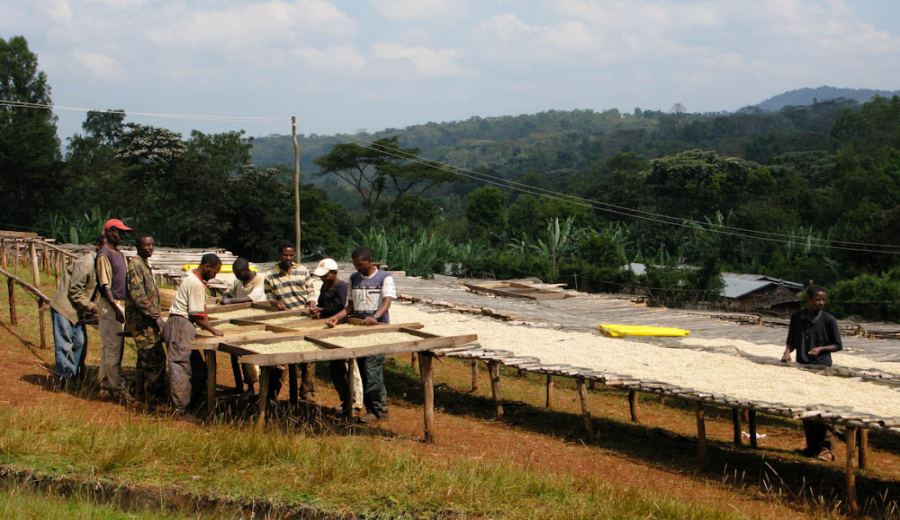
Introduction:Yirgacheffe is the most representative specialty coffee region in Ethiopia, renowned for its washed beans that exhibit bright floral and citrus notes. This article explores the regional divisions, delves into the differences between the Kochere and Gedeb sub-regions, and highlights the founding background and operational model of the Gotiti Cooperative. It also provides a detailed breakdown of the key steps in the washed processing method, explaining how it contributes to the coffee's clarity and unique mouthfeel—making this a comprehensive guide to understanding Yirgacheffe’s flavor profile and processing techniques.
Yirgacheffe, a well-known specialty coffee region in southern Ethiopia, is famed worldwide for producing beans with distinct floral, citrus, and tea-like characteristics. Compared to the traditional natural sun-dried processing method, washed Yirgacheffe has gained popularity among many coffee enthusiasts as an entry point into specialty coffee, thanks to its higher clarity and more balanced acidity and sweetness.
This article will take you through the sub-region breakdown, introducing the geographical and flavor characteristics of two important sub-regions—Kochere and Gedeb—and focusing on the Gotiti Cooperative located in Gedeb town. We’ll explore its founding reasons, farming practices, and annual production scale. Additionally, we will detail each step of the washed processing, analyzing how it contributes to the clean taste and distinctive tea-like notes of Gotiti coffee beans.
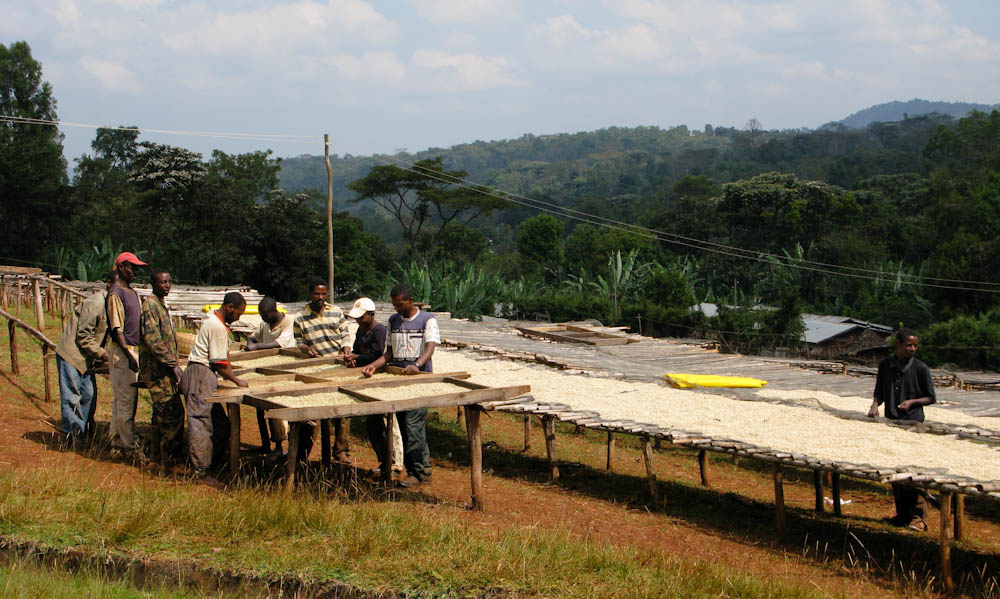
Ethiopia is regarded as one of the birthplaces of coffee, and Yirgacheffe is a flagship representative of the country’s specialty offerings. In earlier years, the region predominantly used the traditional natural sun-dried method to process coffee beans. While this approach delivered intense fruity aromas, the often crude processing led to a higher proportion of defective beans, affecting overall quality consistency. Later, the introduction of washed processing techniques from Central and South America—featuring more refined steps such as pulping, fermentation, washing, and drying—significantly improved the cleanliness and clarity of the green beans. This also accentuated the citrus and floral characteristics of Yirgacheffe washed beans.
Many of the well-known Yirgacheffe coffee beans on the market today are celebrated for their fruity and vibrant profiles, making them ideal for pour over brewing. Their extraction parameters are relatively flexible, allowing for nuanced flavor expression. For beginners looking to explore the world of specialty coffee, Yirgacheffe washed beans are an excellent starting choice.
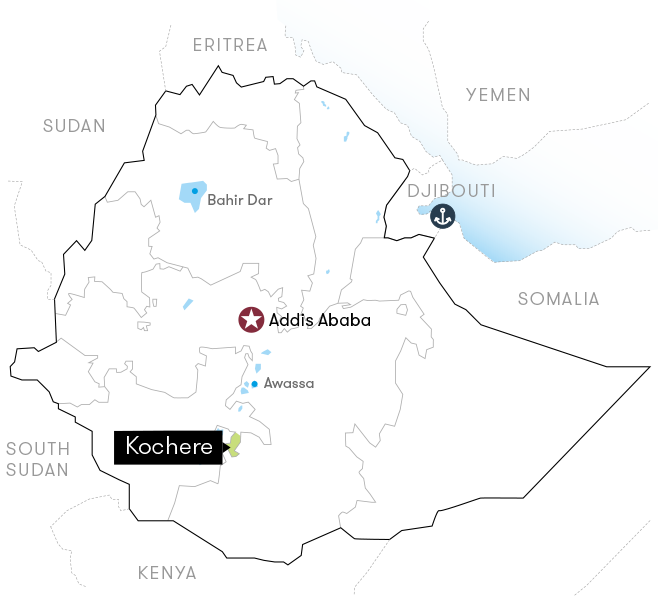
Approximately 25 kilometers southeast of Yirgacheffe lies the small sub-region of Kochere. Its altitude and microclimate conditions often result in coffee with brighter lemon aromas and a refreshing sweet-and-sour profile, along with a relatively smooth mouthfeel. Kochere is seen as a quintessential representation of classic Yirgacheffe flavors. Meanwhile, Gedeb town, located about 60 kilometers southeast of Yirgacheffe, was historically grouped under the Kochere region in administrative and commodity exchange classifications. However, with the specialty coffee industry’s increasing emphasis on traceability, Gedeb has gradually been recognized as a distinct and officially acknowledged sub-region.
Gedeb’s average altitude ranges between 1,900 and 2,200 meters. The higher elevation slows down the ripening process of coffee cherries, aiding in the accumulation of flavor compounds and resulting in a richer and more complex taste profile. The Gotiti Cooperative is situated in Gedeb town and is formed by over 300 smallholder farmers. These farmers were originally part of the Wolkite Cooperative under the Yirgacheffe Coffee Farmers Cooperative Union (YCFCU), but chose to establish their own independent cooperative in pursuit of better realizing their coffee’s potential and directly engaging with the market.
The Gotiti Cooperative’s processing facility is named after the local village of Banko Gotiti, commonly referred to as Gotiti. In Ethiopia, the emergence of many small coffee regions can be attributed not only to their unique geography and microclimates but also to the specialty coffee market’s demand for transparent supply chains “from origin to cup.” By forming cooperatives, farmers can pool resources to build professional processing facilities, enhance quality control capabilities, reduce reliance on intermediaries, and negotiate directly with exporters to secure more equitable compensation.
After coffee cherries are harvested, they undergo a series of processing steps to remove the skin and pulp, leaving only the inner green beans. This process is typically carried out at processing facilities, but due to the high cost of setting up processing equipment, many individual smallholder farmers find it difficult to bear the expense alone. As a result, farmers in the same area often jointly invest in building processing plants, such as the Gotiti Processing Plant. This not only reduces individual burdens but also improves processing efficiency and flavor consistency.
The Gotiti Cooperative employs a garden coffee farming model, where farmers grow coffee trees sporadically in their backyards or farmland and send the harvested cherries to nearby processing facilities for unified processing. Currently, the cooperative manages approximately 760 hectares of planted area, with each member averaging around 2 hectares of coffee gardens. The annual production is about 460 tons, representing a small-to-medium-scale yet consistently high-quality production unit.
It’s worth noting that Ethiopia boasts an extraordinarily rich coffee gene pool, with tens of thousands of coffee varieties cultivated locally, most of which remain uncategorized commercially. As a result, many are generically referred to as “Heirloom” (native varieties). The coffee beans of the Gotiti Cooperative also fall into this category. However, as no chemical fertilizers are used throughout the cultivation process, the beans have obtained EU organic certification, further enhancing their market value and consumer confidence.
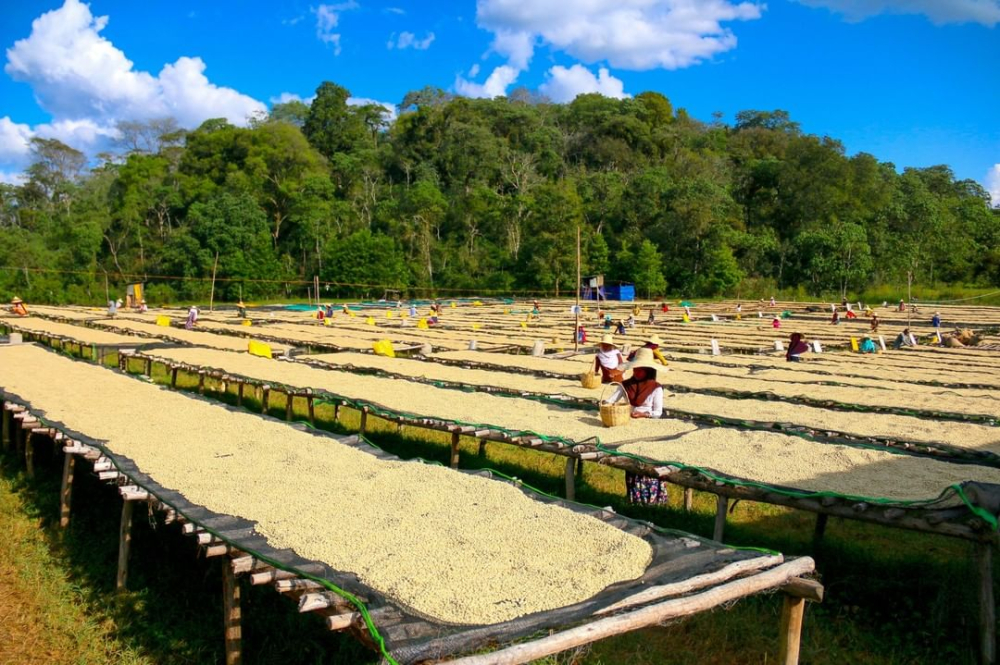
The Gotiti Cooperative has extensive experience in washed processing, with its processing methods refined over time to effectively enhance the coffee’s clarity and flavor characteristics. The typical washed processing steps include: first, floating the harvested coffee cherries to remove underripe or defective beans with insufficient density; then using a pulper to remove the outer skin and pulp; subsequently soaking the beans, which still retain some mucilage, in water for about 24 hours of fermentation to break down residual mucilage; after fermentation, the beans are washed again to remove all slippery substances; finally, the beans are evenly spread on drying beds to dry until their moisture content drops to around 12%, after which the parchment layer is removed, completing the entire washed processing procedure.
This processing method gives Gotiti coffee beans exceptional clarity, with a well-defined and uncluttered flavor profile. The acidity is bright and layered, accompanied by a silky mouthfeel reminiscent of oolong tea and a clean, elegant aftertaste. This makes it especially suitable for coffee drinkers who prefer less bitterness or enjoy fresh, vibrant flavor profiles. For beginners, these expressive and approachable flavors make it an ideal bean for practicing pour over techniques and exploring extraction parameters.
The above content is compiled by CoffeeHunters, a coffee news website.


