







Introduction:Geisha coffee is hailed as the pinnacle of the coffee world, renowned for its unique floral and fruity flavor profile, and has repeatedly taken top honors in international competitions. This article delves into the journey of Geisha from its Ethiopian origins to its rise in Panama, analyzes the reasons behind its scarce production and classic flavor characteristics, and provides a detailed comparison of the two major grade distinctions: Red Label and Green Label. It also offers professional pour over recommendations and practical parameters, allowing you to brew a Geisha experience close to auction-grade quality at home.
In the world of specialty coffee, Geisha is undoubtedly one of the most celebrated and attention-grabbing coffee varieties. Originating from Ethiopia, this coffee captivates countless coffee judges and enthusiasts worldwide with its elegant white floral notes, bright citrus tones, and honey-like finish. Especially at Panama’s Hacienda Esmeralda, Geisha has demonstrated unprecedented depth of flavor, becoming a top contender in the auction market. What exactly makes Geisha so precious? How are its unique aromas and acidity formed? This article will take you on a complete journey through the legendary story of Geisha.
The story of Geisha began in 1931, when researchers discovered this unique variety in the Kaffa Forest in southern Ethiopia while searching for coffee tree species with strong disease resistance. Because it was found near Geisha Mountain, it was named Geisha. Subsequently, the variety was sent to Kenya, Uganda, and Tanzania for trial planting, and it wasn’t until 1953 that it was registered as the T2722 variety at CATIE, the Tropical Agricultural Research and Higher Education Center in Costa Rica. However, due to its fragile tree structure, low yield, and demanding environmental requirements, Geisha long failed to gain favor among farmers and was cultivated only on a small scale.
It wasn’t until the 1960s, when CATIE introduced the T2722 variety to Panama, that Geisha gradually found the fertile ground suited to its growth. By the 1990s, the Peterson family, founders of Hacienda Esmeralda, took over a new high-altitude farm—Jaramillo. At the time, many coffee trees on the farm were infected with leaf rust, but surprisingly, the Geisha trees exhibited exceptional disease resistance. This prompted the farm to separate Geisha from the mixed planting areas and gradually increase its cultivation altitude, laying the foundation for subsequent breakthroughs in quality.
The turning point came in 2003, when the Peterson family first seriously cupped this batch of high-altitude grown Geisha and were amazed by its intense floral aroma and crisp acidity. During that cupping session, Geisha displayed rich white floral notes, a clean mouthfeel, and bright citrus and bergamot undertones, presenting a distinctive fruity and floral character. The following year, this coffee, entered into the Best of Panama (BOP) competition under the name “Geisha,” became an instant sensation, sparking a global craze for Geisha within the specialty coffee community.
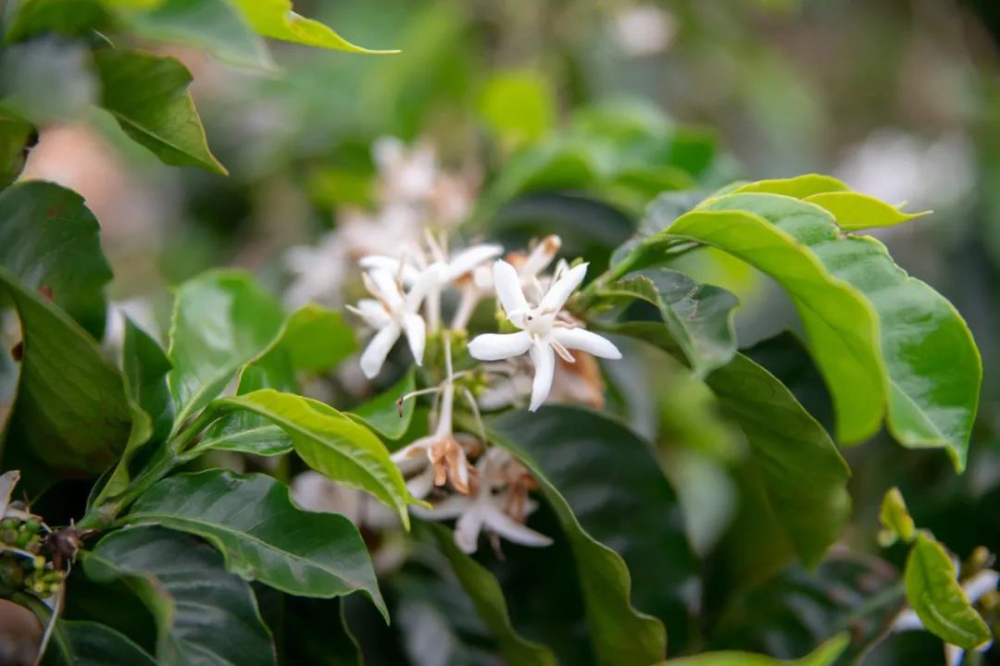
The reason Geisha is so expensive lies not only in its unique flavor but also in its extremely low yield. Compared to common varieties like Caturra or Castillo, Geisha produces less than half the yield and has far more stringent growing environment requirements. It needs high altitudes, fertile and well-aerated soil, and thrives in environments with cloud cover rather than direct exposure to intense sunlight. Additionally, Geisha has thinner leaves, resulting in lower photosynthesis efficiency, along with fragile roots that lead to slow absorption of water and nutrients, causing its overall yield to be much lower than other mainstream varieties.
Considering Panama’s national annual coffee production of about 10,000 tons, Hacienda Esmeralda, as the main producing region of Geisha, manages to produce only about 150 bags of green beans per year, equivalent to roughly 9,000 kilograms, of which the Geisha variety accounts for about 3%—or just around 270 kilograms. Such a scarce supply, coupled with the high demand in the global specialty coffee market, naturally drives up its market price. Moreover, continuous media coverage and competition exposure have made Geisha the “holy grail” in the hearts of many coffee enthusiasts.
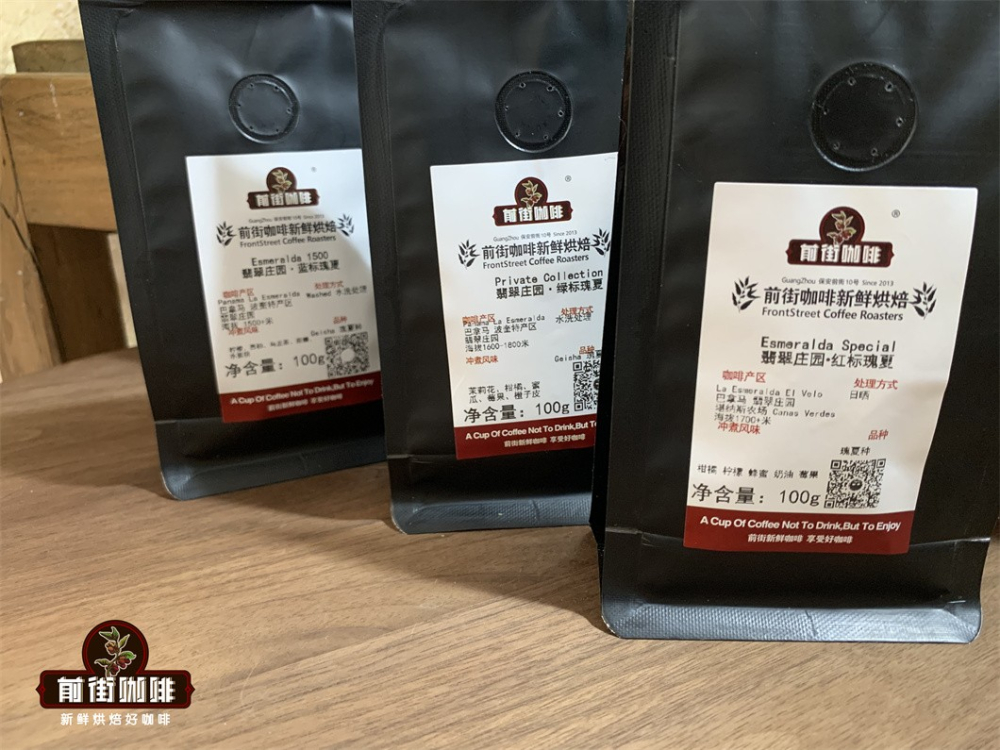
At Hacienda Esmeralda, Geisha is divided into two main categories—Red Label and Green Label—based on origin, processing method, and grade, offering different levels of tasting experiences. Among them, Red Label Geisha is the highest grade, also known as “ESMERALDA SPECIAL,” typically sourced from specific lots within auction batches, such as the famous Mario lot in the Jaramillo farm. These coffee beans are grown at altitudes between 1,600 and 1,800 meters, and their cupping scores generally exceed 90 points. Not only are the flavors intense, but they also boast exceptional purity and complexity. Red Label Geisha is usually processed using the natural (sun-dried) method, enhancing its sweetness and fruitiness.
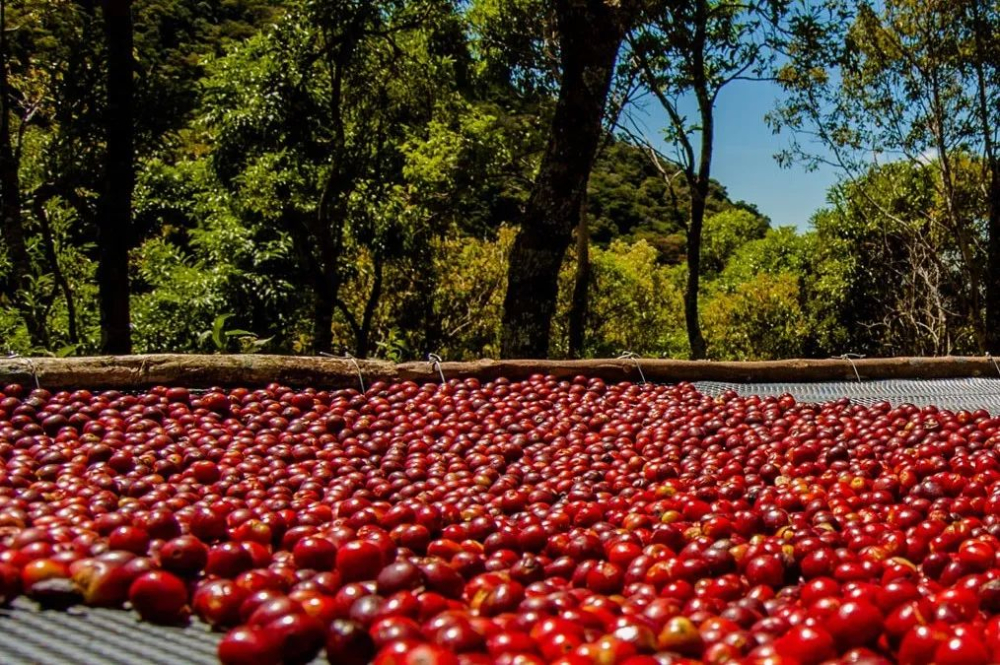
Green Label Geisha, on the other hand, belongs to the high-altitude micro-lot category. Though not part of the auction, it still delivers outstanding quality. This type of Geisha is also grown at high altitudes between 1,600 and 1,800 meters, mainly from farms such as Jaramillo and Cañas Verdes, though not from specific designated lots. The processing method is mostly washed, and the flavor profile is relatively refreshing, often featuring bright citrus, berry, and pomelo acidity, along with delicate Tieguanyin tea notes, making it suitable for drinkers who prefer nuanced acidity and a clean finish.
To brew a Geisha at home that approaches auction-grade quality, it is recommended to use beans roasted to a medium-light level and employ precise extraction parameters to highlight its acidity and aromatic layers. It is suggested to use a Hario V60 dripper with the following professional pour over settings: water temperature controlled at 91–92°C, coffee dosage of about 15 grams, a coffee-to-water ratio of 1:16, total water volume of 240 grams, and a grind size similar to fine sugar (approximately 80% passing through a #20 sieve). Use a three-stage pouring method: the first pour involves 30 grams of water for a 30-second bloom; the second pour adds 120 grams of water to expand the coffee bed and ensure even extraction; the third pour adds another 90 grams of water with a thin stream in small circles to avoid over-extraction. The total extraction time is about 2 minutes and 10 seconds, fully showcasing Geisha’s floral and fruity aromas along with its rich mouthfeel.
Red Label Geisha, even after grinding, emits a rich aroma of roses and citrus. Upon tasting, it presents sweet notes of mango and tropical fruits, with a silky-smooth mouthfeel. The acidity is bright yet not overly sharp, delivering an experience akin to a refined floral and fruit tea. In contrast, Green Label Geisha showcases a more refreshing acidity of lemon and berries, complemented by subtle Tieguanyin tea notes and honey-like sweetness, with a clean and long-lasting aftertaste—ideal for those who prefer a crisp taste profile. No matter which grade you choose, Geisha offers a sensory experience that far surpasses that of ordinary coffee.
The above content is compiled by CoffeeHunters, a coffee news website.


