







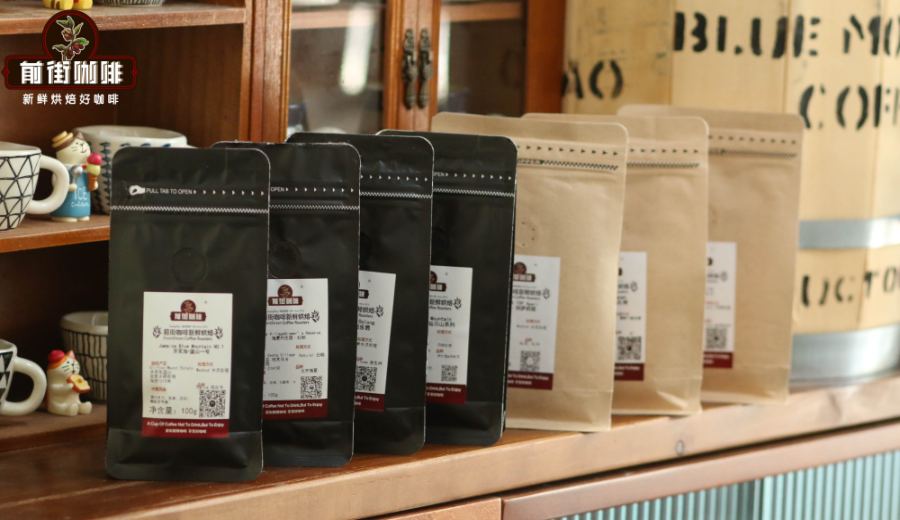
Introduction:Jamaican Blue Mountain coffee has long been regarded as the pinnacle of specialty coffee, yet its grading and pricing often leave consumers puzzled. This article will provide a detailed overview of the Blue Mountain growing region, its historical evolution, and grading criteria, while offering an in-depth interpretation of the grade and pricing logic of Blue Mountain No. 1. It also includes practical brewing parameters and flavor experiences to help you truly appreciate the unique charm of this legendary coffee.
In the world of specialty coffee, Jamaican Blue Mountain is undoubtedly a classic among classics. Even today, with coffee shops on every corner, it remains an irreplaceable presence in the hearts of many coffee enthusiasts. This article will take you through a systematic exploration of the Jamaican Blue Mountain coffee from aspects such as regional geography, planting history, green bean processing, and grading system, focusing on the grade classification and pricing level of Blue Mountain No. 1, and complementing it with actual brewing parameters and flavor profiles to give you a comprehensive grasp of the essence of this top-tier coffee.
Jamaican Blue Mountain coffee is grown in the Blue Mountains, a mountainous region spanning four main administrative areas: St. Andrew, St. Thomas, St. Mary, and Portland. Among them, St. Andrew was the first area to start coffee cultivation, with a history that dates back to the mid-1720s. At that time, Arabica varieties were introduced by the then Governor of Jamaica, Nicholas, and gradually took root locally. Due to the rugged terrain, the yield of Blue Mountain coffee has always been scarce, and the local government is committed to improving quality rather than expanding production, making each Blue Mountain coffee bean even more precious.
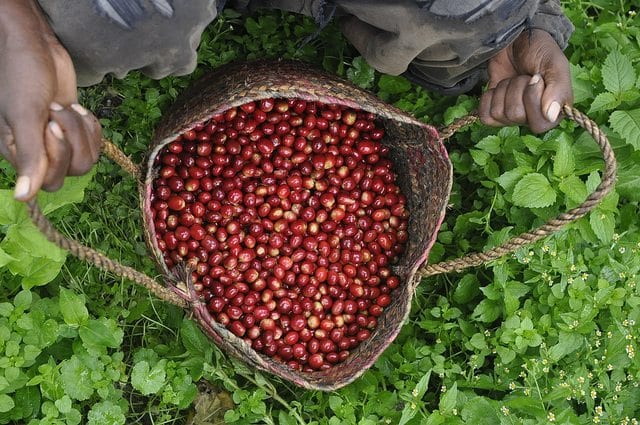
In 1948, the Jamaican government established the Coffee Industry Board (CIB), which began to implement rigorous grading and quality control systems for Blue Mountain coffee, ensuring that only coffee meeting specific standards could be labeled as “Blue Mountain.” Blue Mountain coffee primarily uses the ancient and elegantly flavored Typica variety, which, although susceptible to disease and low-yielding, can exhibit exceptional flavor potential in high-altitude environments. However, due to the steep terrain, harvesting is challenging and relies on skilled labor to handpick each ripe red cherry, further enhancing its rarity.
In terms of green bean processing, Jamaica adheres to the traditional washed method. This method effectively removes defective beans, resulting in a cleaner and brighter coffee flavor. After harvest, the coffee cherries undergo floatation to remove unripe or overripe beans, followed by removal of the pulp and skin, then a 12 to 18-hour fermentation process. They are then rinsed with clean water until the surface is smooth, and finally dried in the sun to achieve a moisture content of about 12–14%. The entire process is meticulous, contributing to the balanced and layered taste of Blue Mountain coffee.
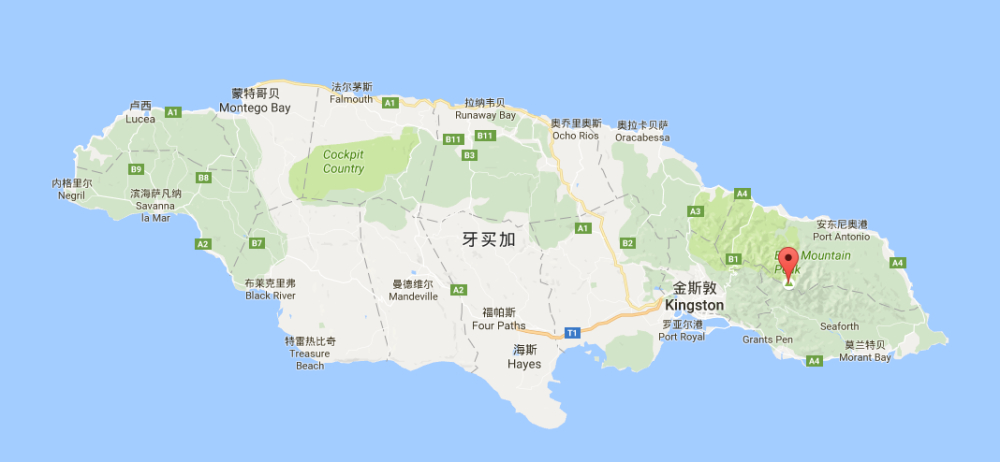
Regarding the grading of Blue Mountain coffee, it’s essential first to understand its regional limitations. As the Jamaican government has designated altitudes above 1,700 meters as a nature reserve, coffee can only be cultivated below 1,700 meters. According to CIB regulations, only Typica variety coffee grown between 910 and 1,700 meters can be called “Jamaica Blue Mountain coffee”; those grown between 460 and 910 meters are classified as “Jamaica High Mountain coffee”; and those below 460 meters are considered “Jamaica Prime coffee.” Therefore, Blue Mountain coffee does not refer to all coffee produced in the Blue Mountains, but only to coffee that meets altitude requirements and passes strict quality checks.
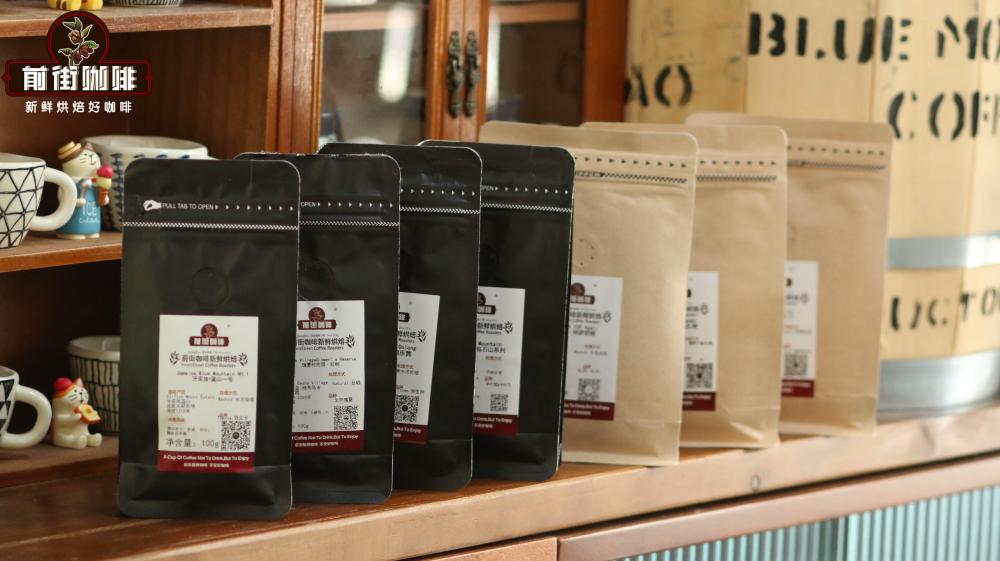
Blue Mountain coffee is further subdivided into four grades based on altitude, defect rate, and bean size: No. 1, No. 2, No. 3, and PB (Peaberry, or pea berry). Among them,Blue Mountain No. 1 (No. 1) is the highest grade,requiring green beans with a screen size of 17 or above and a defect rate below 3%. A well-known roaster offers Blue Mountain No. 1 that meets this high-standard grade. These green beans are typically shipped in exclusive wooden barrels, with barrel sizes of 70 kg, 30 kg, and 15 kg. The barrels are printed with the words “Jamaica Blue Mountain Coffee,” the name of the producing estate, and the green frog logo representing Rainforest Alliance certification—one of the key features for identifying authentic Blue Mountain coffee. In addition, each batch of Blue Mountain No. 1 comes with a certificate of authenticity issued by the Jamaica Coffee Board.
When it comes to price, Blue Mountain No. 1 has always belonged to the high-end market. In earlier years, due to a long-term contract between Japan’s UCC Ueshima Coffee Company and Jamaica, which secured 80% of the high-quality quota of Blue Mountain coffee, the product was primarily supplied to the Japanese market, resulting in limited international circulation and persistently high prices. Even after the contract ended, the rarity and high quality of Blue Mountain coffee have kept its price at a premium. Currently, a certain roasting platform sells Jamaican Blue Mountain No. 1 coffee at 158 yuan per 100 grams, and a cup of pour over at the retail store is about 60 yuan. Though more affordable compared to earlier years, it still remains a top choice among specialty coffees.
In terms of flavor, Blue Mountain No. 1 is known for its balanced and delicate profile. Practical brewing tests by a certain roaster have shown that this coffee exhibits distinct notes of nuts and chocolate, with a well-balanced acidity, sweetness, and bitterness, and a smooth mouthfeel with a long-lasting aftertaste. It is recommended to use a KONO filter, set the water temperature at 88°C, and use a 1:15 coffee-to-water ratio. Based on 15 grams of coffee powder, a three-stage extraction is advised: start with a 30-second bloom using 30 grams of water, then add water in stages at 125 grams and 225 grams, and finally complete the drip. These parameters help highlight the rich texture and refined flavors of Blue Mountain coffee.
Overall, Jamaican Blue Mountain coffee is not only a product of its geography and altitude, but also a crystallization of refined agronomy, strict quality control, and traditional craftsmanship. From regional distribution to grading, from green bean processing to final flavor expression, every step reflects the ultimate pursuit of quality. If you are eager to explore the pinnacle of premium coffee flavors, Blue Mountain No. 1 is undoubtedly a classic worth savoring in detail.
The above content is compiled by CoffeeHunters, a coffee news website.


