








Introduction:Ethiopia is hailed as the birthplace of coffee, home to over five thousand native coffee varieties and Africa’s largest coffee-producing country. This article delves into the country’s coffee culture, farming models, the unique flavor profiles of its nine renowned producing regions, as well as the ECX’s G1 and G2 grading system, helping readers understand how to identify high-quality Ethiopian beans and master the most representative processing methods and brewing recommendations from each region.
Ethiopia is not only the birthplace of coffee but also renowned for its rich coffee gene pool. Over five thousand native varieties have been discovered alone in the Kaffa forests of the south. As Africa’s largest coffee producer, its coffee culture is deeply embedded in daily life and faith. Whether it’s the solemn coffee ceremony or the distinctive flavor expressions across the nine major producing regions, coupled with the ECX’s rigorous G1 and G2 grading systems, Ethiopian coffee boasts unparalleled depth and charm.

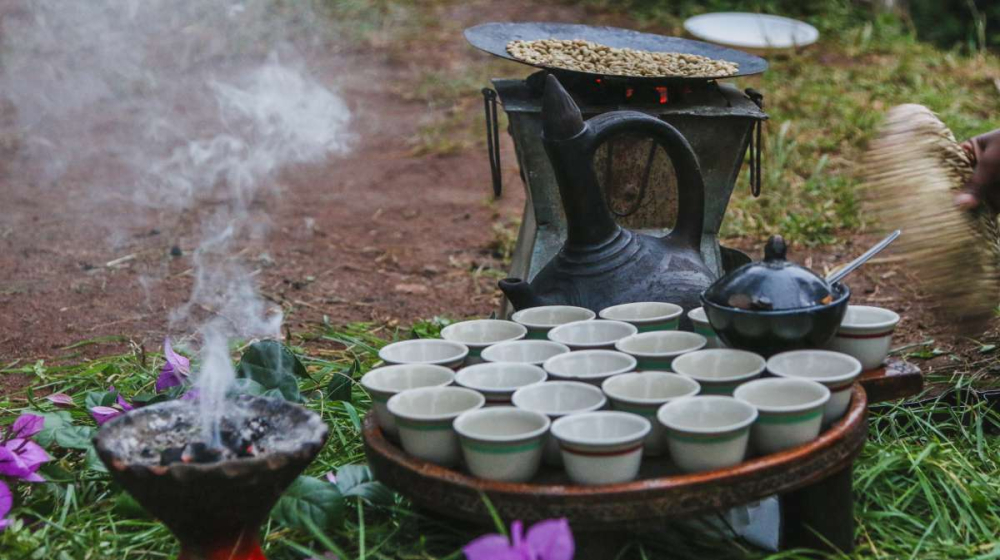
Ethiopian coffee is more than just a beverage—it is an essential part of social and cultural life. The Coffee Ceremony is regarded as one of the most sacred social activities, involving roasting, grinding, brewing, and tasting, and lasting anywhere from 90 minutes to 1.5 hours. This ceremony is commonly used for family gatherings, business negotiations, or even conflict resolution. The first round of coffee, called Abol, symbolizes the beginning; Tona is the refill; and Baraka represents reconciliation and blessings. Women play a key role in the ceremony, showcasing the sanctity of coffee through unique steps.
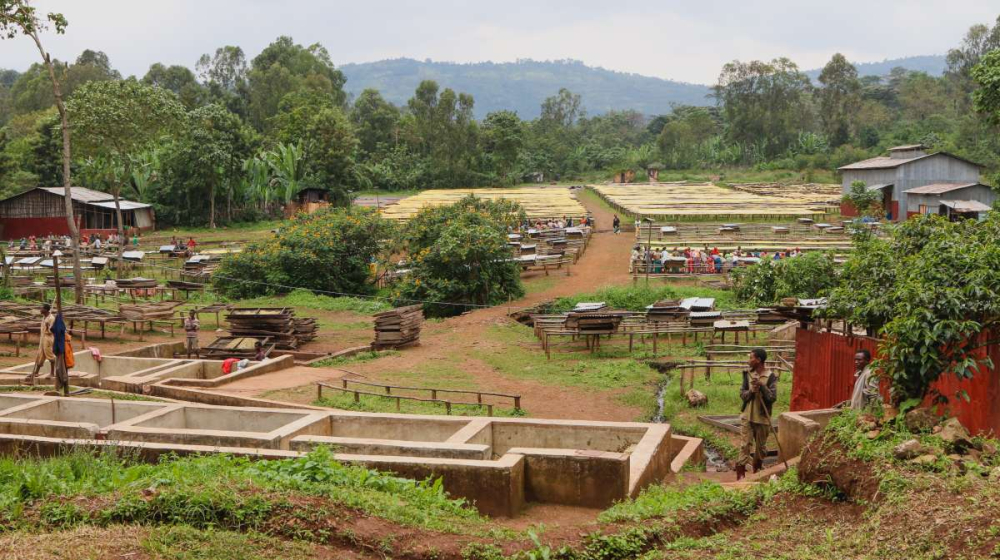
Coffee cultivation in Ethiopia is mainly concentrated in the western and southern regions, with approximately 90% operated by smallholder families. Each household typically farms less than 4 hectares at altitudes ranging from 1000 to 2300 meters, planting about 1000 to 1800 coffee trees per hectare, yielding around 600 kilograms per year. Based on farming models, it can be divided into forest coffee (8–10%), semi-forest coffee (30–35%), garden coffee (50–55%), and plantation coffee (5–6%), among which garden coffee accounts for the highest proportion and is the main source of specialty beans.
Ethiopia’s nine major producing regions each have distinct characteristics, with significant differences in flavor profiles. Yirgacheffe, the most representative specialty region, sits at elevations between 1800 and 2000 meters and primarily uses the garden coffee system. Its flavors are known for jasmine, lemon, peach, apricot, and tea-like notes, often described as “a garden in bloom.” The region traditionally employs the natural process, but after the introduction of washed processing in 1972, it further highlighted its clean citrus character. Nowadays, the natural method is making a comeback, with improved techniques producing renowned naturals such as Idido Misty Valley, Beloya, and Aricha, offering complex layers and captivating fermentation notes. In addition, innovative processes such as red honey and anaerobic are gradually gaining attention.
Sidama, at elevations between 1400 and 2200 meters, also primarily uses the garden coffee system. Its washed and natural beans often exhibit pronounced sweetness and berry notes, rivaling the quality of Yirgacheffe. The famous “Huakui” beans originate from the Guji sub-region of Hambela. Since making their debut in the TOH competition in 2017, they have become a star variety capable of standing up to Geisha. Coffees from this region are often medium to light roasted, balancing floral-fruity aromas with caramel finishes. The 2025 version of Huakui has continued to evolve in terms of dry fragrance and cupping performance.
The Limu region, at elevations between 1200 and 2000 meters, though mainly exported to Europe and the United States and less common in Taiwan, offers washed, natural, and semi-washed beans with unique grassy and black sugar aromas, bright acidity, and relatively lower body. Harar, an ancient eastern region at elevations of 1500 to 2400 meters, almost exclusively uses the natural process and is known for its intense funky and berry notes. Alongside Yirgacheffe, it is considered one of Ethiopia’s two flagship flavor representatives. However, note that the quality in this region has fluctuated in recent years, so cupping before purchase is advised.
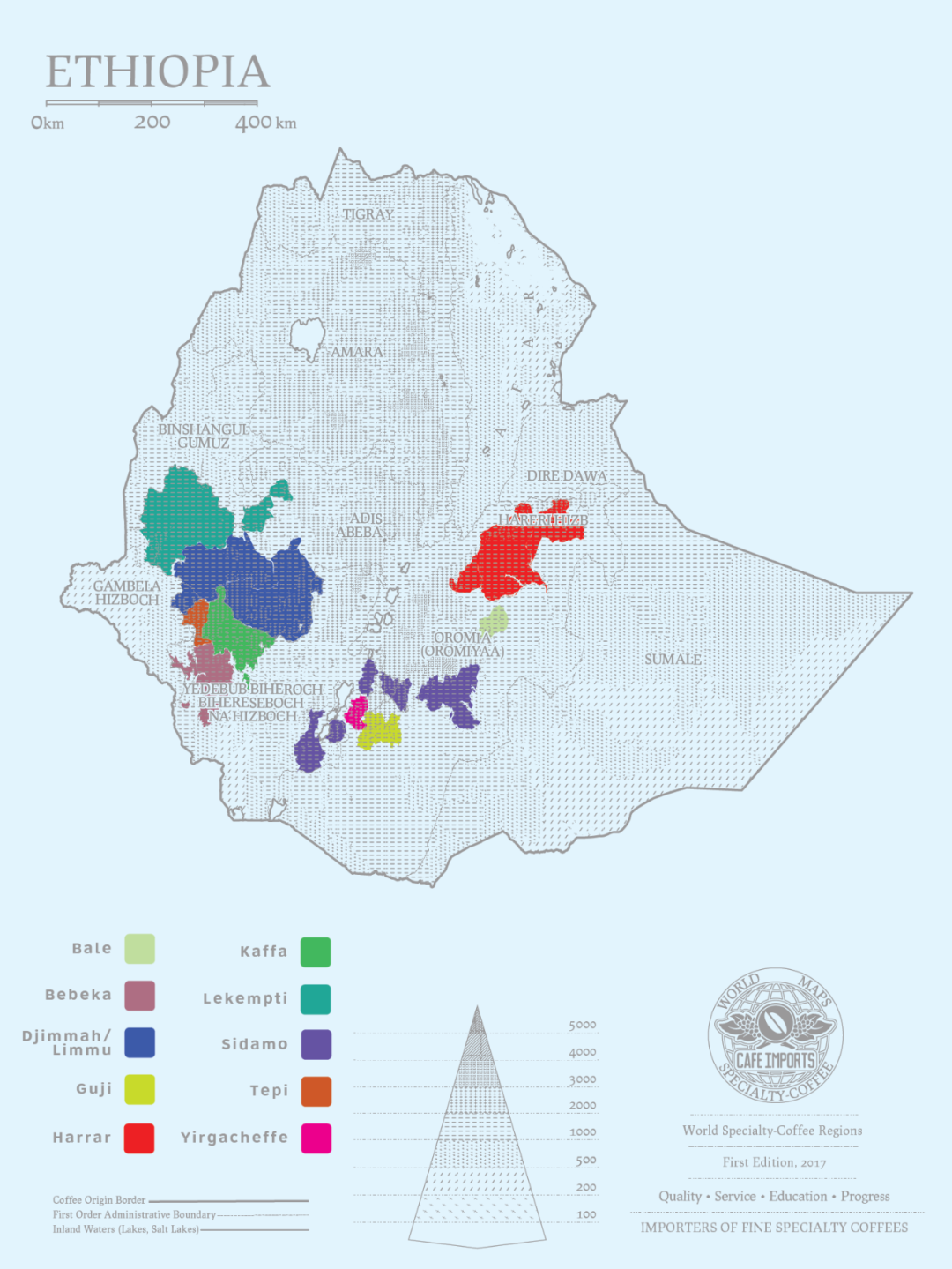
Jimma is Ethiopia’s largest coffee-producing region, accounting for about one-third of exports, at elevations between 1350 and 1850 meters, primarily using forest and semi-forest systems. Due to the mix of various wild varieties, commercial-grade Jimma beans may have simpler flavors but still offer decent clarity and acidity, along with affordable pricing—making them suitable as blend components. Regions such as Illubabor, Gimbi/Lekempti, and Teppi/Bebeka mostly produce bulk commercial beans with relatively balanced flavor profiles, suitable for everyday drinking or blending. Among them, Illubabor beans are larger in size, with low acidity and good body; Gimbi/Lekempti features long beans and bright acidity; and Teppi/Bebeka, due to large altitude variations, has unique flavors but limited production.
Lake Tana, though not a mainstream producing area with an annual output of less than 10 tons, is hailed as the coffee source with the most “divine flavor” due to its historical background surrounding Eastern Orthodox monasteries. The coffee here naturally grows in forests and gardens, harvested on a small scale by local communities, resulting in rare production with deep cultural heritage.
The Red Cherry Project is a quality improvement initiative driven by Dutch trader Trabocca, encouraging farmers to handpick only fully ripe red cherries and strictly control post-harvest processing. Participating regions include Yirgacheffe, Sidama, Pungo Forest, Lekempti, Kembaata, Illubabor, and Harar. The project aims to fully showcase the unique flavors of Ethiopian coffee, and related products are marked with the Trabocca logo on the sack.
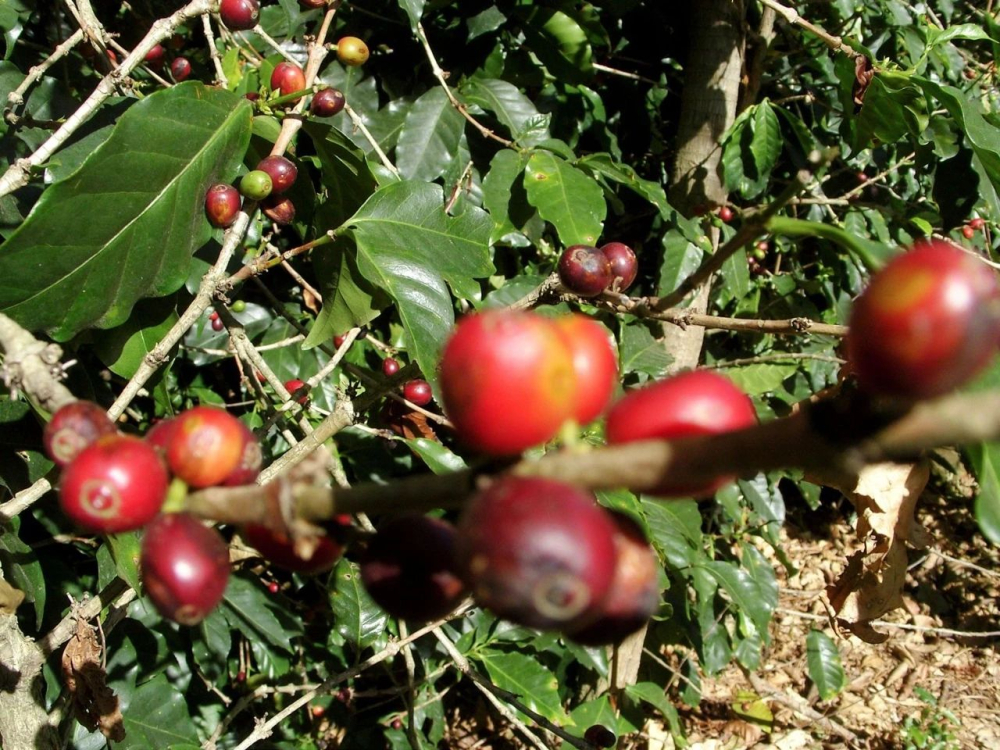
Ethiopia has nearly 2000 registered coffee varieties, of which 1927 are native and 128 are introduced. Since most coffee trees are interplanted, bean sizes at harvest are often uneven, and variety labeling is usually generalized as “local Ethiopian native variety.” However, in recent COE competitions, clearer labeling has emerged using codes such as 74158, 74110, or traditional variety names such as KURUME (Kurume) and TYPICA (Typica), indicating a gradual trend toward variety identification.
In terms of processing methods, Ethiopia mainly employs washed and natural techniques. The washed method removes the pulp, ferments, and washes the beans to achieve a 12% moisture content, resulting in clean acidity and delicate floral-fruity notes. The natural method involves directly sun-drying ripe cherries, preserving more sugars and fermentation flavors, often yielding a richer and sweeter taste. For consumers trying Ethiopian beans for the first time, it is recommended to start with washed beans to experience their bright acidity and clear fruity tones. If you prefer sweetness and body, natural beans are a great choice.
Regarding grading, the trading market categorizes coffee beans into G1 and G2 based on defect rates: G1 allows no more than 3 defects per 300 grams of green beans, while G2 allows 4 to 12. Additionally, referencing SCA cupping standards, scores above 85 are classified as Q1 grade, and 80 to 84.75 as Q2 grade. Notably, washed G1 indicates 0 to 3 defects, and G2 4 to 12—both are generally considered high quality, differing only in the number of defects. Many popular Ethiopian single-origin coffees such as Guji Dingding, Red Cherry, and Huakui are G1 grade, representing their pure flavors and stable quality.
The above content is compiled by CoffeeHunters, a coffee news website.


