







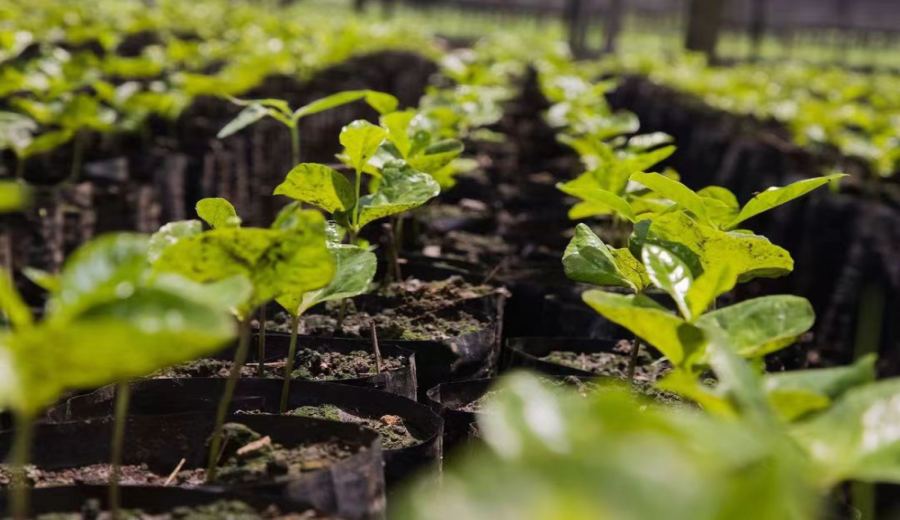
Introduction:Although El Salvador is a small Central American country, it is one of the world’s important producers of specialty coffee. This article will take you on an in-depth exploration of El Salvador’s coffee history, the flavor profiles of its nine major producing regions, the characteristics of its four main coffee varieties, and an analysis of the roasting and V60 pour over methods for the representative Bourbon variety “Chocolate Amor.” From origin to cup, gain a comprehensive understanding of the charm of El Salvador’s coffee.
Despite its relatively small land area, El Salvador holds a significant place in Central America’s coffee map. The country is known for its volcanic terrain and mineral-rich soils, providing an ideal environment for coffee cultivation. From its historical development and regional distribution to varietal evolution and market challenges, the story of El Salvador’s coffee is full of twists and resilience.
Regions and Geographic Conditions
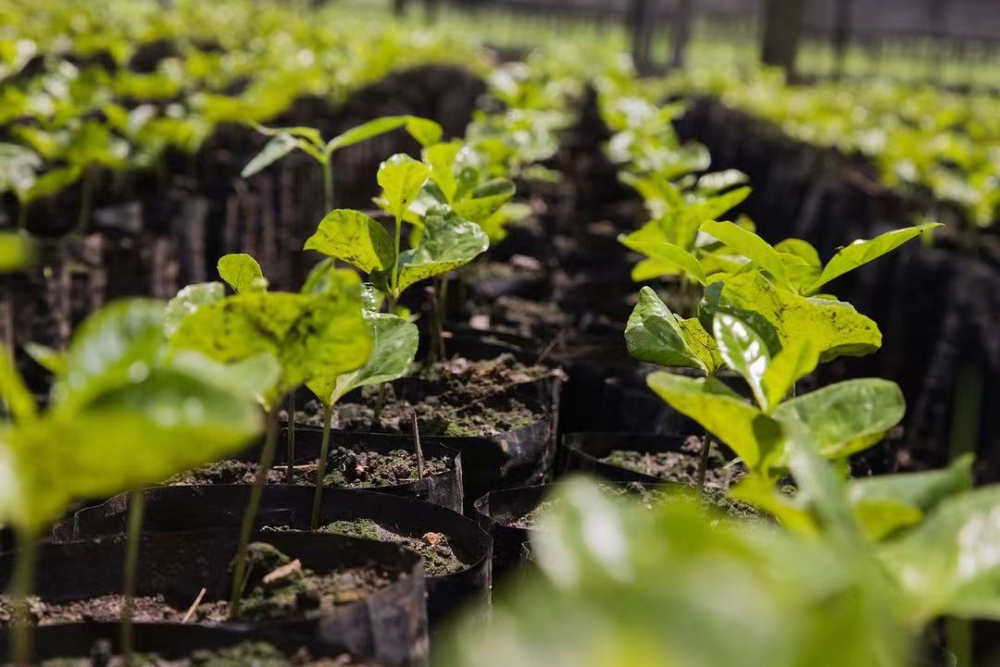
Located in Central America, nestled between Honduras and Guatemala and bordering the Pacific Ocean to the south, El Salvador is predominantly mountainous and highland, often referred to as the “Land of Volcanoes.” Its numerous active volcanoes enrich the soil with nutrients, and the widespread use of shaded cultivation contributes to a harvest season generally from November to April each year, resulting in coffee with delicate acidity and balanced flavors. Currently, there are about 23,000 coffee growers nationwide, nearly 90% of whom manage farms smaller than 17 hectares, mostly smallholders accounting for over 80% of national production. In addition, around 15,000 smallholders are organized into 119 cooperatives, leveraging collective strength to improve operational efficiency and market bargaining power.
According to official classification, Salvadoran coffee farmers are divided into three categories: smallholders (farms under 7 hectares), medium-sized farmers (farms between 7 and 70 hectares), and large-scale farmers (farms over 70 hectares). It is worth noting that 1 hectare equals 10,000 square meters, or approximately 15 standard mu.
Historical Development and Industry Transformation
Coffee cultivation in El Salvador dates back to the mid-18th century, but it truly scaled into an industry during the 19th century. At that time, chemical dyes replaced traditional indigo, causing the collapse of the economy which had relied on indigo exports. The government then encouraged a shift toward coffee farming. However, this transition was accompanied by land consolidation and social conflict—former indigo-growing areas were mostly controlled by large estates, and through legislation, the government forcibly evicted poor farmers, incorporating their land into emerging coffee plantations without any compensation. These land-dispossessed people could only survive as seasonal laborers.
By 1930, coffee exports accounted for over 90% of the country’s total exports. Even through two World Wars and global economic downturns, its coffee production remained among the top in the world. However, after the civil war ended in the 1980s, land reform policies were gradually implemented, breaking the monopoly of large estates, though the government still restricted individual farmers from owning more than 245 hectares. To date, over 90% of coffee is produced on small farms under 20 hectares.
Yet the industry’s development has not been smooth sailing. Between 1997 and 2001, impacted by a sharp drop in international coffee prices, the country’s coffee output plummeted by over 34%. An even greater challenge came with the outbreak of leaf rust disease in 2013, causing production to plunge nearly 60% in the 2014 harvest season—only 3% of coffee trees were rust-resistant varieties at the time, the rest mostly being susceptible Bourbon and Pacas. Although annual production later rebounded by about 7.5% through domestic and international aid, it remained far below the previous peak of 2.4 million bags.
To revive the industry, in 2016 the Ministry of Agriculture distributed 20 million rust-resistant seedlings to smallholders; in 2017, the government signed an agreement to invest $100 million over eight years to replant 70,000 hectares with disease-resistant varieties. However, reports indicate many seedlings had not yet been certified and lacked sufficient funding for necessary management before reaching production age. Additionally, World Coffee Research has established its Central American headquarters in El Salvador and operates a 7-hectare research farm near Santa Ana, dedicated to variety improvement and technology development.
Nine Major Regions and Flavor Profiles
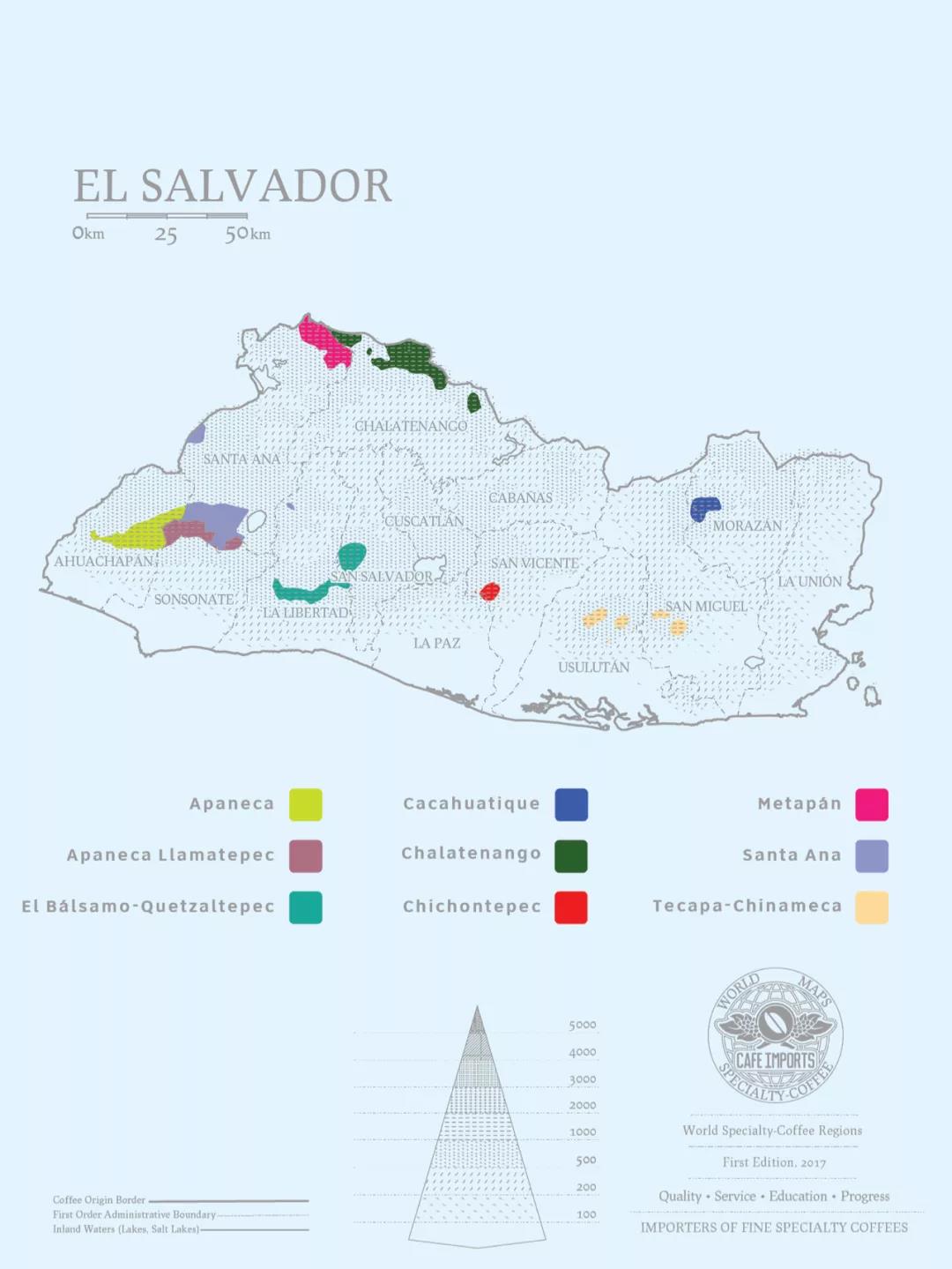
El Salvador is divided into nine major coffee-producing regions, each with unique flavor expressions due to microclimates and altitude differences:
Apaneca(Western region) — known for its exceptional aroma.
Apaneca Llamatepec(Western mountainous area) — often exhibits notes of peach, cream, chocolate, and citrus, with a refined mouthfeel.
El Balsamo-Quetzaltepec(Southwestern mountainous area) — offers rich flavors, creamy texture, and a smooth mouthfeel.
Cacahuatique(Located between San Miguel and Morazán provinces) — showcases delicate juiciness and almond notes.
Chalatenango(Northern region) — features soft acidity, prominent sweetness, nutty and chocolatey tones, and a velvety mouthfeel.
Chichontepec(Central region) — combines chocolatey sweetness with orange aroma, offering distinct layers.
Metapán(Northern region) — based on floral notes, blended with chocolate, citrus, and a unique caramel-like acidity, with standout fruity flavors.
Santa Ana(Western region) — balanced flavors, with creamy chocolate and gentle fruit acidity.
Tecapa-Chinameca(Around San Miguel city) — rich mouthfeel, blending chocolate with various ripe fruit sweetnesses such as cantaloupe, apple, and grape.
Santa Ana Chocolate Amor
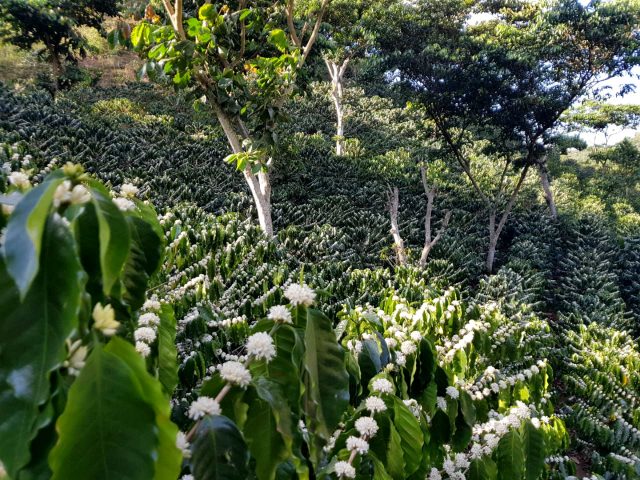
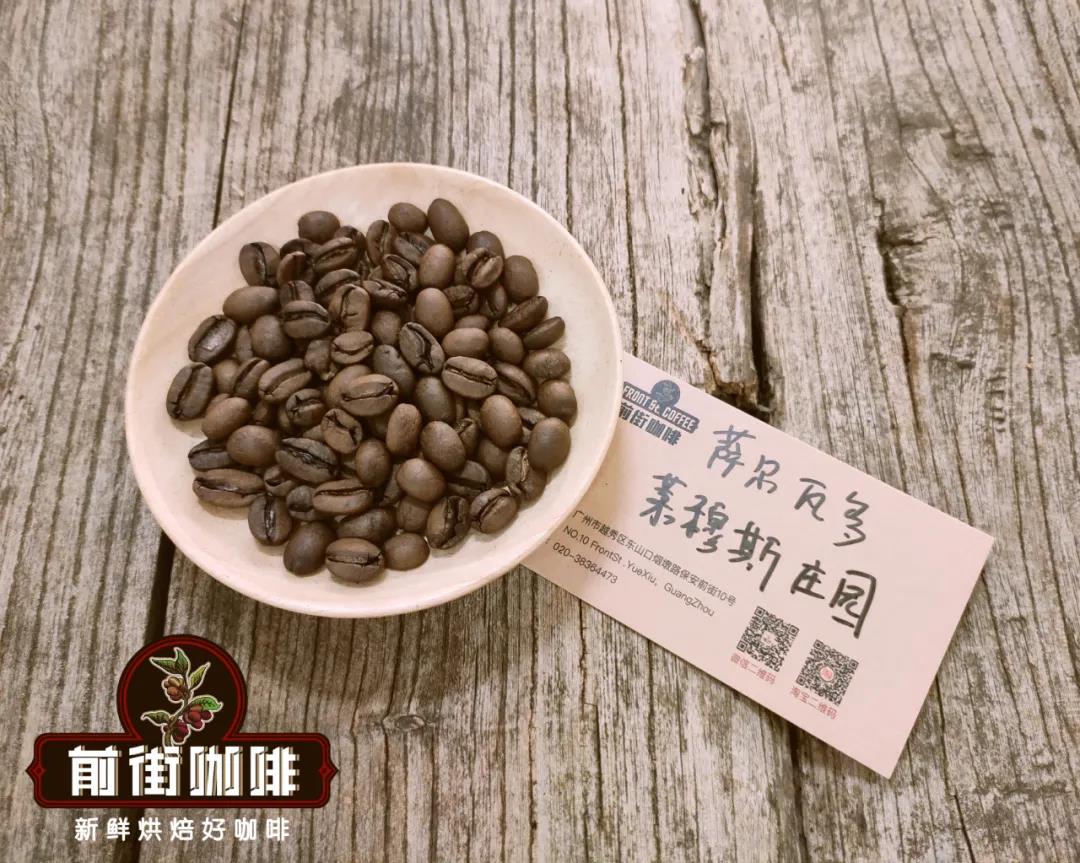
Produced at the Chocolate Amor estate (El Guayabo) in the Santa Ana department, grown at 1,450 meters above sea level, using a 50% washed and 50% honey process, with the Bourbon variety. Its flavor profile is anchored by cocoa, caramel, and cream, complemented by gentle fruit acidity and a berry finish, delivering a balanced and layered cup overall.
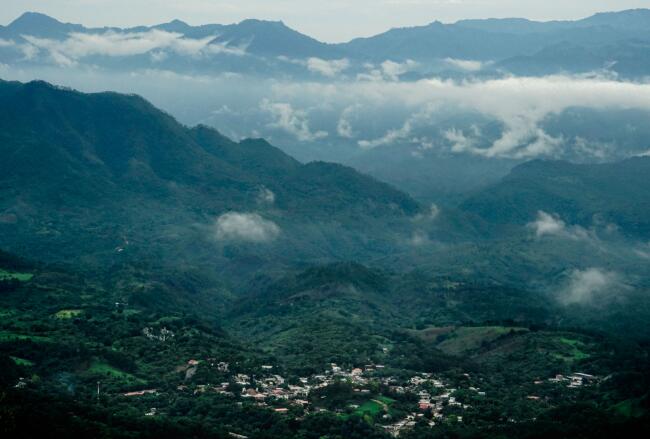
Another representative region is the Finca Lemus Bella Vista in the Apaneca mountain range, grown at 1,250 meters, mainly with Bourbon and Catuaí varieties, processed via black honey method, and classified as SHB (Strictly Hard Bean). Its flavor characteristics include citrus, berries, grapes, cocoa, and excellent balance.
Main Varieties Introduction
El Salvador’s coffee cultivation is dominated by four main varieties: Typica, Bourbon, Pacas, and Pacamara.
TypicaOne of the oldest coffee varieties from Ethiopia, with bronze-tipped leaves and oval or slender pointed beans. It offers elegant flavors but is weak in constitution, prone to disease, and low-yielding, commonly found in renowned regions such as Jamaica Blue Mountain, Sumatra Mandheling, and Hawaii Kona.
BourbonA mutation derived from Typica, its bean shape changed from slender pointed to round. Its history traces back to the 18th century when the French introduced the Mocha variety to Bourbon Island (now Réunion) and it spread to Brazil and Central and South America by the late 18th century. It is known for its sweetness and high cupping scores.
PacasA natural mutation of Bourbon discovered in El Salvador, selected by local farmer Pacas in 1935 as a high-yield variety. Later confirmed by the University of Florida as a genetic mutation, hence named. This variety is widely planted in Central America for its stable yield and good quality.
PacamaraA variety developed in 1958 by Salvadoran researchers, combining traits of Pacas and Maragogipe (elephant bean). Its beans are large, with over 90% measuring 17+ mesh, approximately 1.03 cm long and 0.71 cm wide. It features lively and varied acidity, sometimes showing biscuit notes, other times pronounced fruitiness, along with excellent body and crema. This variety performs exceptionally well in El Salvador and Guatemala.
Roasting and Pour Over Recommendations
Taking Santa Ana Chocolate Amor as an example, to highlight its soft acidity and balanced mouthfeel, a light-to-medium roast is recommended. This roast level preserves floral and fruity notes while bringing out the warm undertones of chocolate and caramel.
For brewing, using a V60 filter with high water temperature and fast pour rate can effectively extract acidity details and avoid over-extraction. The V60’s 60-degree conical design focuses the flow of coffee grounds, with its clockwise spiral ribs inside increasing water channels. Coupled with the large bottom hole design, it accelerates overall extraction flow, aiding in controlling brew time.
Recommended pour over parameters are as follows: use a V60 filter, set water temperature to 90°C, water-to-coffee ratio 1:15 (15 grams of coffee), grind size at 80% passing rate of a Chinese No. 20 standard sieve (approximately medium-fine grind).
Specific steps: start with a 30-gram bloom (about double the coffee weight) for 30 seconds; then pour in a circular motion with a slow stream until reaching 125 grams for the first pour, wait until the water level is about to expose the coffee bed, then pour up to 225 grams and stop. Total brew time should be controlled around 2 minutes for optimal flavor balance.
The above content is compiled by CoffeeHunters, a coffee news website.


