








Introduction:Many people’s first experience with black coffee begins with Starbucks’ Americano. But why do some find it too bitter, while others fall in love with its richness? This article delves into the historical origins of the Americano, the reasons behind its bitterness, and how to adjust it to your preferred taste through coffee bean selection and proper brewing parameters. It also analyzes the flavor profiles of different blends to help readers find their perfect cup.
The Americano is often the starting point for many beginners exploring black coffee, and Starbucks’ version is frequently the first one people try. But why does it taste unbearably bitter to some, yet delightfully layered to others? In reality, the flavor and bitterness of an Americano are influenced by multiple factors, including the roast level of the beans, the quality of the green beans, freshness, and various brewing parameters.
Simply put, an Americano is black coffee made by diluting a shot of espresso with hot water. This beverage can be found in coffee shops around the world, yet the flavor can vary greatly from one place to another. Understanding the reasons behind these differences can help you better choose or customize an Americano that suits your taste.

As for whether an Americano is bitter, the answer is closely tied to the type of coffee beans used. Starbucks’ Americano is generally considered more bitter mainly because it typically uses beans roasted to a darker level. During dark roasting, beans undergo a longer caramelization process, producing a large amount of dark compounds that give the coffee a bold, heavy body along with noticeable bitterness. However, this bitterness isn’t a flaw but rather part of the dark roast style. If it feels too intense, you can adjust the flavor balance by adding water, a small amount of milk, or sugar.
So, is the Americano really enjoyable? In fact, the global popularity of this black coffee lies in its high “customizability.” It’s said that the origin of the Americano dates back to World War II, when American soldiers stationed in Italy found the local espresso too strong and concentrated for their taste, so they diluted it with water themselves. Although this method was initially frowned upon by Italians and even mockingly called “Americano” (the American’s coffee), this adjustment ultimately gave rise to a coffee style suited to the majority’s palate.
To brew an Americano with excellent flavor, the first step is choosing freshly roasted coffee beans. To ensure optimal extraction and flavor expression, it’s recommended to use beans roasted within five days prior to brewing, in order to retain the maximum amount of aromatic compounds and freshness. Additionally, using a blended coffee is usually a more practical choice, especially in a café setting, as blends can offer a more balanced flavor profile under high-pressure extraction conditions, reducing the risk of extreme characteristics often found in single-origin beans.
For different flavor preferences, there are many professionally designed blend formulas available on the market. For example, some blends focus on delivering smooth nutty and creamy notes, ideal for those who enjoy a rich mouthfeel without strong bitterness; others emphasize fruity acidity and floral aromas, providing a bright and refreshing drinking experience. For consumers who can’t tolerate any bitterness at all, certain specialty blends feature bright berry and floral notes paired with moderate sweetness, ensuring a rich flavor profile even when brewed as an Americano.
In terms of actual extraction, making espresso requires a professional espresso machine, which forces hot water through a finely ground coffee puck under high pressure to extract a concentrated coffee liquid. This process is typically done at 9 bar pressure, and it’s recommended to use a medium grind size to ensure even extraction. A commonly suggested starting parameter is: using 20 grams of coffee grounds, extracting about 40 grams of coffee liquid in 25 to 30 seconds with a 1:2 coffee-to-water ratio. These values can be fine-tuned based on the performance of your machine and personal taste preferences.
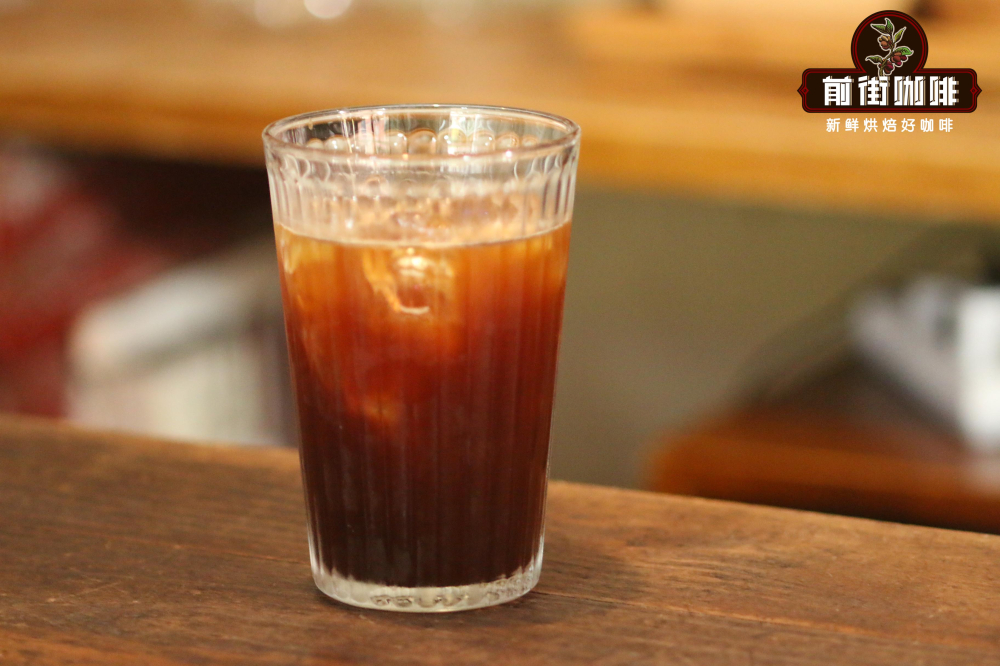
Once the espresso is extracted, simply add an appropriate amount of hot water to dilute it, and you’ve got a standard Americano. To make an iced Americano, start by placing about 90 grams of ice and 150 grams of cold water in a cup, then slowly pour around 40 milliliters of espresso over the ice. Stir gently and it’s ready to enjoy. This method not only cools the drink quickly but also preserves the original flavor characteristics of the coffee, making it an excellent choice for hot summer days.
The above content is compiled by CoffeeHunters, a coffee news website.


