







Introduction:Jamaica Blue Mountain coffee has long been hailed as one of the world’s top-tier coffees. Its elegant balance of acidity, sweetness, and bitterness, along with its unique aroma, makes it a dream brew for coffee enthusiasts. This article delves into the legal grading system, regional restrictions, and specialty evaluation standards of Blue Mountain No. 1, while also offering practical pour over recommendations and flavor profiles. It takes you through the entire journey—from cultivation and grading to brewing—to fully appreciate the charm of this legendary coffee bean.
Back in an era when bright fruity acidity wasn’t yet the mainstream in specialty coffee, most consumers still associated coffee with intense bitterness. However, Jamaica Blue Mountain coffee has long stood out with its delicate aroma and the perfect harmony among acidity, sweetness, and bitterness, becoming a timeless classic in the hearts of many. This article will take you deep into every facet of this premium coffee bean, from its grading system and regional regulations to actual cupping flavors and pour over suggestions.
To understand the rarity and prestige of Blue Mountain No. 1, we must first discuss its strict regional and grading classifications. According to Jamaica’s Coffee Industry Regulation Act, only Arabica Typica variety coffee grown at elevations between 910 and 1,700 meters within the four administrative regions of Saint Andrew, Saint Thomas, Portland, and Saint Mary qualifies as “Jamaica Blue Mountain.” These four regions cover a total area of just about 6,000 hectares—only one-third of the entire Blue Mountain cultivation zone—with the rest mainly used for cultivating Jamaica High Mountain and Jamaica Prime coffee. In fact, less than 15% of Jamaica’s annual coffee production can be sold under the Blue Mountain name, highlighting its exceptional scarcity.
According to the standards set by the Jamaica Coffee Industry Board (CIB), Blue Mountain coffee is divided into four grades: Blue Mountain No. 1, Blue Mountain No. 2, Blue Mountain No. 3, and Blue Mountain Peaberry. Among them, Blue Mountain No. 1 is the highest grade, requiring green beans to be 17 mesh or larger, with a defect rate not exceeding 2%, moisture content strictly controlled between 10% and 12.5%, and exhibiting an excellent balance of acidity, sweetness, bitterness, body, and aroma during cupping. Such stringent criteria result in the rarity and exceptional flavor profile of Blue Mountain No. 1.
The green beans of Blue Mountain No. 1 are typically packaged in wooden barrels rather than the more common burlap sacks. These barrels effectively regulate humidity, prevent aroma loss, and maintain stable moisture levels, which contributes to more consistent roasting performance. Observing the barrels themselves can also yield useful information—for example, the barrel lid bears the official CIB certification mark, and each barrel is labeled with information about the registered exporter and importer. For instance, Blue Mountain No. 1 beans from the Clifton Estate may also feature an ecological label of the tropical rainforest tree frog. Moreover, officially imported Blue Mountain No. 1 usually comes with quality certification issued by the Jamaica Coffee Board, an authorized sales certificate from the producer, and a certificate of origin, ensuring its authenticity and superior quality.

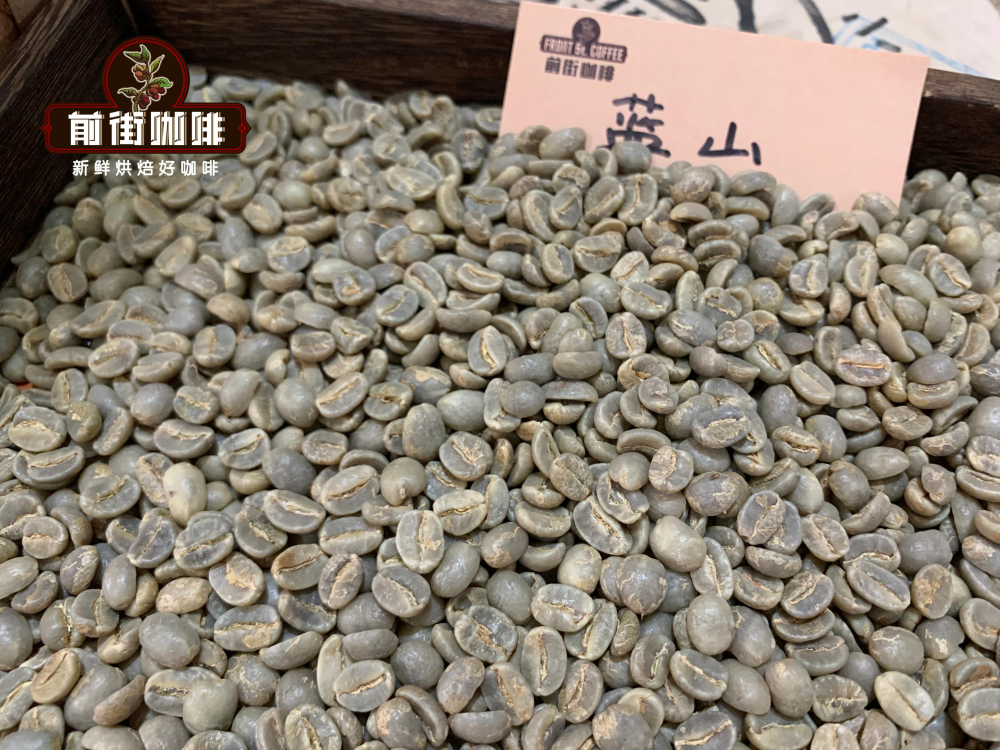
Upon close inspection, Blue Mountain No. 1 green beans are found to be plump and uniformly sized, with a clear blue-green appearance. After proper roasting and cupping, the dry aroma presents a complex profile of nuts, melon, and chocolate; upon pouring water, it releases captivating notes of oolong tea, caramel, honey, and dark chocolate. On the palate, flavors of dark chocolate, roasted hazelnuts, butter, and brown sugar unfold with distinct layers, delivering a refreshing and full-bodied mouthfeel, with a lingering and unforgettable finish.
As for brewing advice, since Blue Mountain No. 1 is often medium-to-dark roasted to fully bring out caramelized flavors, it can also easily release excessive off-notes. Therefore, it is recommended to lower the brewing water temperature—while light roasts typically use 91–93°C, medium-to-dark roasted Blue Mountain No. 1 is advised to be brewed at 87–88°C to help suppress over-extraction. Additionally, grind size requires special attention; too fine a grind increases extraction yield, resulting in an overly bitter and heavy taste. Hence, a medium grind is suggested, with shops often using the EK43s grinder set at 10.5 or a Chinese standard sieve passing rate of around 75% as reference.
The following are recommended pour over parameters for practical use: use a Kono filter, water temperature at 88°C, coffee-to-water ratio of 1:15, 15 grams of coffee grounds, and grind size at 75% passing rate through a standard 20-mesh sieve. Step one: gently pour 30 grams of water for a 30-second bloom; step two: pour up to 125 grams while maintaining steady and even circular water flow; when the water level drops to half, continue pouring up to 225 grams, with a total brewing time of approximately 2 minutes. These parameters help achieve balanced extraction and highlight the delicate flavors of Blue Mountain No. 1.
Once brewed, Blue Mountain No. 1 offers a cup where black chocolate, roasted nuts, and toffee dominate the flavor profile, complemented by a moderate caramel sweetness. The acidity is gentle and understated, resulting in a smooth and rich mouthfeel overall. As the temperature cools, the layers become more pronounced, and the aroma continues to unfold, making it a top-tier coffee experience worthy of savoring in detail.
The above content is compiled by CoffeeHunters, a coffee news website.


