








Introduction:Jamaican Blue Mountain coffee is world-renowned for its balanced flavor and rare production, making it a dream bean for many coffee enthusiasts. This article delves into the characteristics of the Typica variety in Blue Mountain coffee, the four-tier grading system, the impact of altitude on flavor, and compares the key differences between Blue Mountain and High Mountain coffee. It also provides practical pour over references to help readers fully grasp this top-tier coffee from flavor and grade to purchasing.
Jamaican Blue Mountain coffee is globally recognized as one of the finest coffees, grown in the Blue Mountains of Jamaica and celebrated for its perfect balance of sweet, acidic, bitter, and mellow notes. The unique flavor of this coffee originates from the region’s distinctive geographical environment and meticulous cultivation and processing methods. The main peak of the Blue Mountains stands at 2,256 meters, the highest point in the Caribbean, and its microclimate and fertile volcanic soil provide ideal growing conditions for coffee trees.
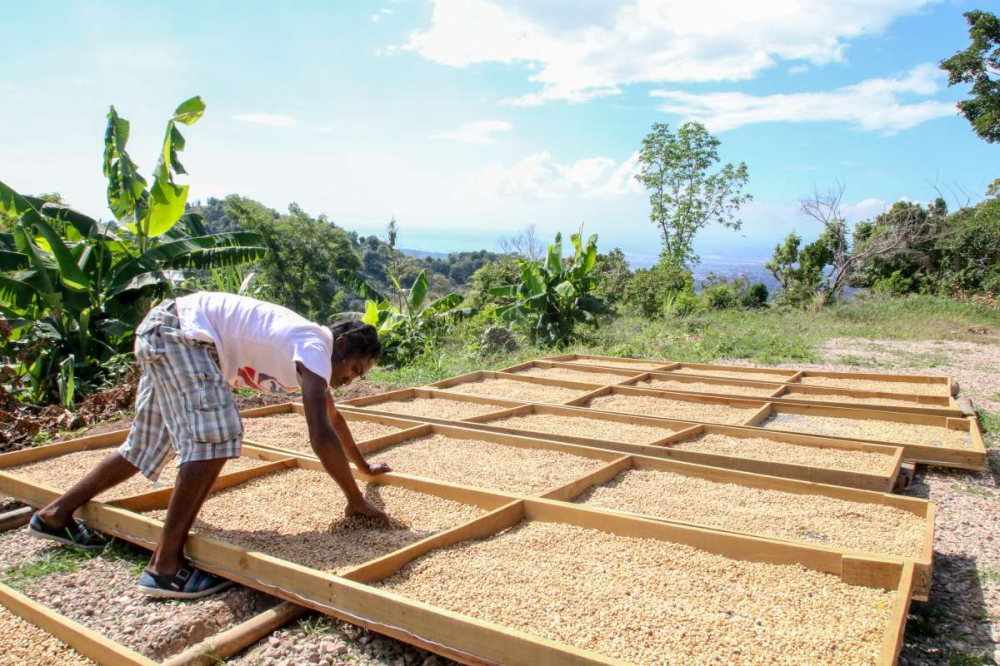
The harvesting season for Blue Mountain coffee runs from June to November each year, with the entire process relying on hand-picking to ensure only ripe red cherries are selected. The harvested coffee cherries undergo a washed process, followed by sequential steps including pulping, fermentation, drying, sun drying, hulling, and roasting. Each step influences the final flavor profile. Notably, only coffee grown above 1,600 meters in altitude within the approximately 6,000-hectare Blue Mountain area qualifies as “Blue Mountain coffee.” Due to its extremely limited production, its price consistently ranks among the highest in the world.

In terms of variety, Blue Mountain coffee belongs to the ancient Arabica Typica cultivar. Since the 18th century, Jamaica has cultivated this variety, and due to the country’s isolated island geography, it has effectively avoided genetic interference from foreign varieties, allowing the pure genetics of Typica to be fully preserved. This is also one of the key factors that enable Blue Mountain coffee to exhibit a clean, clear, and well-layered flavor.
Both Blue Mountain coffee and High Mountain coffee are divided into four grades, ranked from highest to lowest quality as: NO.1, NO.2, NO.3, and PB (peaberry). According to the regulations of the Jamaica Coffee Industry Board (CIB), only coffee grown at altitudes above 910 meters in the Blue Mountain region can be classified as Blue Mountain coffee. Among them, the highest quality grade is Blue Mountain NO.1 peaberry, which typically comes from altitudes around 2,100 meters. These are rare beans where only a single round bean develops inside a fruit, and they are widely praised by professionals for their rich and uniform flavor.
Compared to Blue Mountain coffee, High Mountain coffee grown at altitudes below 910 meters in the Blue Mountain region, while slightly inferior in overall flavor performance, still maintains good quality and is often considered a “close relative” of Blue Mountain coffee. The production area of High Mountain coffee is about twice that of Blue Mountain coffee, making it relatively more accessible in the market and more affordable in price. However, due to the lower altitude, its flavor complexity and refinement are usually not as pronounced as those of high-altitude Blue Mountain beans.
Understanding the grading and regional differences of Blue Mountain coffee helps consumers make more informed purchasing decisions. For coffee lovers trying the Blue Mountain flavor for the first time, it is recommended to start with High Mountain coffee to experience the unique freshness and balance characteristic of the Jamaican region. For coffee enthusiasts pursuing ultimate flavor and collectible value, Blue Mountain NO.1 or NO.1 peaberry are must-try choices. Additionally, when brewing with pour over, it is recommended to use a medium-light roast, with water temperature controlled at 90–93°C and grind size around medium-fine (similar to fine sugar), to fully showcase its delicate fruit acidity and rich aftertaste.
The above content is compiled by CoffeeHunters, a coffee news website.


