







Introduction:From the first coffee tree planted by missionaries during the Qing Dynasty to today’s star-producing regions in the specialty coffee wave, Yunnan coffee has undergone a century of evolution. This article takes you on an in-depth journey through the distribution of China’s top ten coffee-producing areas, focuses on the cultivation documentation of the Typica variety in Lincang, and shares hands-on experience with natural processing methods and pour over parameters—helping you master the unique flavor profile of this locally grown specialty bean.
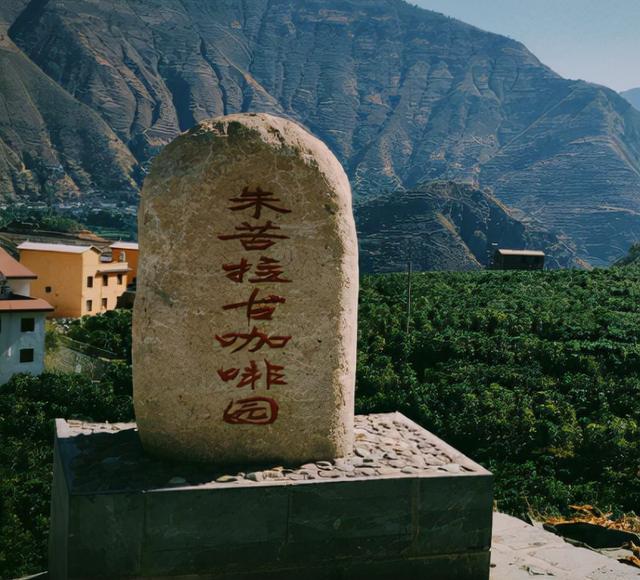
The history of coffee cultivation in China reads like a micro-epic spanning centuries. As early as the late Qing Dynasty during the Guangxu Emperor’s reign, a foreign missionary planted the historically significant first coffee tree next to a church in Zhukula Village, Binchuan, Yunnan. These seeds later flourished during the mid-20th century’s coffee repayment planting boom. At that time, Yunnan’s small-bean coffee, cultivated on a large scale to repay debts to the Soviet Union, conquered European and American markets with its balanced acidity and bitterness. After the reform and opening-up, the disease-resistant, high-yield Catimor variety introduced by Nestlé drove a production leap, but also left behind controversial aftertastes due to its Robusta lineage.
 Entering the new millennium, with the spread of specialty coffee concepts, producers began focusing on variety optimization and innovations in post-harvest processing techniques. Currently, China’s major coffee-producing regions are concentrated in five key areas: Pu’er, Baoshan, Dehong, Xishuangbanna, and Lincang. Among these, Lincang, situated along the golden coffee belt at 23°N latitude, has emerged in recent years as an important origin for emerging specialty beans.
While exploring the potential of China’s native coffee varieties, a coffee team specifically chose Lincang to establish an experimental plantation. This land, with its moderate altitude, enjoys a constant annual temperature of 21°C, coupled with abundant rainfall, ample sunlight, and the natural protection of zero frost in winter—creating an ideal habitat for the Arabica Typica variety. It’s worth noting that Typica, as one of the oldest coffee varieties, though lower in yield and weaker in disease resistance, can deliver exceptionally floral and fruity flavor notes.
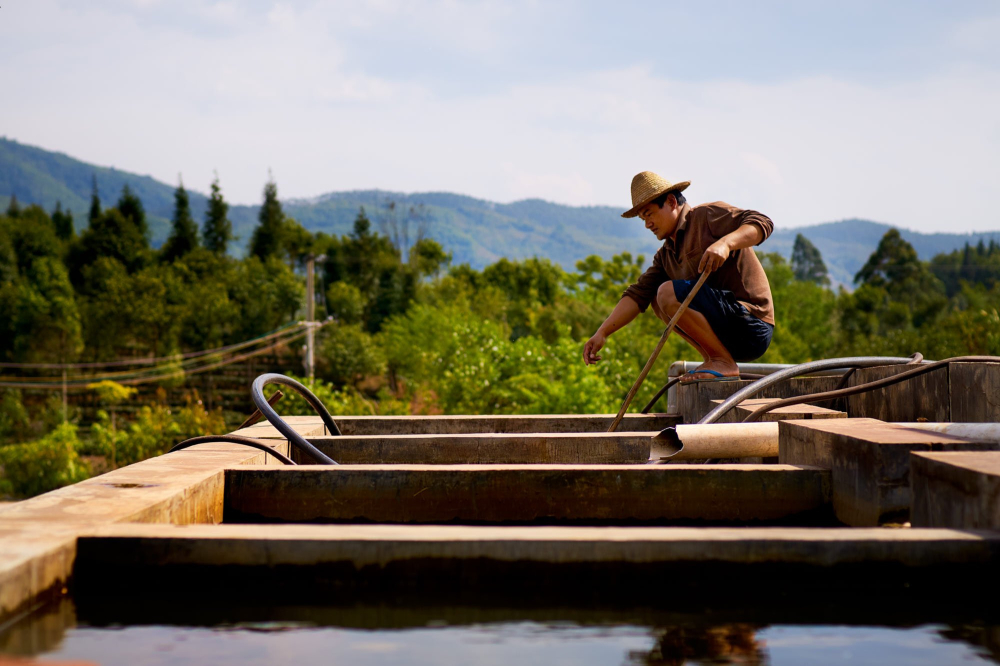
 The plantation launched its planting initiative in 2017. After four years of meticulous management, it harvested its first crop in 2021. The natural processing method employed was highly ingenious: harvested coffee cherries were evenly spread on breathable drying beds, with workers turning them every two hours to ensure even heat exposure, while strictly controlling moisture content fluctuations throughout the process. Compared to washed processing, this traditional technique preserves more pulp sugars, ultimately yielding a pronounced caramel sweetness and rich body.
The roasting team specially adopted a medium-temperature, medium-roast profile (approximately 203°C bean inlet temperature, rising to 215°C after one minute and maintained for eight minutes). This approach preserves the distinctive lemony acidity of Typica while enhancing the nutty and dark chocolate notes in the finish. Cupping data shows that this natural Typica exhibits a three-phase flavor progression: the initial stage presents bright red plum acidity, the middle phase transitions into brown sugar sweetness, and the finish leaves a subtle, mellow Keemun black tea-like aftertaste.
For actual brewing, it is recommended to use a V60 filter cone with the following parameters: 15 grams of coffee grounds (it is advised to use a Chinese standard No. 20 sieve for screening, maintaining a 75% pass-through rate to achieve uniform particle size), water temperature controlled at 88±1°C, and a brew ratio of 1:15. The specific process is divided into three stages: the first pour of 30 grams of hot water for a 30-second bloom to activate CO₂; the second pour involves circling from the center outward to reach 125 grams, maintaining steady water flow; the final pour continues to a total of 225 grams, with an optimal total extraction time of 1 minute and 50 seconds to 2 minutes. A special reminder for beginners: freshly roasted coffee beans require a 5–7 day resting period, and before brewing, be sure to perform a 30-second pre-bloom to release excess CO₂.
The above content is compiled by CoffeeHunters, a coffee news website.


