







Introduction:Explore how China's Yunnan has risen from a remote borderland to a key specialty coffee producing region. From the historical starting point in Zhucula Village to six core areas including Pu'er and Baoshan, this article details the regional characteristics, quality evolution, and diverse flavors of Yunnan's small-grain coffee, along with professional pour over recommendations and practical parameters to help coffee enthusiasts deeply understand the potential and charm of this emerging coffee hotspot.
The rise of China’s coffee industry is inseparable from the continuous cultivation of Yunnan, this southwestern mountainous land. From the first coffee tree planted in Zhucula Village, Binchuan County, over a century ago, to the formation of six major production regions such as Pu'er, Baoshan, and Lincang, Yunnan coffee is no longer limited to instant coffee raw materials but is steadily transitioning toward specialty coffee. This article will delve into the historical background, regional distribution, and flavor characteristics of Yunnan coffee, and share practical pour over parameters and three-phase pouring techniques to help readers more comprehensively understand this promising producing region.
When it comes to globally renowned coffee origins, Brazil, Colombia, and Ethiopia often come to mind first. However, with the growth of China’s domestic demand market, Yunnan coffee has gradually entered the procurement lists of major coffee brands, becoming an important choice for many chain brands. Whether online or in physical stores, more and more consumers are beginning to try and taste Yunnan’s small-grain coffee, showing that it is steadily advancing to the forefront of the specialty market.
The history of Yunnan coffee dates back to 1904, when French missionary Térraux planted the first coffee tree in Zhucula Village, Binchuan County, thus beginning this land’s century-long bond with coffee. True commercial cultivation began in the 1950s, when botanist Professor Qin Renchang discovered red coffee cherries on a Dai ethnic farm in Luxi County, Dehong Prefecture. Identified as small-grain variety coffee, under his advocacy, coffee trial planting programs were launched at the Mangshi Forest Farm and the Luxiaba in Baoshan, marking the birth of New China’s coffee industry.
1988 was a pivotal turning point for Yunnan’s coffee industry. Nestlé established a branch locally, introducing the disease-resistant and high-yield Catimor variety, and committing to purchasing coffee beans at international futures prices, which greatly promoted the expansion of planting areas. Subsequently, brands like Starbucks and Maxwell also moved in, accelerating the rapid development of Yunnan coffee. However, in the early stages, due to farmers’ lack of professional knowledge and relatively extensive production processes, most coffee beans could only serve as instant coffee ingredients, with prices also subject to fluctuations in the international market. To break through these limitations, a shift toward specialty-grade transformation became an inevitable trend.
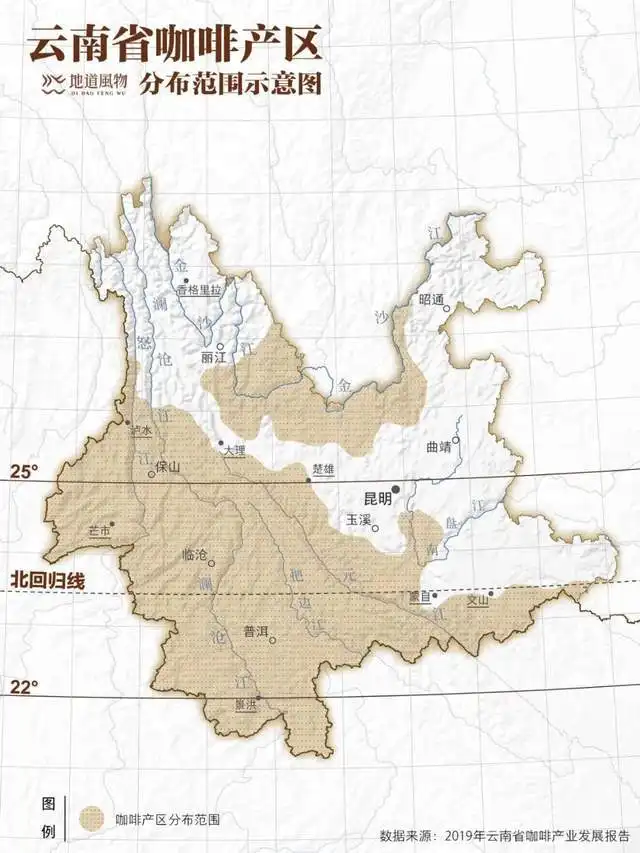
Today, Yunnan’s main coffee-producing regions cover eight areas including Pu'er, Baoshan, Dehong, Lincang, Nujiang, and Xishuangbanna, six of which are core producing regions. These areas boast natural conditions of low latitude, high altitude, and significant diurnal temperature variations, providing an ideal environment for growing high-quality Arabica coffee. Local coffee has also been awarded five geographical indication protection certifications: “Baoshan Small-Grain Coffee,” “Zhukula Coffee,” “Dehong Small-Grain Coffee,” “Pu'er Small-Grain Coffee,” and “Simao Coffee,” demonstrating that its quality has gained market recognition.
Taking Baoshan as an example, the region is famed for its small-grain coffee from Luxiaba, characterized by a three-dimensional mountain climate at low latitudes, large day-night temperature differences, an average annual temperature of about 14–17°C, and rainfall of 700–2100 mm, with distinct wet and dry seasons—ideal conditions for coffee fruit growth that yield coffee with a uniquely sweet aftertaste. One of a certain brand’s representative everyday beans is precisely this premium small-grain variety from Baoshan.
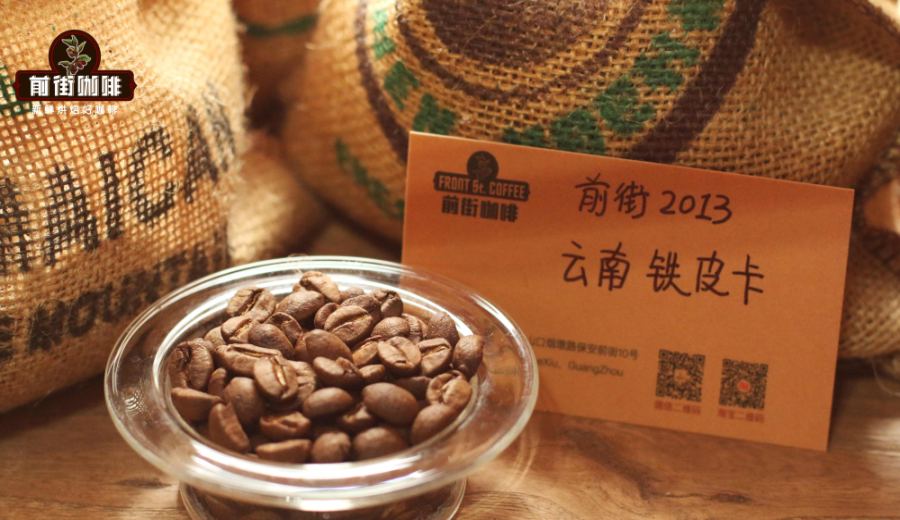
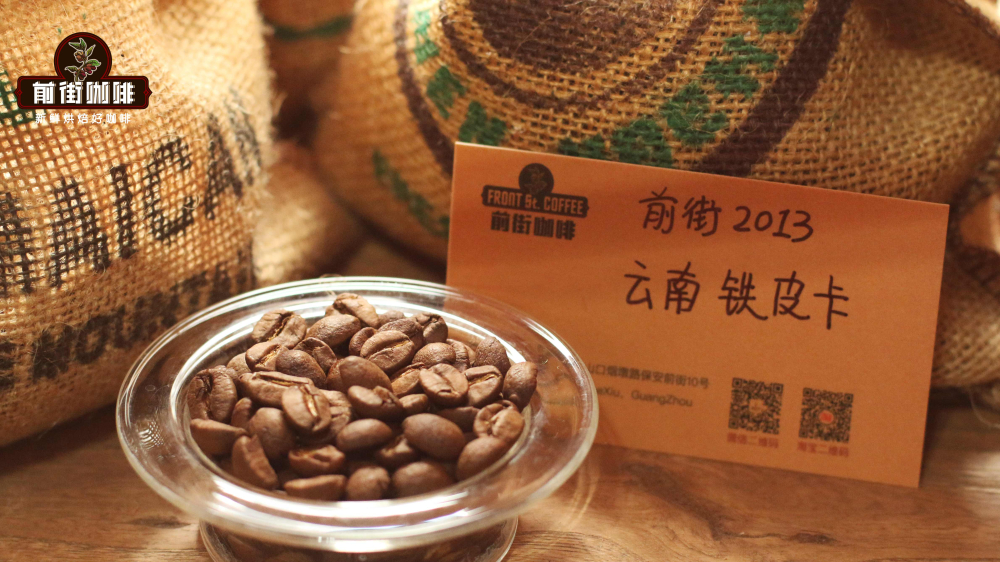
In addition, a certain brand’s “Brand Name 2013” natural-processed Typica is produced from its own estate in Lincang. Since 2013, the brand has independently controlled every step—from site selection and seedling cultivation to harvesting, processing, and roasting—in Lincang. Using the most representative Arabica heirloom variety Typica and a natural sun-dried processing method, it crafts a coffee with a gentle and elegant flavor profile, highly favored by consumers.
In terms of flavor profile, Yunnan’s small-grain coffee differs from the pronounced acidity of African beans and the heavy intensity of Indonesian beans, instead presenting a balanced neutral tone of sweet, sour, and bitter notes, suitable for the palates of most drinkers. A certain brand employs medium roasting to highlight chocolatey, nutty, and caramel roast aromas while preserving moderate fruit acidity. During cupping, one can often sense herbal, nutty, caramel, brown sugar, fruity sweetness, and the soft acidity of plums, with a rich yet harmonious flavor layering.
When performing pour over, a certain brand recommends using moderate water temperature and grind size. Hot water at 90°C paired with a coarseness of about 70% passing through a Chinese standard No. 20 sieve (or EK43s at setting 10.5) can avoid over-extraction or under-extraction. For more stable operation, a three-phase pouring technique can be used: the first phase involves pouring hot water at twice the coffee dose (about 30g) for a 30-second bloom; the second phase uses a slow circular pour to reach 125g, then continues pouring until 225g after the water level drops, with the whole process taking about 2 minutes—helpful for full flavor release and enhanced mouthfeel complexity.
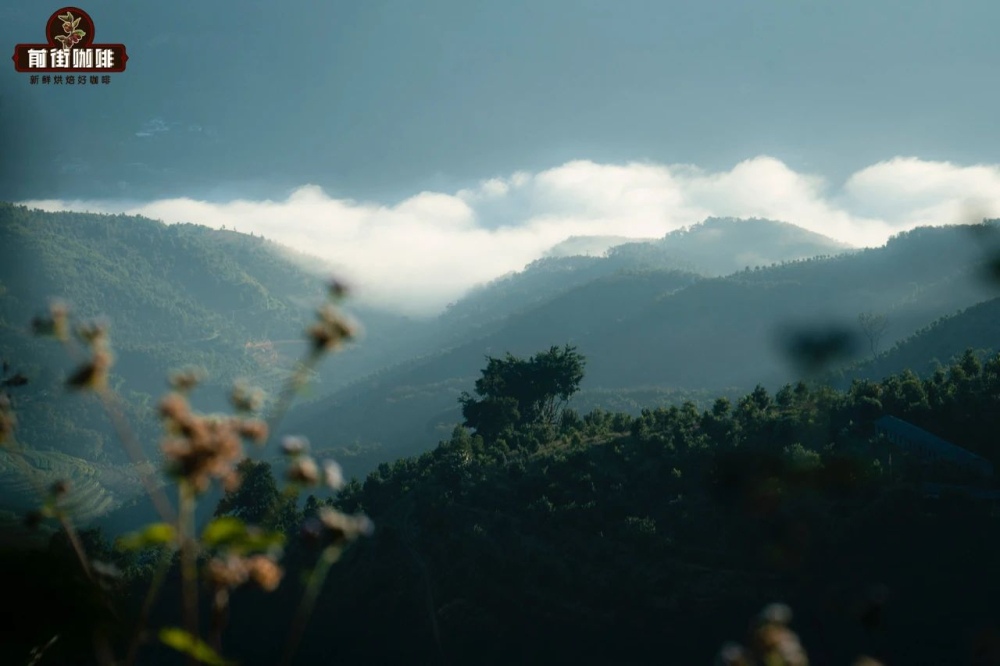
In summary, the development journey of Yunnan coffee is not just a story of industrial transformation, but also showcases how local farmers, brands, and technical teams have worked tirelessly to turn a remote land into a specialty coffee region with international potential. Every cup of pour over coffee from Yunnan carries the terroir of the land and the refinement of time, waiting for coffee enthusiasts to savor in detail.
The above content is compiled by CoffeeHunters, a coffee news website.


