







Introduction:Although Americano is one of the most common drinks in coffee shops, its historical background, brewing methods, and flavor adjustments still hold many details worth exploring. This article starts with the drinking habits of U.S. soldiers during World War II, analyzes the evolving definition of Americano, the differences between Americano and Long Black, and provides practical ratios and parameter suggestions for both hot and iced versions. Finally, it discusses whether removing crema can optimize flavor, helping readers better understand what makes a great Americano.
Americano may seem like just diluted espresso, but there’s actually quite a bit of science behind it. This beverage originated during World War II when U.S. soldiers stationed in Southern Europe, unaccustomed to the intensity of espresso, began diluting it with hot water—gradually forming the prototype of Americano. Today, it has become a staple drink in coffee shops worldwide, but its preparation and definition have changed significantly from those early days.
Generally speaking, what we call an Americano refers to a black coffee made by combining espresso with a large amount of hot water. Its characteristics include a relatively refreshing taste and a balanced acidity and bitterness, making it ideal for those who enjoy pure coffee flavors without consuming too much concentrated espresso in one go. However, in actual coffee shops, various methods of preparing Americano have emerged. The most common are the “water poured into espresso” method known as Americano, and the “espresso poured into water” method called Long Black—both of which have slight differences in taste and appearance.
When discussing the history of Americano, we must mention the European battlefields of the late World War II. At that time, a large number of U.S. troops arrived in places like Italy and discovered the locals’ love for espresso. But for the American soldiers, accustomed to filtered, lighter coffee, the strong taste of espresso was hard to accept. To adjust the concentration, they began diluting it with hot water. This method gradually spread within the military and was later brought back to the United States, forming the early concept of what would become “Americano.”
Interestingly, the U.S. already widely used drip coffee makers—commonly referred to as American coffee pots—prior to this, which produced coffee that was naturally lighter in body. This brewing method typically took four to five minutes, releasing flavors more gently. It wasn’t until the international expansion of brands like Starbucks that the practice of adding water to espresso to make an American-style drink truly became the global standard.
Currently, the Americanos available on the market mainly fall into two common preparation methods: one involves pouring brewed espresso into hot water, known as Americano; the other involves pouring hot water into the cup first, followed by the espresso, known as Long Black. These two methods not only differ in the order of steps but also slightly affect the distribution of coffee crema and the final taste. Generally, the crema in an Americano is more evenly distributed throughout the drink, while a Long Black retains more crema on the surface.
However, one brewing method has sparked debate in the industry: using an espresso machine to perform a long, low-pressure extraction to produce a lighter-tasting coffee. Some baristas believe this method can easily lead to over-extraction, resulting in excessive off-flavors and caffeine content, especially in the later stages of extraction where flavor compounds can become unbalanced. Supporters, however, point out that compared to methods like the French press or siphon, this approach doesn’t necessarily take longer and allows for personal taste adjustments—so it shouldn’t be dismissed outright.
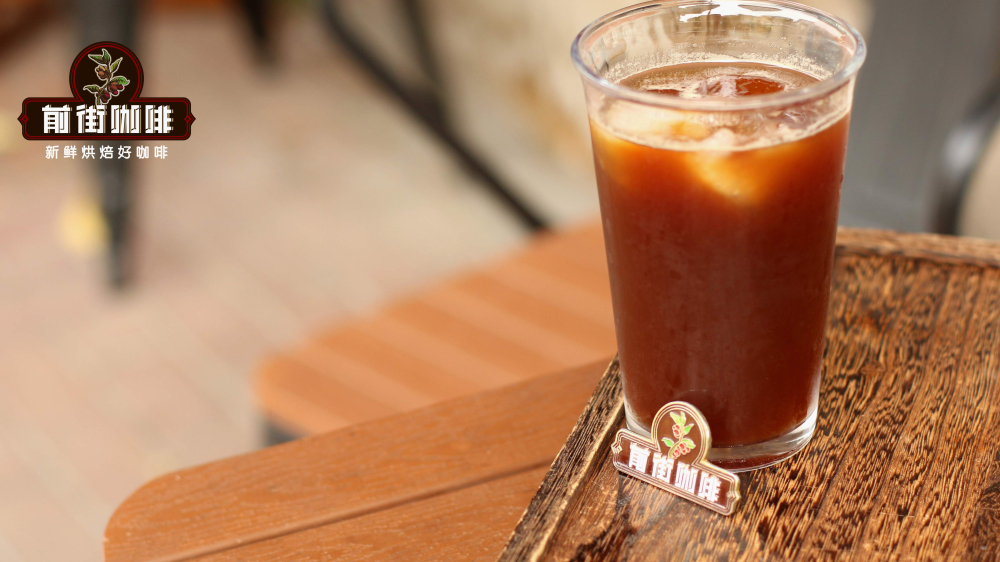
In practice, although Americano is made up solely of espresso and water, achieving the right balance is a skill. For a hot Americano, a common ratio of espresso to water is around 1:6 to 1:8. Experienced shops, especially those specializing in single-origin and blended coffees, will adjust brewing parameters based on the beans’ characteristics. For example, using a blend of Brazilian, Indonesian, and Vietnamese beans—extracting 20 grams of coffee beans to produce 40 grams of coffee liquid, with a brew time controlled between 25 to 30 seconds—can yield a balanced flavor with a bright and defined profile.
For a hot Americano, a 1:6 ratio is recommended—that is, 40 grams of espresso liquid to 240 grams of hot water. This concentration showcases the bean’s characteristics without being overly intense. For an iced Americano, a 1:7 ratio is suggested—for instance, 40 grams of espresso to 280 grams of ice-water mix (with about 180 grams of ice and 100 grams of cold water)—to balance the dilution effect caused by melting ice.
Additionally, many coffee enthusiasts wonder: does removing the crema from the surface make the Americano taste better? The answer actually depends on personal preference. Crema is a fine layer of foam formed during high-pressure extraction, resulting from the combination of carbon dioxide and coffee oils, contributing rich aroma and a fuller mouthfeel. Practical tests show that Americanos without crema tend to have a cleaner, smoother taste with more distinct flavors; retaining the crema, however, adds layers and a richer body, which is particularly appealing to those who prefer a heavier mouthfeel. It’s recommended to flexibly decide whether to remove the crema based on the beans’ characteristics for the day or individual taste preferences.
The above content is compiled by CoffeeHunters, a coffee news website.


