







Introduction:Tanzanian coffee is renowned for its gentle and balanced flavor profile, with the AA-grade Typica from the Kilimanjaro region being the most representative. This article delves into the historical background, geographical conditions, and washed processing methods of this region, and provides professional pour over parameters to help you fully appreciate this specialty coffee bean with its citrus, berry, and honey aroma layers.
Tanzania, along with its neighbor Kenya, is an important origin of premium coffee in East Africa. The two regions share similar languages and have frequent trade exchanges, yet their coffee flavor profiles are distinct. Compared to the often bold and dark berry notes of Kenyan coffee, Tanzanian coffee typically exhibits a milder and softer acidity, accompanied by a fresh sweetness and lingering aftertaste—making it ideal for coffee lovers who enjoy layered, bright fruit-tea-like flavors.
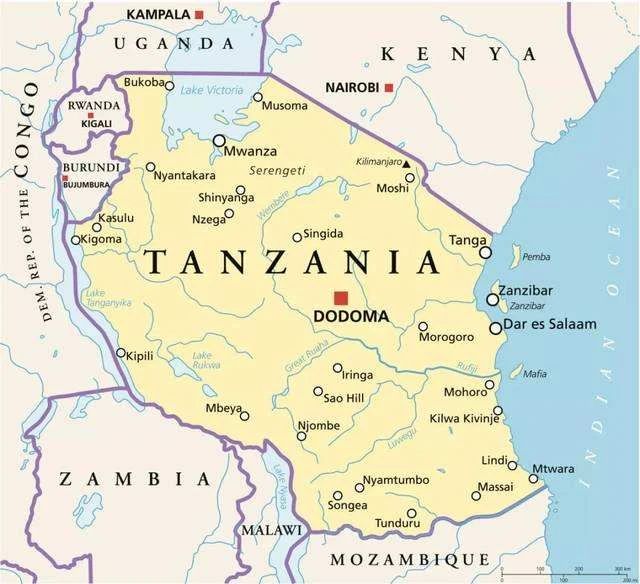
The history of coffee cultivation in Tanzania dates back to the late 19th century. It is recorded that coffee was first introduced from Kenya by missionaries from Réunion Island (French territory) and was trial-planted in areas such as Bayamoyo and Mogoro. By 1893, coffee trees planted at the foothills of Mount Kilimanjaro successfully yielded the first harvest, thanks to the fertile volcanic soil—marking the official beginning of coffee cultivation in Tanzania.
In the early 20th century, the colonial government promoted large-scale Arabica planting in the Bukoba region in 1911, and in 1952 established the first coffee farmers' cooperative organization—the Kilimanjaro Native Planters' Association (KNRA)—to encourage smallholder participation. After Tanzania gained independence in 1961, the government set a goal to double coffee production, which was not fully achieved, but today the annual coffee output remains stable at around 60,000 metric tons, with Arabica and Robusta each accounting for half.
In the early days, most Tanzanian coffee was produced by large estates, but over time, more than 80% now comes from small-scale farmers, many of whom operate collectively through cooperatives. Among them, the Kilimanjaro Cooperative Union (KNCU) is one of the most representative organizations, responsible for monitoring coffee quality. After green beans are purchased, they are uniformly processed by the Tanzanian Coffee Marketing Board (TCMB) and then sold to exporters via auction.
The Tanzanian coffee featured in this article comes from the volcanic highlands of northern Kilimanjaro, with the classic Typica variety, graded as the highest AA level, and processed using the traditional washed method. When brewed, it often presents a bright citrus note, interwoven with fruity aromas and a honey-like sweetness, with a soft tea-like finish. The overall flavor profile is richly layered.
Coffee processing in Tanzania is predominantly washed. Once the coffee cherries are harvested at maturity, farmers transport them to nearby processing facilities. The washed process begins with flotation to remove unripe cherries, followed by mechanical removal of the skin and pulp. The mucilage-covered beans are then placed in fermentation tanks for 18 to 36 hours to break down residual pulp. After fermentation, the beans are rinsed with clean water for 30 to 60 minutes, using water flow and density differences to separate defective beans. Finally, the clean parchment beans are sun-dried on African raised beds or drying tables.
This washed process effectively reduces impurities and undesirable flavors, resulting in a final cup with a clear, bright citrus and lemon acidity, while preserving elegant floral characteristics. The overall flavor profile is clean and delicate.
For this Tanzanian Kilimanjaro AA-grade Typica coffee bean, a pour over method is recommended to fully showcase its bright acidity and complex layers of fruit and honey. Being medium-light roasted and sourced from high altitude, a medium-fine grind and slightly higher water temperature are suggested to bring out the details.
Recommended pour over parameters are as follows: use a V60 filter cone, with water temperature controlled at 92-93°C, suggested coffee dosage of 15 grams, coffee-to-water ratio set at 1:15, grind size roughly equivalent to that of fine sugar, or using a 20-mesh sieve to achieve 78% extraction fineness.
Suggested specific brewing steps: begin by pouring 30 grams of water for 30 seconds of bloom; then pour 95 grams of water(total weight approximately 125 grams), completed within about 1 minute; when the water level drops to about 2/3 , pour the remaining 100 grams of water(total weight approximately 225 grams), completed within about 1 minute 35 seconds. Finally, let it drip to completion (approximately 2:10), then remove the filter cone and enjoy.
Once brewed, you’ll experience pronounced berry aromas, with a soft citrus acidity upon entry, a full-bodied nuttiness in the mid-palate, and a honey-like sweetness with elegant tea-like aftertaste in the finish. It’s a high-quality specialty coffee best savored slowly.
The above content is compiled by CoffeeHunters, a coffee news website.


