







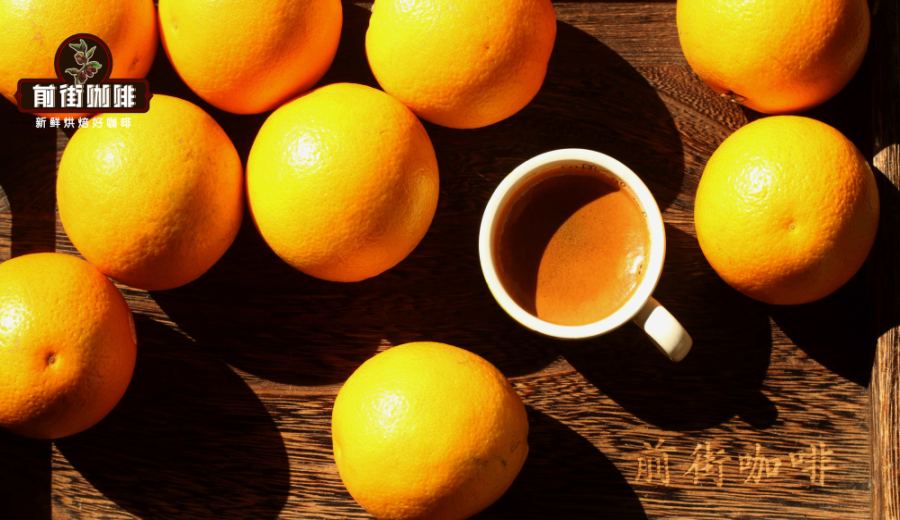
Introduction:Have you ever heard of adding lemon to espresso? This “Espresso Romano,” originating from southern Italy, blends lemon juice and sugar to temper the intense bitterness of dark-roast beans, resulting in a classic beverage with subtle acidity and caramel aroma. This article delves into its historical background, standard recipe, and two practical methods of adding lemon, while also offering extraction parameter suggestions and roast level adjustment tips—so you can recreate this richly southern Italian-style coffee at home.
The bright acidity of lemons is often used to describe the vibrant acidity in coffee, but in Italy, lemon is actually one of the real ingredients added to espresso. This classic drink, known as “Espresso Romano,” was born in Italy’s southern Campania region, originally created to counteract the harsh burnt bitterness of low-quality dark-roasted beans. By squeezing in lemon juice and adding sugar, an espresso with balanced sweet-and-sour notes, hints of whiskey aroma, and caramel sweetness was born. This article will start with its historical origins, guide you through the full recipe ratios, extraction details, and two practical ways to add lemon, and will also provide adjustments for lemon and sugar based on different roast levels.

Though renowned for its fresh aroma, lemon’s acidity is quite sharp and is often used in coffee flavor descriptions as a metaphor for the bright acidity of single-origin coffees. When we taste a coffee with lively acidity and uplifting aromas, we often describe it as having “lemon-like notes.” However, such descriptions are usually flavor associations rather than actual lemon additions. But in Italy, the birthplace of the espresso machine, there is indeed a coffee that directly adds lemon juice to the shot—letting drinkers truly experience the fruit’s acidity: Espresso Romano.
The creation of Espresso Romano is closely tied to Italy’s social context at the time. Ever since Italians invented the espresso machine and moka pot, coffee quickly became part of daily life. However, postwar economic hardship and limited access to quality coffee beans meant that dark-roasted lower-grade beans were commonly used, resulting in intense burnt bitterness and a harsh mouthfeel that many consumers found hard to accept. To balance this strong bitterness, people began experimenting with adding other ingredients to their coffee—and lemon and sugar ultimately became the widely adopted solution.

Campania in southern Italy is rich in lemon production, making this local ingredient a natural choice for balancing coffee’s bitterness. Lemon acid effectively softens intense bitterness, but if the acidity is too high, it can create new unpleasantness—so sugar is also added to smooth out the overall flavor. Over time, lemon and sugar became the standard pairing for this coffee, and even today, the drink remains popular in southwestern Italy. Though regional names may vary slightly, the preparation method is largely the same. Next, let’s take a detailed look at how to make Espresso Romano.
The ingredients needed to make Espresso Romano are very simple: one standard shot of espresso, a fresh lemon, and about 10 grams of white granulated sugar. For the espresso, it’s recommended to use a medium-dark roasted blend, using 20 grams of coffee grounds as a base, with a 1:2 coffee-to-water ratio, and extracting for around 30 seconds to achieve a balanced and smooth espresso base. A certain medium-dark roasted blend is a common and easily accessible option, suitable for most palates.

Once the espresso is extracted, the first step is to pour it into a cup that already has the sugar in it—this helps the sugar dissolve faster and meld with the coffee. Next comes the method of adding lemon, which mainly comes in two forms: the first is to manually squeeze fresh lemon juice directly into the coffee, typically using about 4 ml, adjusted according to roast level; the second is to place a small piece of lemon directly into the cup, allowing the heat of the coffee to naturally draw out the juice. The former allows precise control of lemon juice quantity, while the latter adds a more natural flavor—but the juice amount is harder to manage.
It’s worth noting,the darker the roast of the coffee beans, the stronger their inherent bitterness and harshness, so it’s recommended to pair them with more lemon juice and sugar to balance the flavor. For example, if using dark-roast beans, you can increase the lemon juice to 6 ml and slightly adjust the sugar as well. Conversely, if using light-to-medium roast beans—which already have pronounced acidity—it’s advisable to reduce the lemon to avoid the sourness overpowering the cup. For the average consumer, using a medium-dark roast such as the Warm Sun Blend, 4 ml of lemon juice and 10 grams of sugar are sufficient to harmonize the overall flavor.
After completing the above steps, gently stir the entire cup to let the lemon juice, sugar, and espresso fully meld—then enjoy this uniquely flavored Espresso Romano. When the proportions are just right, this coffee delivers a sweet-and-sour balanced mouthfeel, combining the rich layers of espresso with the fresh acidity of lemon, and upon closer sipping, you may even detect hints of whiskey-like booziness, the smoothness of buttery cookies, and the sweet lingering notes of caramel. For those who enjoy acidity and complex flavors, this coffee is definitely worth a try—but if you’re not a fan of sourness, it’s best to observe first before deciding whether to take on the challenge.

The above content is compiled by CoffeeHunters, a coffee news website.


