








Introduction:Want to make a well-balanced, layered iced latte at home? There's actually quite a bit of know-how involved beyond just “adding ice, pouring milk, and topping with coffee”! The choice of coffee beans and milk, the golden ratio between espresso, milk, and ice, and even the details of extraction and assembly can greatly affect the final taste. This article breaks down three key elements to help you consistently replicate a professional-grade iced latte and enjoy the fun of making coffee easily at home.
An iced latte may look like a simple drink made by combining ice, milk, and coffee, but if you want to brew one with truly outstanding flavor and a refreshing mouthfeel, there are actually quite a few details that need careful attention. From selecting the right coffee beans and milk, to controlling the precise ratio between espresso, milk, and ice, to the operational rhythm during extraction and pouring — each step directly influences the final outcome. This article will take an in-depth look at the three core aspects of making an iced latte so that you too can easily create a well-layered beverage with balanced milk and coffee aromas at home.

Espresso is a fundamental skill for many baristas and a staple offering in most cafés. The iced latte is a type of milk coffee from the espresso family that has relatively low barriers to entry, making it perfect for coffee beginners to try. However, although the method may seem like just “adding ice, pouring milk, and then adding coffee,” achieving the ideal taste and flavor actually involves hidden techniques at every step.
Many people think making an iced latte is very simple — just add ingredients in sequence — but the more intuitive the steps seem, the more care is needed in selecting materials, configuring proportions, and managing the process, in order to avoid outcomes that are overly bitter, weak, watery, or lacking in layering.
Step 1: Carefully select coffee beans and milk to lay the foundation for flavor
The flavor performance of an iced latte first depends on the coffee beans and milk you choose. Even among commonly available commercial options, different brands, roast levels, and origins of coffee beans can bring completely different flavor profiles. Generally speaking, Italian-style blends often have rich notes of nuts, chocolate, or caramel, which can give the iced latte a full-bodied and deep coffee flavor; whereas certain single-origin beans or special blends can better highlight the sweetness and silky texture of the milk.
As for milk, there are over ten types of common whole fresh milk available on the market. Some have a strong milky aroma, smooth and thick mouthfeel, while others are relatively lighter. When choosing milk, the focus isn’t on having the strongest milk flavor possible, but rather on whether it can achieve harmony and balance with the coffee. If the milk flavor is too strong, it can easily overpower the delicate notes of the coffee; if the milk is too thin, it might make the whole drink taste bland. It’s recommended to try a few different brands of whole fresh milk to find the pairing that best suits your personal taste.
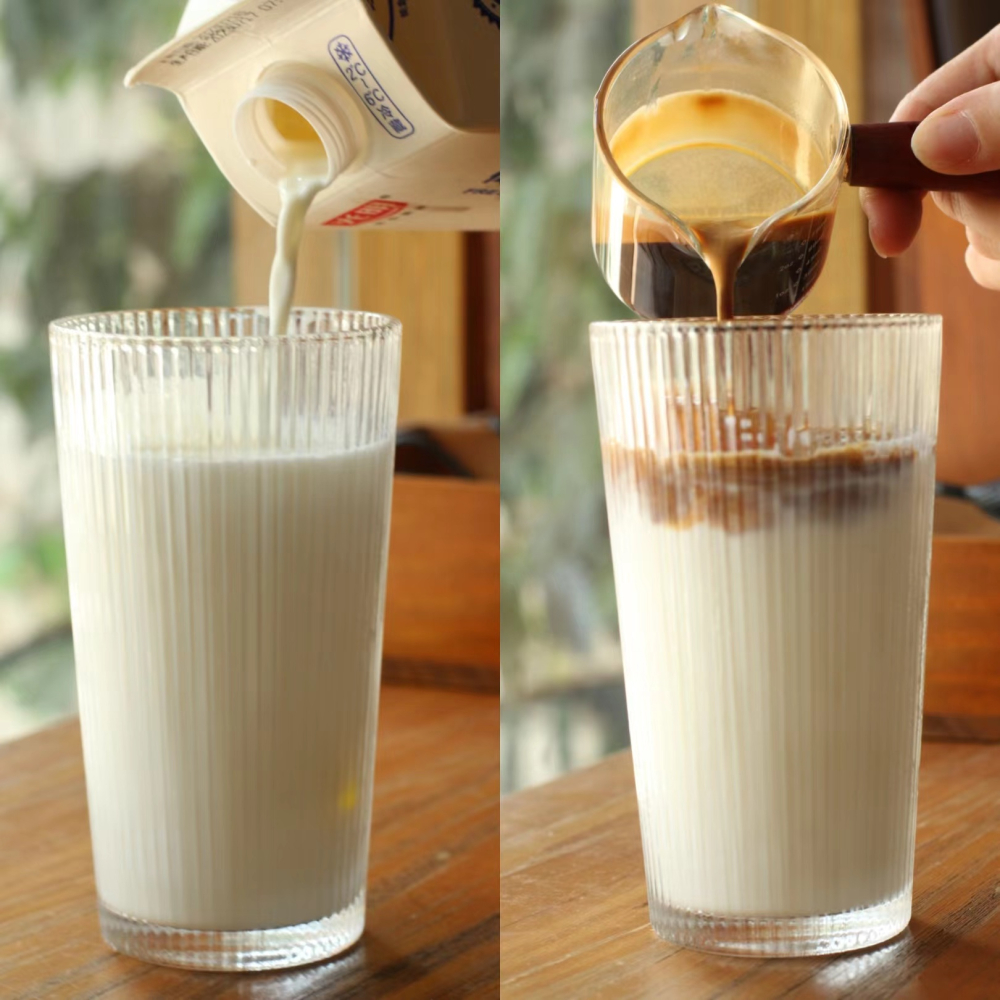
Step 2: Master the milk-to-coffee ratio to achieve the ideal mouthfeel
Even if you've chosen the right coffee beans and milk, an unsatisfactory iced latte can still result if the ratio is off. Taking common practical operation as an example,the commonly used ratio of espresso to milk is 1:4.5— that is, based on 40 grams of espresso liquid, paired with about 180 grams of iced milk and 75 grams of ice, poured finally into a transparent glass cup with a capacity of about 300 milliliters. This ratio balances the richness of the coffee with the creaminess of the milk, while the ice helps maintain the drink's coolness and an appropriate concentration.
However, this set of numbers is not absolute and is for reference only. In reality, many baristas make multiple adjustments and tastings based on the bean variety, milk characteristics, and personal taste to determine the most suitable ratio. For beginners, it’s recommended to start with this ratio as a base, then fine-tune according to actual taste. It’s especially important to note that too much milk can dilute the coffee flavor, too little may result in excessive bitterness, and too much ice may dilute the overall flavor as it melts.
Step 3: Pay attention to operational details to enhance overall performance
The process of making an iced latte may sound simple, but there are still plenty of details worth noting during actual execution. Among them,the extraction quality of the espresso is crucialbecause it directly determines the core flavor of the entire drink. Common extraction issues such as channeling or improper time control can significantly affect the final taste and aroma.
Additionally, the entire process emphasizes being “fast.” Ice and milk should not sit in the cup for too long, lest the ice melt and cause dilution, resulting in unwanted wateriness. Especially the espresso — right after extraction, its surface is rich in crema, which helps create a beautiful layered effect between the coffee and milk. But if left for more than 30 seconds, the crema gradually dissipates, affecting not only appearance but also reducing the overall flavor richness. Therefore, it’s recommended to pour the freshly extracted espresso into the cup already containing ice and milk as quickly as possible, to lock in the best flavor and texture.
The above content is compiled by CoffeeHunters, a coffee news website.


