







Introduction:Blue Mountain No. 1 coffee beans are renowned for their balanced and rich flavor profile, but due to their limited production, counterfeit products are common in the market. This article delves into how to identify authentic beans by examining key aspects such as barrel packaging, official certificates, bean appearance characteristics, and processing method differences. It also compares the unique flavor profiles of the washed and natural versions, and provides professional brewing recommendations to help you master the essentials of selection and tasting.
Blue Mountain coffee is grown exclusively in the high-altitude regions of Jamaica's Blue Mountains, at elevations between 910 and 1700 meters, and the cultivated variety is the classic Typica. Its flavor profile is defined by a perfect balance of acidity, sweetness, and bitterness, with a rich and full-bodied mouthfeel, a long-lasting sweet aftertaste, and absolutely no burnt or bitter off-notes.
Due to its extremely limited annual production, the reasonable retail price for genuine Blue Mountain No. 1 coffee beans in China is about 150 to 400 RMB per 100 to 200 grams. It’s important to note that products labeled as “Blue Mountain flavor” or “Blue Mountain blend” are not authentic Blue Mountain coffee.
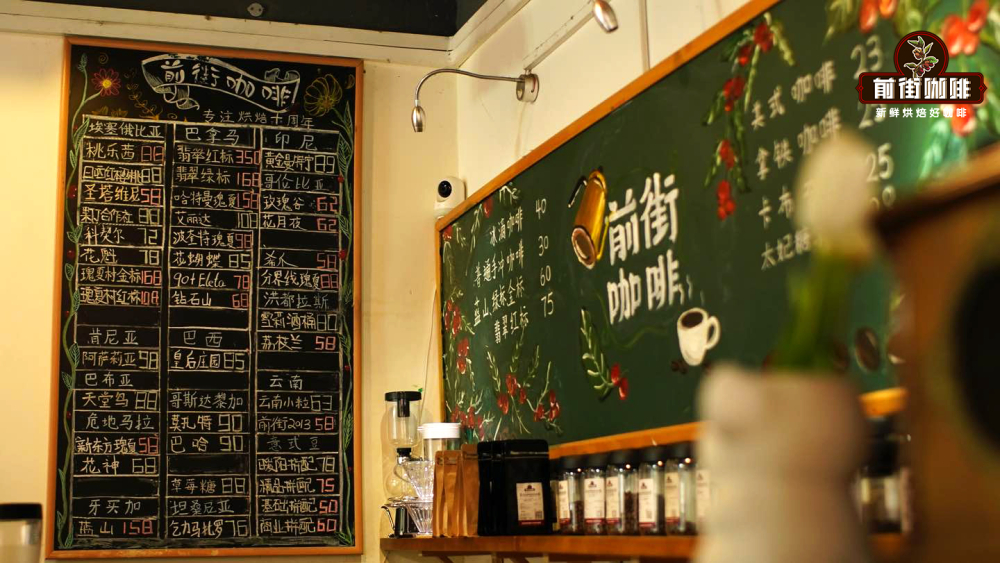
To authenticate Blue Mountain No. 1, the first step is to examine its packaging and certification documents. Genuine Blue Mountain coffee is always transported and exported in traditional wooden barrels and comes with an official certificate issued by Jamaican authorities or the growing region.
Taking the well-known Clydesdale Estate as an example, this estate is not only the oldest coffee plantation in the Blue Mountain region, but all its export products can be verified for barrel origin and official certification. When making an actual purchase, being able to personally inspect the wooden barrels and related certificates will greatly improve the accuracy of authenticity identification.
In addition to packaging and certification, observing the physical characteristics of the coffee beans themselves is also an important basis for judgment. Start with the overall size and uniformity of the beans.
Currently, the authentic Blue Mountain No. 1 beans circulating in the market mostly belong to the higher-grade levels, requiring at least 96% of the coffee cherries to be sized at 17 mesh (approximately 8 mm) or larger, with the post-processing defect rate strictly controlled to within 2%.
For this reason, high-quality Blue Mountain No. 1 green beans usually have a plump and consistent appearance, with almost no visible defects, and do not require additional manual sorting procedures.
In terms of bean shape characteristics, Blue Mountain No. 1 uses the Typica variety, and its green beans are slender and oval-shaped, with both ends naturally slightly upturned, giving an overall slender and elegant contour. After roasting, the beans still maintain a uniformly plump oval appearance, with consistent size and very few defects.
Another key identification point is the color difference of the green beans. Traditionally, Blue Mountain No. 1 mainly uses the washed processing method, and in this case, the green beans exhibit a distinctive grayish-green hue.
It’s worth noting that since 2020, some Blue Mountain No. 1 beans have begun to use the natural processing method, and the color of these green beans turns to a yellowish-green. When purchasing, you can observe color variations based on the differences in processing methods.
Regarding the flavor differences brought by different processing methods, actual brewing tests show that using the Kono filter, with a standard parameter set of 88°C water temperature and a 1:15 coffee-to-water ratio (15 grams of coffee, ground to 70-75% passing through a 20-mesh sieve), can fully showcase the delicate qualities of Blue Mountain No. 1.
Specific brewing suggestions: start with a 30-gram bloom for 30 seconds, then pour up to 125 grams (approximately 95 grams of actual increment), maintaining for about 1 minute; when the water level drops to two-thirds of the coffee bed, continue pouring the remaining 100 grams (total 225 grams), with the total extraction time controlled between 2 minutes 05 seconds and 2 minutes 15 seconds.
The flavor profile of the washed version of Blue Mountain No. 1 is clear: the cup opens with distinct notes of dark chocolate and nuts, a clean and bright mouthfeel, richly balanced and harmonious in both acidity and sweetness. The natural processed version, on the other hand, showcases a distinctly different character—brown sugar sweetness paired with gentle berry acidity, gradually releasing layers of nuts and cocoa in the mid-to-late stages, with a silky creamy texture and walnut aroma in the aftertaste, offering an overall more complex and rich flavor profile.
The above content is compiled by CoffeeHunters, a coffee news website.


