







Introduction:Colombia is a globally renowned single-origin coffee-producing country, where the diverse terrains of the Andes Mountains give rise to a rich and varied array of coffee flavors. This article explores the three major coffee-growing regions—from the north, central, to the south—detailing each area’s climate, altitude, and processing characteristics. It also highlights the classic dark chocolate and caramel flavors of washed beans from the Huila region, as well as the double anaerobic washed process and captivating spice-and-berry aftertaste of the “Sakura” beans from the Paradise Estate. At the end, we offer practical V60 pour-over brewing tips so you can enjoy layered Colombian coffee at home.
When it comes to single-origin coffee, Colombia is definitely one of the first countries that comes to mind for many people. Located in South America, this country, with its exceptional geographical conditions and mountain microclimates, cultivates coffee beans with distinct flavor layers that are widely loved. Colombian coffee not only holds a solid position in the international market but is also a top choice for many coffee newcomers entering the world of specialty coffee.
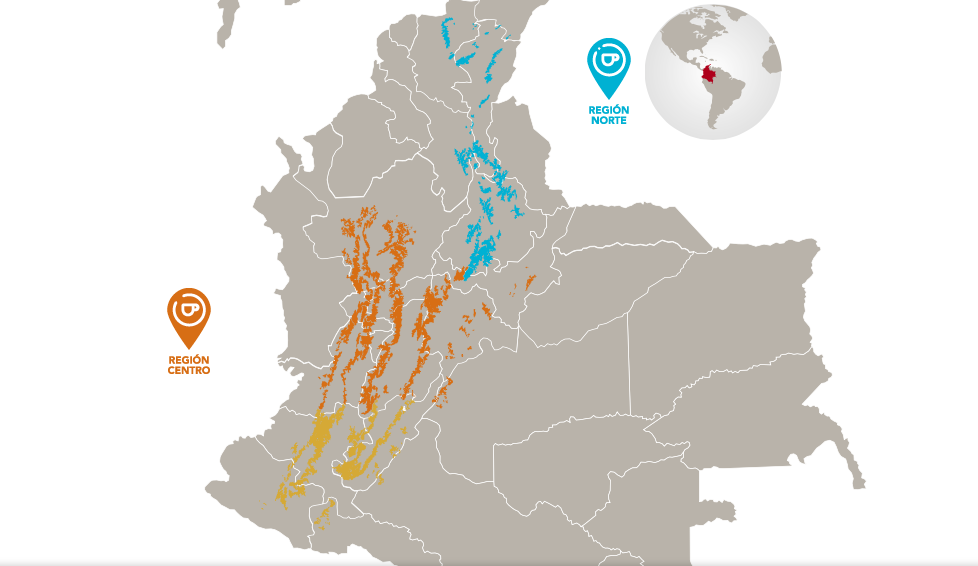
Situated within the longitudinal stretch of the Andes Mountains, Colombia has complex and varied terrain and climate, so its national coffee-growing regions can be roughly divided into three major blocks: northern, central, and southern, each showcasing unique flavor profiles. This regional diversity makes Colombian coffee an excellent choice for exploring different flavor experiences.
The northern region mainly includes provinces such as La Guajira, Magdalena, and Cesar. Due to its relatively northern location, the temperatures are higher on average, and shaded cultivation is commonly practiced. As a result, the coffee here generally has a fuller body and lower acidity. Although not as famous as the southern or central regions, the stable performance and affordable pricing make it a great everyday drinking option.
The central region is the heartland of Colombian coffee, covering provinces such as Antioquia, Valle del Cauca, Tolima, and Quindío. Not only is it the country’s largest coffee-producing area, but it also gathers numerous long-established farming communities. Central Colombian coffee is characterized by medium acidity and rich fruity notes, with some areas even offering a fresh herbal undertone, making it ideal for those who prefer balanced flavors.
The southern region includes provinces such as Cauca, Huila, and Nariño. Situated at high altitudes and close to the equator, it experiences large day-night temperature variations, which produce coffee with bright acidity and prominent floral and fruity aromas. The coffee from this region is often regarded as representative of Colombia’s specialty offerings, especially the washed beans from the Huila region, known for their intense dark chocolate and caramel sweetness, making them a popular choice for many coffee beginners.

Driven by the trend in specialty coffee, more and more consumers are beginning to pay attention to how processing methods affect flavor. Among these, anaerobic fermentation processing has garnered significant attention for its ability to enhance fruity notes and boost body. A well-known coffee merchant once selected a coffee bean named “Sakura” from the Paradise Estate in Colombia from among many Colombian beans, using a double anaerobic washed process that showcased unusual spice and berry aftertastes.
This “Sakura” bean from the Paradise Estate in Colombia’s Cauca region is grown at an altitude of up to 2050 meters and is of the common and stable Castillo variety. In terms of processing, it undergoes a double anaerobic washed method, allowing the beans to accumulate a richer array of aromatic molecules during fermentation. A roaster from a certain roasting company chose a medium roast to preserve the fruit acidity while enhancing overall sweetness and layering.
According to cupping results, this coffee exhibits distinct notes of Vietnamese balm, mugwort, and rosemary. The acidity is round on the palate, and the finish even reveals a sweet aftertaste reminiscent of strawberry jam. Although this flavor combination is not entirely what one might imagine from “Sakura,” it showcases the unique charm of high-altitude Colombian coffee.
If you’d like to try brewing this coffee at home using a pour-over method, it is recommended to use a Hario V60 filter, with water temperature controlled around 90°C, a coffee dose of 15 grams, and a 1:15 coffee-to-water ratio. For grind size, a medium-fine grind is advised—approximately 80% passing through a Chinese standard No. 20 sieve—to help fully extract flavor details.
Since coffee beans release a large amount of carbon dioxide after roasting, it is recommended to perform a 30-second bloom before brewing, pouring about 30 grams of hot water. Then, slowly circle the water injection from the center, pouring to 125 grams in the first stage, waiting for the water level to drop, and then continuing to pour up to 225 grams. The total extraction time should be controlled to around 2 minutes to achieve better balance in taste.
It is worth noting that the optimal degassing period for coffee beans is about 4 to 7 days after roasting, when the flavors are the most rounded and off-flavors have dissipated. However, since residual carbon dioxide remains inside the beans after roasting, the initial “sharpness” may affect the taste, making the blooming step particularly important. It effectively reduces harshness and leads to a smoother overall flavor.
In summary, the charm of Colombian coffee lies in its regional diversity and varied processing methods. Whether you prefer the bold and rich chocolatey profile or enjoy floral-fruity notes and unique processing flavors, you can find something to your liking in Colombia. By understanding the characteristics of each region and the suitable brewing parameters, you will be able to delve deeper into the boundless allure of this major single-origin coffee country.
The above content is compiled by CoffeeHunters, a coffee news website.


