







Introduction:Jamaica Blue Mountain and Ethiopia Yirgacheffe represent two extremes of coffee flavor profiles — deep, rich body and bright, floral-fruity notes. Understanding their regional characteristics, varietal genetics, grading systems, and optimal brewing methods can help you choose the beans that best suit your taste preferences and master key extraction techniques to elevate your home brewing experience.
In the world of specialty coffee, Jamaica Blue Mountain and Ethiopia Yirgacheffe are often seen as representing two vastly different flavor extremes. The former is known for its classic flavor profile featuring intense notes of nuts, chocolate, and a balanced acidity and sweetness, while the latter captivates coffee enthusiasts with its pronounced jasmine floral aroma and citrusy, berry-like acidity. So which one is more worth savoring? Perhaps the answer lies not in comparison, but in delving into their origins, varieties, and processing methods, then making a choice based on your own taste preferences.
This article will take an in-depth look at the growing environments, grading systems, varietal traits, and pour over recommendations for these two renowned coffees. It aims to introduce you to their unique qualities from multiple perspectives and provide practical extraction parameters, allowing you to achieve close-to-professional-level flavor at home.
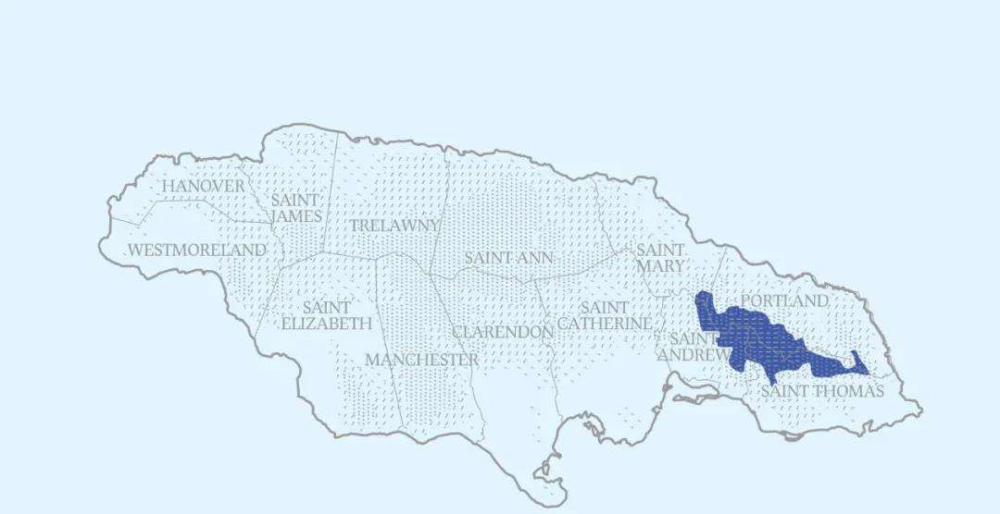
The fame of Jamaica Blue Mountain coffee stems from its exceptional geographical environment and strict grading system. Jamaica is a tropical island nation located in the Caribbean, with a coffee-growing history dating back to the 18th century. The Blue Mountains are situated in the eastern part of the country and are named for the blue-hued glow created by sunlight refracting off the ocean surface. The highest elevation reaches 2,256 meters, though the coffee-growing regions are mainly concentrated below 1,700 meters.
To ensure coffee quality, the Jamaican government classified Blue Mountain coffee into three main categories based on altitude in 1932: Jamaica Blue Mountain, Jamaica High Mountain, and regular Jamaica coffee. Only beans grown between 1,000 and 1,700 meters above sea level qualify to be labeled as “Jamaica Blue Mountain.” Additionally, Blue Mountain coffee is further subdivided into four grades based on the defect rate of green beans: NO.1, NO.2, NO.3, and PB (peaberry). Among them, the NO.1 grade must have a defect rate of less than 2%, with uniformly sized and intact beans, typically delivering the most outstanding flavor.
The Jamaica Blue Mountain No.1 beans offered here are sourced from around 1,310 meters in the Blue Mountains, processed using the washed method, and of the traditional Typica variety. The flavor profile of these beans is dominated by chocolate, nuts, cream, and cocoa, with a rich yet layered mouthfeel — a true classic among Blue Mountain coffees.
In contrast to the bold and mellow profile of Blue Mountain, Ethiopia Yirgacheffe offers a completely different lightness and vibrancy. Located in the Gedeo region of southern Ethiopia, Yirgacheffe is a highland town situated at an altitude between 1,700 and 2,200 meters. Its cool climate slows down the ripening process of coffee cherries, allowing them to accumulate richer aromatic compounds.
Most Yirgacheffe coffee is grown by local smallholder farmers using garden-style cultivation, often intercropped with other plants for shade. After harvest, the coffee cherries are sent to cooperatives for unified processing, so many Yirgacheffe beans are named after the cooperatives they come from. The region currently has 28 cooperatives, among which Gedeb, Worka, and Konga are particularly well-known.
The dominant processing method for Yirgacheffe coffee is washed processing, which is also key to its clean, bright acidity. During processing, the coffee cherries first undergo flotation to remove defects, then the pulp is removed, followed by fermentation in tanks for 12 to 36 hours to loosen the mucilage layer. The beans are then washed multiple times with clean water and sun-dried. This process gives Yirgacheffe its clean, bright acidity along with distinctive notes of jasmine, citrus, and berries, often ending with a tea-like finish.
The Yirgacheffe sample beans provided here come from a well-known local cooperative, grown at an altitude of approximately 1,900 to 2,000 meters, and of the Ethiopia-specific Heirloom heirloom variety. The flavor is characterized by jasmine, citrus, berries, and a tea-like quality, with bright acidity and a rich layering.
In terms of variety, Jamaica Blue Mountain uses Typica, an historic Arabica variety known for its elegant aroma and soft mouthfeel. However, it has low yield and is susceptible to diseases, so its planting area is limited. Yirgacheffe, on the other hand, mostly uses the local Heirloom heirloom variety. Due to the great variety and lack of a unified classification, these beans often vary in size, yet this also results in greater genetic diversity and flavor potential.
For home brewers, understanding the correct extraction method is crucial. Many wonder why their home-brewed coffee lacks the aroma of professional shop brews. One key factor is bean freshness. It’s generally recommended that coffee beans undergo a 4 to 7-day resting period after roasting to allow residual carbon dioxide to dissipate, after which they enter their optimal drinking window of about 30 days. For the most vibrant flavors, choose beans roasted within 5 days.
For a coffee like Jamaica Blue Mountain No.1, which features nutty and chocolatey notes, it’s recommended to use a slightly coarser grind, with water temperature controlled around 88–90°C. You may opt for a KONO filter to enhance the body. For brewing, use 15 grams of coffee grounds, start with a 30-second bloom using 30 grams of water, then pour in a slow, circular motion from the center outward to reach 125 grams, followed by a second pour to 225 grams until the dripping finishes.
For Yirgacheffe, a medium-light roasted coffee with prominent floral and fruity notes, it’s recommended to use a finer grind, with water temperature increased to 90–92°C, and a V60 filter to highlight its acidity and aroma layers. Using 15 grams of coffee grounds as a base, begin with a 30-second bloom, then pour in two stable stages to reach 225 grams. Pay attention to pouring speed and bed level changes to fully bring out its citrus, berry, and tea-like characteristics.
In summary, Jamaica Blue Mountain and Yirgacheffe represent two extreme and exquisite flavor profiles in the coffee world — one deep and steady, the other fresh and lively. Understanding their regional traits, varietal genetics, and processing methods helps you make a more precise choice based on personal taste. Whether you prefer a rich chocolatey profile or bright floral-fruity aromas, mastering the right extraction techniques allows you to recreate a near-professional tasting experience with home brewing equipment.
The above content is compiled by CoffeeHunters, a coffee news website.


