








Introduction:As the birthplace of Arabica coffee, Ethiopia boasts a rich diversity of heirloom varieties and unique regional flavor profiles. This article delves into the origins and characteristics of the Heirloom variety, provides a detailed analysis of the flavor profiles of major producing regions such as Yirgacheffe, Sidamo, Guji, Harrar, and Limu, explores the impact of washed and natural processing methods on coffee flavors, and offers practical pour over parameter recommendations to help readers fully grasp the essence of Ethiopian coffee.
Ethiopia is not only the cradle of Arabica coffee but also a holy grail for global specialty coffee enthusiasts. The country’s coffee is renowned for its vibrant and intense floral and fruity aromas, with the unclassified wild varieties—collectively known as Heirloom—being particularly distinctive. These native coffee varieties not only shape the unique personality of Ethiopian coffee but also bring endless surprises to the global market.
Definition and Characteristics of Heirloom Varieties
When it comes to Ethiopian coffee, the term "Heirloom" is almost unavoidable. However, Heirloom is not a single variety but rather a general term for the numerous scientifically unclassified, mostly wild or semi-wild coffee varieties in the country. Literally, Heirloom means "family heirloom," symbolizing that these coffee varieties are passed down through generations like precious treasures. Due to Ethiopia’s extremely high genetic diversity in coffee and the fact that many varieties have not undergone complete genetic identification, they are collectively referred to as Heirloom, which also serves as a way to protect these unique genetic resources.

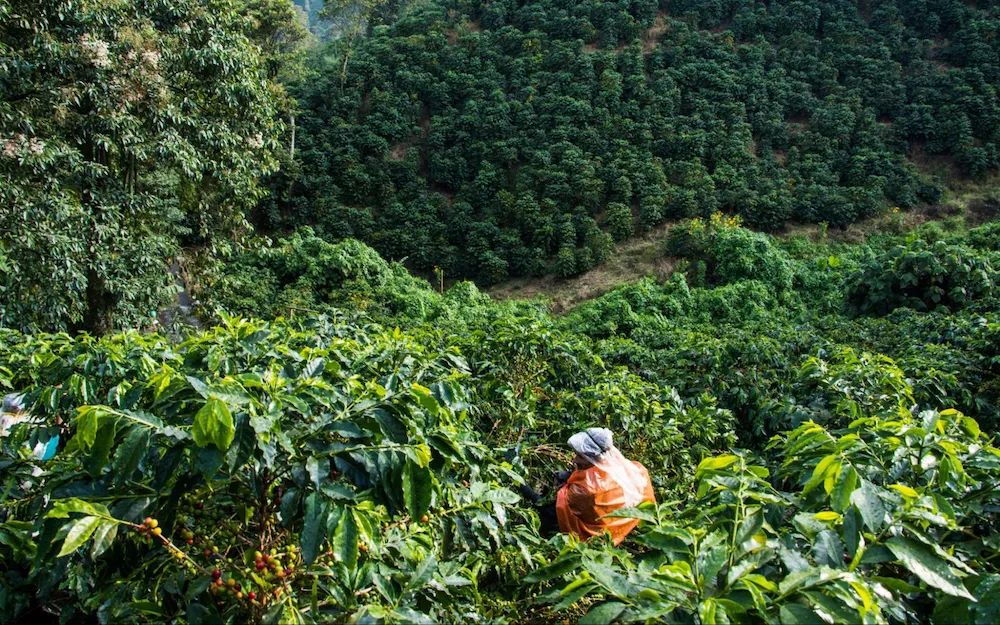
Coffee cultivation in Ethiopia can be divided into four models: forest, semi-forest, garden, and large-scale farms, with semi-forest cultivation being the most common. Farmers typically manage wild coffee tree clusters while intercropping with other plants. Due to the wide variety of cultivars and their scattered distribution, coupled with a lack of large-scale genetic testing, growers often rely on experience to identify plants. Heirloom varieties usually have smaller beans with more irregular shapes, typically ranging between 14 and 15 mesh sizes, and often exhibit delicate floral and fruity notes during cupping, making them highly favored by baristas and consumers.
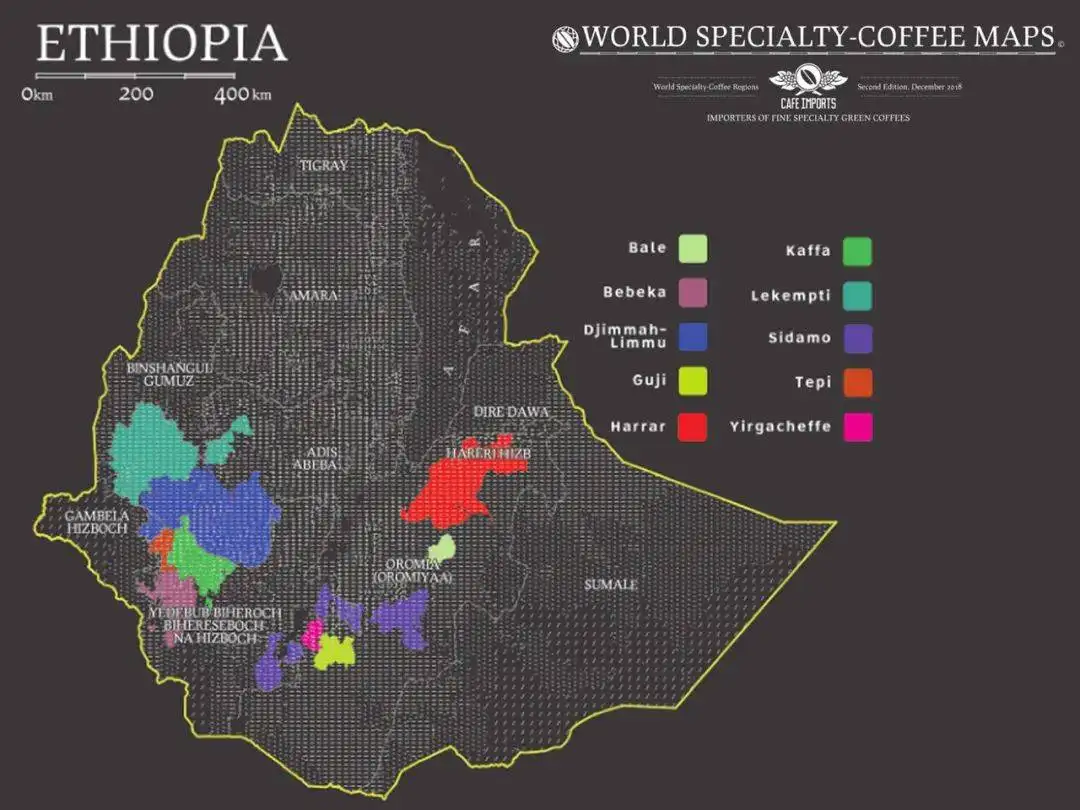
Overview of Ethiopia’s Major Specialty Coffee Regions
Coffee cultivation in Ethiopia is primarily concentrated in the western and southern regions, supported by nearly 1.2 million smallholder farming families, accounting for about 90% of the nation’s production. Production methods include forest, semi-forest, garden, and large-scale farms, with garden coffee being the most common. Due to limited individual yields, coffee is often processed collectively through cooperatives or washing stations, then sold under the name of the processing facility.
Yirgacheffe: The Classic Representative of Citrus and Floral Notes
Originally part of Sidamo, Yirgacheffe became an independent region due to its unique flavor profile. The area consists of 28 small cooperatives, such as the well-known Kochere and Worka cooperatives. High altitudes and significant diurnal temperature variations allow coffee cherries to ripen slowly, accumulating richer flavor compounds. Yirgacheffe coffee often features bright citrus and lemon acidity, intense jasmine floral notes, and a honey-like sweetness, serving as the archetype of "African coffee" for many.
One brand includes washed Yirgacheffe in its everyday coffee series, serving as an entry point for newcomers to understand the region’s flavor characteristics. These beans are suitable for light roasting to preserve their clear acidity and delicate floral notes, making them an excellent choice for practicing pour over.
Sidamo and Guji: Diverse Flavors and Delicate Florals
Located in southern Ethiopia, Sidamo features complex and varied geographical and climatic conditions, giving rise to diverse coffee flavors. The region’s coffee is mostly distributed along both sides of the East African Rift Valley, with fertile soil and annual rainfall reaching up to 2000 mm. Guji, a high-altitude micro-region within Sidamo (1850–2000 meters), is known for its prominent sweetness and delicate floral notes. Although it was once part of Sidamo, it is now often regarded as an independent area. Its coffee often exhibits flavors of tropical fruits such as passion fruit and strawberry, making it a favorite among many roasters.
Harrar Region: Natural Processing and Rich Berry Notes
Harrar, located in eastern Ethiopia, is both a historic trading hub and one of Islam’s four holy cities. The region’s coffee is produced in the Hararghe Highlands, where annual rainfall is relatively low, around 1000 mm, leading to the prevalence of natural processing. Specialty Harrar coffee often features intense chocolate, red wine, and dark berry flavors, sharing similarities with Yemeni Mocha. However, in recent years, due to grading and quality control issues, consistently high-quality Harrar coffee has become increasingly rare.
Limu Region: Low Body and Unique Herbaceous Notes
Limu is situated in central Ethiopia, at altitudes between 1200 and 2000 meters, with relatively low production, mainly exported to Europe and the United States. The region employs diverse processing methods, including washed, natural, and semi-washed. Limu coffee generally has a lower body, with floral and citrus notes less pronounced than those of Yirgacheffe or Sidamo, but it features unique fruit acidity, grassy, and brown sugar flavors, appealing to drinkers who enjoy distinctive taste profiles.
Impact of Washed and Natural Processing Methods on Flavor
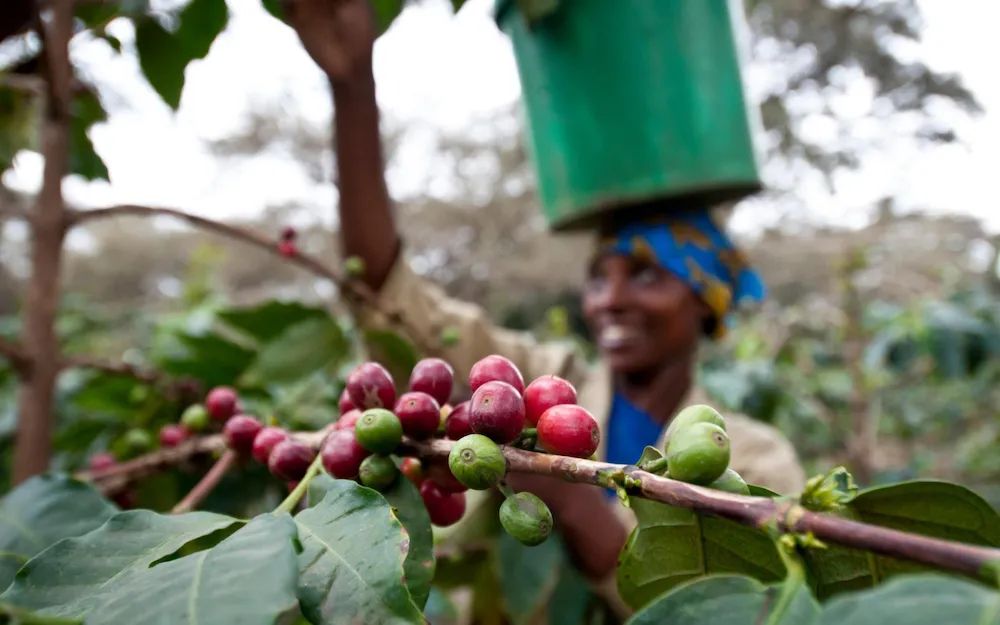
In its early days, Ethiopia primarily used traditional natural processing, where coffee cherries were directly sun-dried on rooftops or mud grounds, often leading to off-flavors or uneven fermentation. In 1972, the government introduced washed processing techniques from Central and South America, significantly improving the cleanliness and flavor expression of the coffee, and establishing Yirgacheffe’s status as a specialty coffee region.
The washed process steps include: sorting (using buoyancy to remove unripe cherries), removing the pulp and flesh, fermenting to remove the mucilage, washing, and finally drying on African beds. This method highlights bright citrus and white floral notes, catering to consumers who prefer pronounced acidity.
Natural processing, on the other hand, involves drying the whole intact coffee cherry directly. Modern practices place greater emphasis on even turning to improve flavor consistency. Natural coffee often exhibits intense fruit aromas, honey-like sweetness, and layered fermentation notes, with examples like Red Cherry lots showcasing complex flavors of black tea and berries.
Pour Over Parameter Recommendations: How to Extract Optimal Flavor
For high-altitude, very hard beans like Yirgacheffe, a medium-light roast is recommended to preserve acidity and aroma. Washed versions suit light roasts, emphasizing citrus and floral notes; naturals suit medium-light roasts, bringing out berry and sweetness. It is recommended to use a Hario V60 filter, with water temperature controlled at 91~93°C, a brew ratio of 1:15, and a grind size approximately equivalent to a medium-fine grind with an 80% passing rate through a standard Chinese No. 20 sieve 80% 通过率 .
For pour over, a three-stage extraction is suggested: first, pre-infuse with twice the coffee dose (about 30 grams) of water for 30 seconds; then pour in a slow, steady stream until 125 grams for the first pour, wait for the water level to drop, then pour again until 225 grams, with a total extraction time of about 2 minutes. These parameters help balance acidity, sweetness, and aroma, showcasing the refined layers of Ethiopian coffee.
The above content is compiled by CoffeeHunters, a coffee news website.


