







Introduction:Jamaica Blue Mountain coffee is hailed as the "King of Coffees," but the market is flooded with counterfeits and misleading information. This article delves into the authentic growing regions, official certifications, variety characteristics, and processing methods of Blue Mountain coffee, and guides you in identifying the genuine product through details such as CIB certificates and wooden barrel packaging. It also provides insights into the flavor differences between washed and natural processed beans, roasting recommendations, and pour-over parameters to help you truly understand and savor the unique charm of this world-class coffee.
Blue Mountain coffee has long been known as the "Emperor of Coffees," but precisely because of its fame, the market is teeming with imitations and conceptually confusing products, leaving many coffee enthusiasts at a loss when making purchasing decisions. This article will take you through the full spectrum of Jamaica Blue Mountain coffee—from historical background, regional certification, variety traits, processing methods, to how to identify the authentic product and master brewing techniques.
The Historical Origins of Jamaica Blue Mountain Coffee
The history of coffee cultivation in Jamaica dates back to the early 18th century. In 1717, King Louis XV of France ordered the establishment of coffee plantations in the region. By the mid-1720s, then-Governor Sir Nicholas Lawes introduced Arabica seeds from Martinique and promoted their cultivation in the Saint Andrew area. Over time, the Blue Mountain range, due to its terrain and microclimate variations, gradually developed into three distinct grades: Blue Mountain, High Mountain, and regular Jamaican coffee, with Blue Mountain becoming the top-tier variety due to its elevation and environmental conditions.
Where is the Authentic Growing Region of Blue Mountain Coffee?
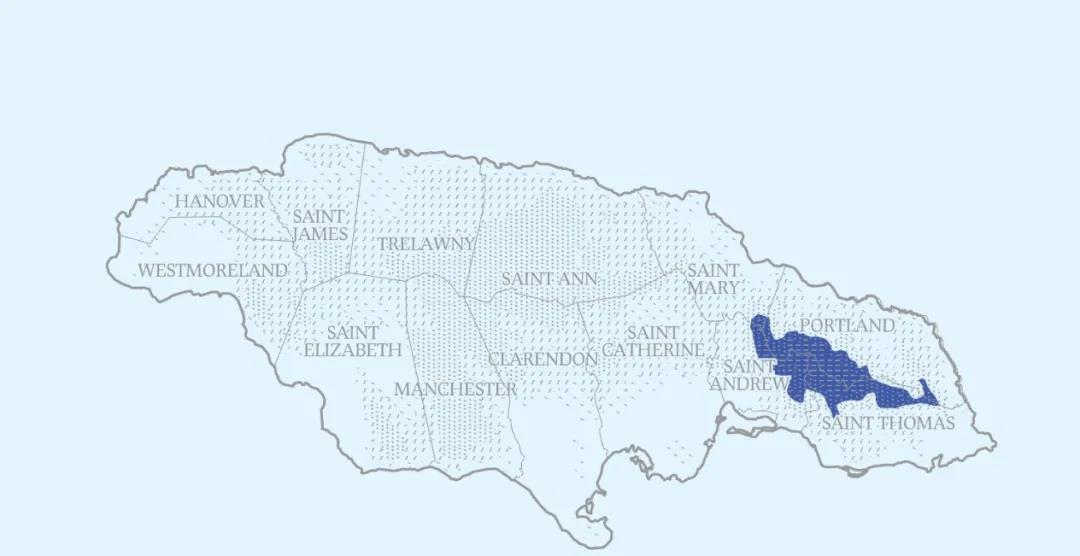
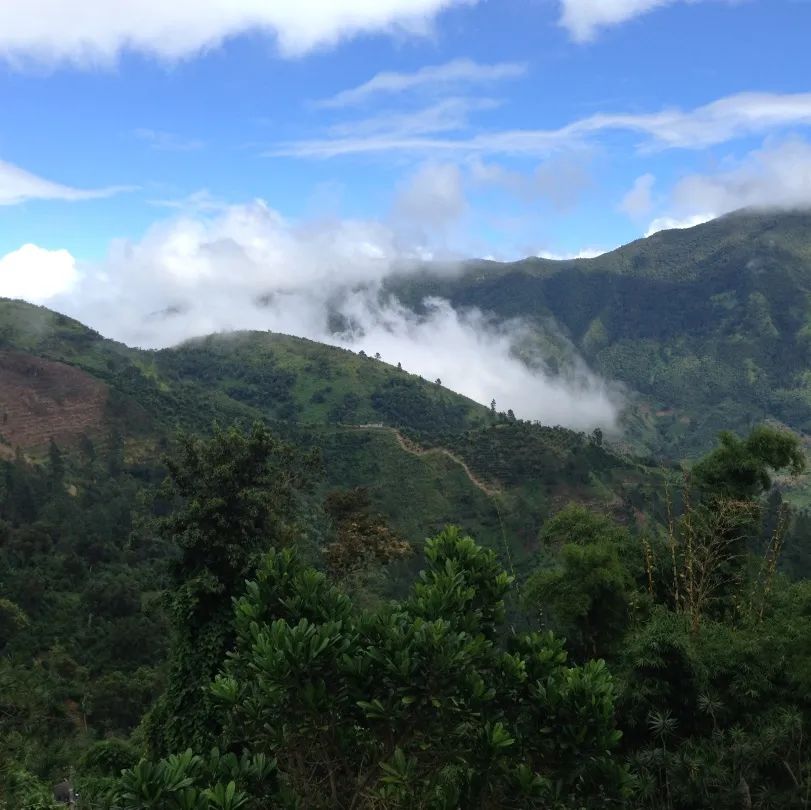
True Jamaica Blue Mountain coffee is grown exclusively in the region of the Blue Mountains at elevations between 1,000 and 1,700 meters, located on the eastern part of the island, surrounded by the azure Caribbean Sea. When sunlight hits the sea surface, the mountain peaks reflect a sapphire-like shimmer, from which the name "Blue Mountain" originates. This area boasts fertile volcanic soil, fresh air, high humidity, and abundant rainfall, with an average annual precipitation of about 1,980 millimeters and a stable temperature of around 27°C, resulting in the delicate and layered flavors of Blue Mountain coffee.
The Jamaican government strictly delineates the official Blue Mountain growing region, which includes four administrative parishes: Saint Andrew, Saint Thomas, Saint Mary, and Portland. Many trustworthy Blue Mountain coffees on the market today, such as those from the Clifton Estate, come from this area. Moreover, this estate is the only coffee farm in the Blue Mountain region to have earned Rainforest Alliance certification, emphasizing sustainable and eco-friendly farming practices.
Planting Elevation and Grading System of Blue Mountain Coffee
According to the regulations of the Jamaica Coffee Industry Board (CIB), only coffee grown at elevations above 2,200 feet (approximately 670 meters) qualifies as Jamaica Blue Mountain. Among these, the range of 1,000 to 1,700 meters is considered the golden production zone for Blue Mountain coffee. The CIB classifies Blue Mountain green beans into four grades based on bean size and defect rate: NO.1, NO.2, NO.3, and Peaberry (abbreviated as PB). Among them, NO.1 is the highest grade, requiring bean size of 17 mesh or above, a defect rate below 3%, and a moisture content of approximately 13%.
The specific grading standards are as follows:
(1) NO.1 — 17/18 mesh, defect rate ≤ 2%
(2) NO.2 — 16/17 mesh, defect rate ≤ 2%
(3) NO.3 — 15/16 mesh, defect rate ≤ 2%
(4) Peaberry (PB) — 10MS, defect rate ≤ 2%
The Reason Why Japan Once Had Priority Purchase Rights for Blue Mountain Coffee
In 1950, the Jamaican government established the Coffee Industry Board to set quality standards and oversee exports. To ensure the quality of Blue Mountain coffee, all exported green and roasted beans were stamped with an official seal. As Japan had provided loans to assist Jamaica in improving production techniques, it enjoyed priority purchase rights for Blue Mountain coffee starting from the 1960s, until 2009. Mainland China, on the other hand, only saw its first official import of Jamaica Blue Mountain No.1 coffee in April 2011.
The Role of the Jamaica Coffee Industry Board (CIB)
The CIB is the sole official coffee regulatory body in Jamaica, under the Ministry of Agriculture and Fisheries, responsible for the full-process quality control of Blue Mountain coffee—from planting, harvesting, processing, to export. Its board members are primarily representatives from large-scale estates. Currently, newly applying Blue Mountain estates must cover an area of at least 50 hectares. The CIB clearly stipulates that only coffee grown above 2,200 feet in the Blue Mountain region and passing rigorous inspection can be legally labeled as "Jamaica Blue Mountain" and obtain an official certification certificate.
How to Identify Genuine Jamaica Blue Mountain Coffee?
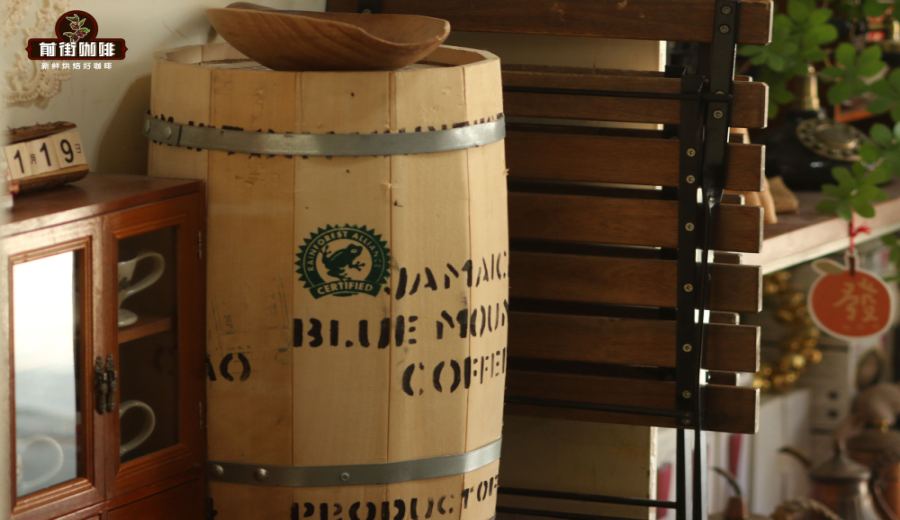
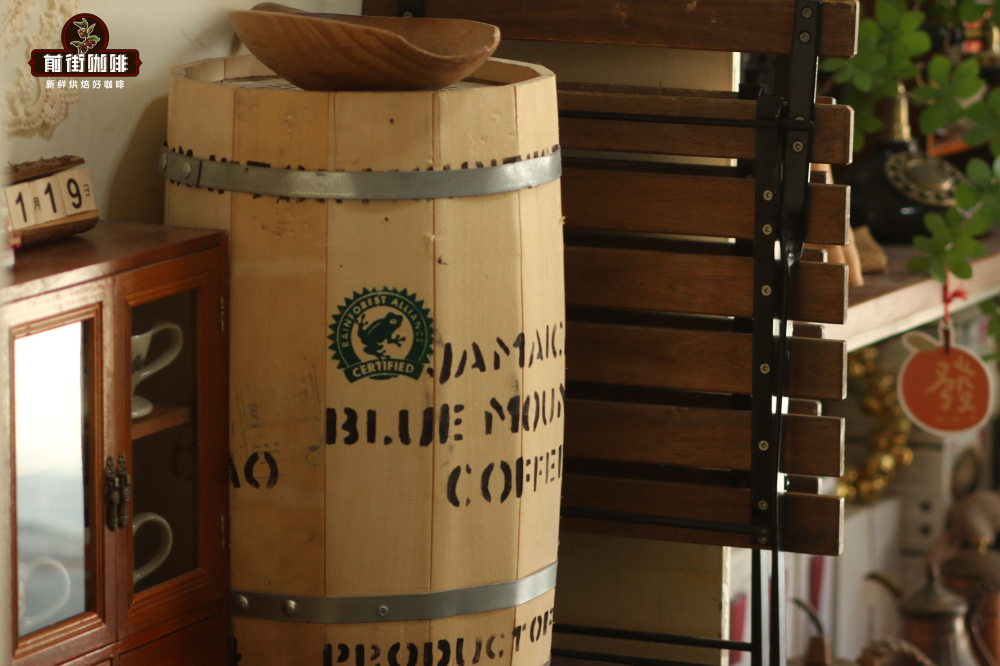
To identify authentic Blue Mountain coffee, two key factors should be prioritized: whether it comes from a CIB-certified region, and whether it comes with an official certificate and wooden barrel packaging. Traditional Blue Mountain green beans are exported using distinctive wooden barrels, one of the most notable features that distinguish Jamaica Blue Mountain from other regions.
Common misconceptions among consumers include:
1. Mistaking "Blue Mountain-flavored coffee" or "blended Blue Mountain beans" for the genuine product. These products are often blends from other regions and may contain no Blue Mountain beans at all.
2. Believing that genuine Blue Mountain coffee is unavailable in the Chinese market. In fact, since 2011, China has officially imported authentic Blue Mountain coffee, and as long as it's sourced through the correct channels and certifications, the genuine product can still be obtained.
Varieties and Processing Methods of Blue Mountain Coffee
Jamaica Blue Mountain primarily grows the Typica variety, which was introduced from Martinique in the 18th century. It is known for its elegant flavor profile, but it has low yield and is relatively susceptible to diseases. It's worth noting that Blue Mountain Typica, having adapted over time to the region’s unique environment, is difficult to replicate elsewhere, even if transplanted.
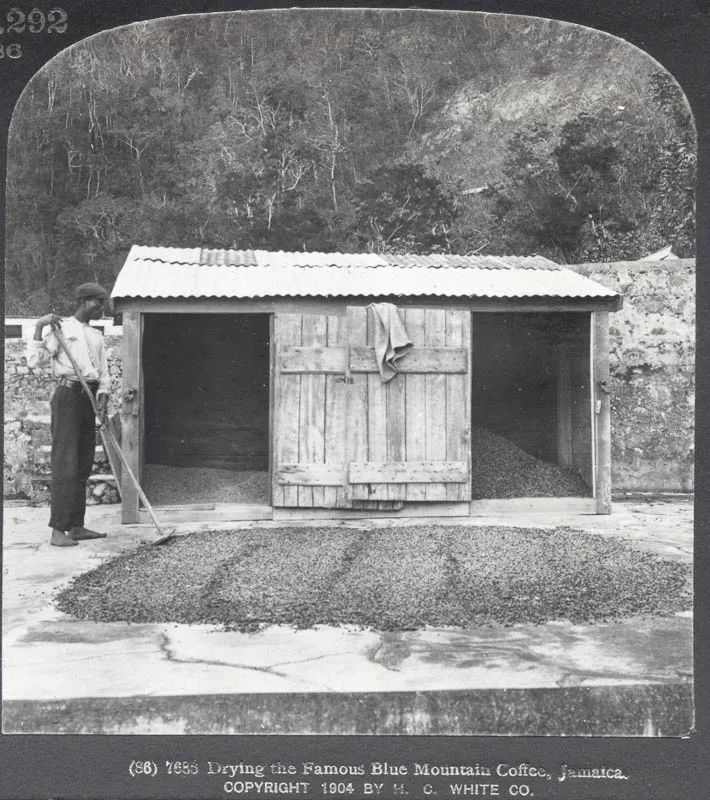
In terms of processing methods, prior to 2019, Blue Mountain coffee was mainly processed using the washed method, which includes steps such as removing the pulp, fermenting, washing, drying, and storing. Starting in 2020, some Blue Mountain coffee has begun experimenting with natural processing, which, although more challenging, also offers different flavor expressions.
Appearance Characteristics of Blue Mountain Green Beans
Authentic Blue Mountain green beans are plump, uniformly sized, with slightly upturned ends, exhibiting a typical oval shape with flat sides—characteristics of the standard Typica appearance. Washed Blue Mountain green beans often display a bluish-green hue, with minimal silver skin, as most of the silver skin is removed during the washing process. This is also one of the references for determining whether it is washed-processed.
Roasting and Brewing Recommendations
For roasting Blue Mountain coffee, a medium-light roast is recommended to preserve its delicate acidity and rich aromatic layers. For pour-over brewing, a medium-fine grind (e.g., 75% passing through a 20-mesh sieve) is advisable, with a coffee-to-water ratio of 1:15 to 1:16, and water temperature controlled between 92-94°C. Using a pulsed pouring method can better highlight its flavor characteristics, combining nutty, chocolatey, and sweet notes.
In summary, Jamaica Blue Mountain coffee is not just about strict standards for origin and grade—it’s an ultimate coffee experience that combines history, terroir, and craftsmanship. With the right identification methods and brewing techniques, you too can savor the true flavor of the "King of Coffees."
The above content is compiled by CoffeeHunters, a coffee news website.


