







Introduction:No espresso machine? You can still brew rich coffee at home! Since its debut in the 1930s, the moka pot has been a classic choice for home coffee enthusiasts. This article will take you through the invention story and working principles of the moka pot, help you master the correct usage steps and precautions, analyze the differences and pros and cons between moka pot coffee and espresso, and recommend dark roasted beans that work well with the moka pot—so you can easily brew a cup of smooth, aromatic coffee at home.
If you want to enjoy a strong cup of espresso-style coffee at home, you don’t necessarily have to splurge on an espresso machine.The moka pothas long been a go-to tool for home coffee lovers: just add hot water and ground coffee to the lower chamber, place it on the stove, and in just a few minutes, you can enjoy a rich cup of coffee. However, many people don’t know that the moka pot was originally created as a “budget-friendly alternative” to the espresso machine. Modern espresso machines can push near-boiling water through a tightly packed puck of coffee grounds under extremely high pressure—a high-pressure extraction technique made possible only by decades of advancements in coffee machine engineering.
To understand the origins of the moka pot, we need to start with the history of the espresso machine. The world’s first espresso machine debuted in Turin, Italy, in the late 19th century. By 1905, La Pavoni had launched the first commercial espresso machine, enabling baristas to serve espresso to multiple customers in very little time. From then on, more and more cafes across Italy began adopting these machines. These large machines had to be heated over a flame, using internal steam to push water from the bottom chamber up through a tube and into the coffee grounds. However, they were too expensive and bulky for most households—only the wealthy could afford to have one at home.
The origin of the moka pot dates back to the 1930s. Alfonso Bialetti, from the small northern Piedmont town of Crusinallo, returned to his hometown after over a decade working in France’s aluminum industry. There, he opened a workshop producing aluminum household products. Legend has it that one day, while watching his wife do the laundry, he had a flash of inspiration: the washing machines of the time had two layers—the lower one held soapy water that was heated to boiling, and the upper one held the laundry, connected by a tube in the middle. The boiling soapy water would rise through the tube and spray onto the clothes. With the help of Luigi De Ponti, this principle was adapted for coffee brewing, giving birth to the moka pot as we know it today.
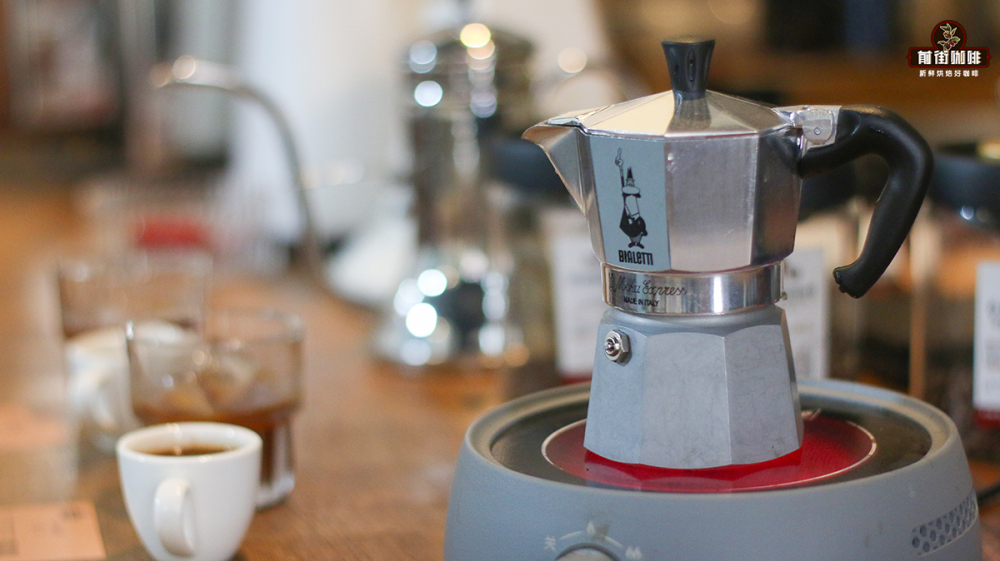
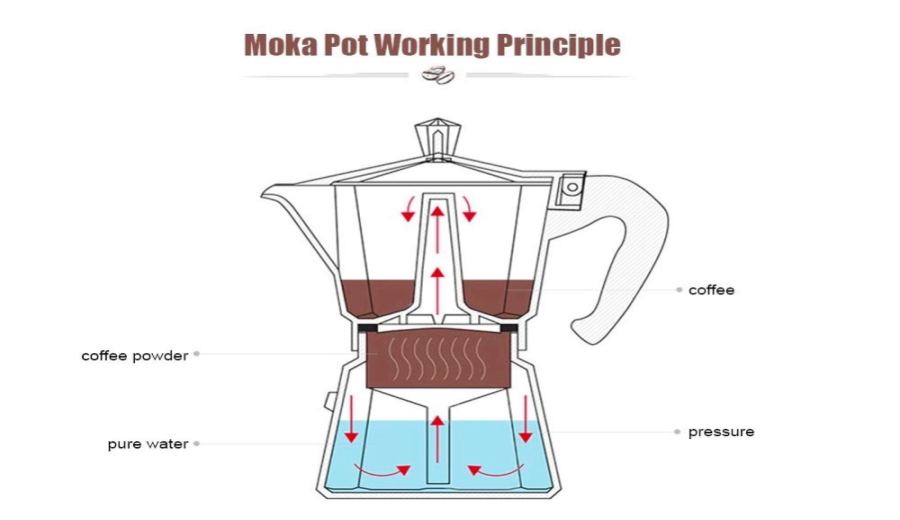
The classic moka pot featuresan octagonal aluminum bodywith an insulated plastic handle. Its overall structure consists of three parts: the lower chamber holds the hot water, the middle section is a metal filter basket for placing ground coffee, and the upper chamber collects the brewed coffee.
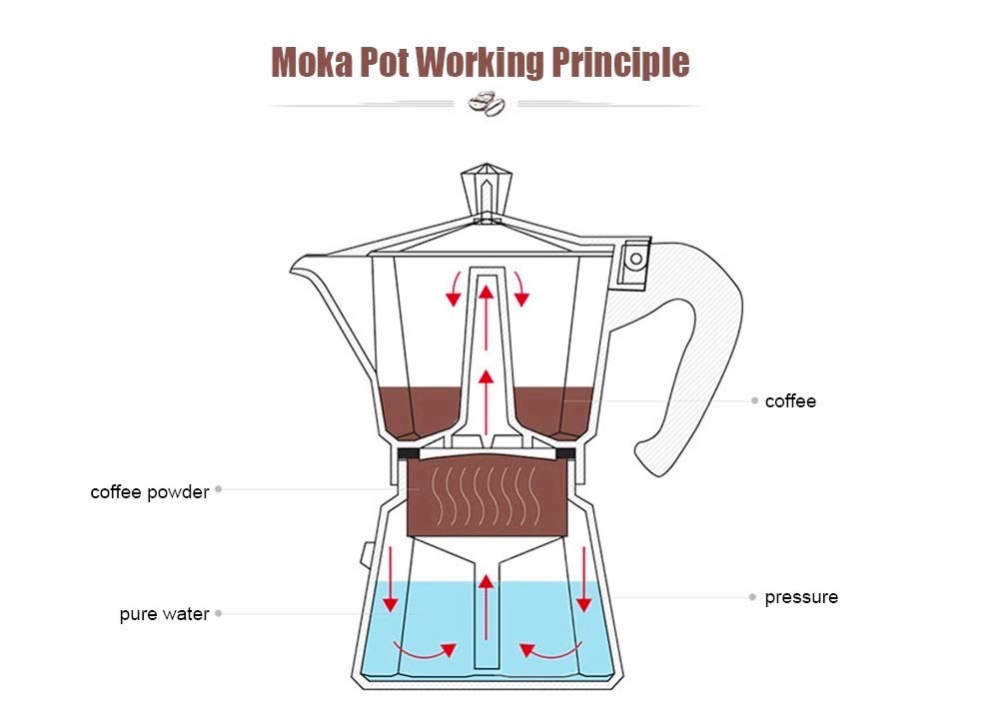
In actual use, start by pouring hot water into the lower chamber (do not exceed the safety valve), then add ground coffee to the middle filter basket and level it gently,without the need to tamp it down firmly like with an espresso machine; next, place the filter basket back into the lower chamber, screw on the upper chamber, and place the entire assembly on a heat source. As the water in the lower chamber boils and generates steam, the increasing pressure in the sealed space forces the water upward through the tube in the lower chamber, pushing it through the coffee grounds in the middle basket and then up through the channels above the metal filter into the upper chamber. When you hear a gurgling sound from the upper chamber and the flow of coffee starts to slow, remove it from the heat to avoid over-extraction, which can lead to bitter flavors.
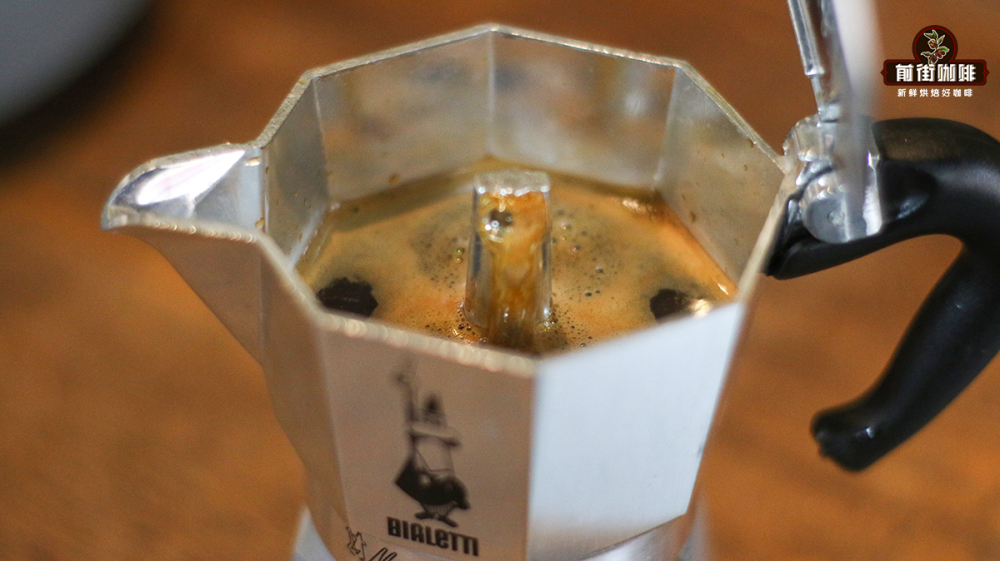
Although the moka pot was designed as a substitute for early espresso machines, espresso machine technology has evolved over decades, and modern machines achieve extraction pressures far exceeding the1.5 barsor so produced by vintage moka pots—resulting in significant differences in the final coffee. In addition, water in a moka pot rises due to boiling, resulting in a notably higher brewing temperature. The metal filter also has larger holes, and the grind size must be coarser than what’s used for espresso. The coarser the grind, the smaller the surface area in contact with water, and the less coffee material that can be extracted. Therefore, the downsides of moka pot coffee areless crema compared to espressoand slightly lower body; but its advantages include affordability, compact size, and ease of use, making it a highly cost-effective home brewing solution.

The above content is compiled by CoffeeHunters, a coffee news website.


