








Introduction:Creating a vivid smiling face latte art on a flat white is more than just pouring coffee and making a couple of dots. This article delves into the three key factors that influence the formation of a smiling face: milk foam thickness, coffee crema strength, and the choice of appropriate cup volume. It helps you understand from the basics to practical details, improving your latte art success rate — even beginners can gradually master this skill.
The smiling face design on a flat white may seem like it’s just about pouring espresso into milk and lightly dotting a few lines, but the technical barriers behind it are much higher than imagined. Many baristas and enthusiasts only realize after trying that without mastering proper milk foam control, crema selection, and cup type matching, it remains difficult to consistently produce a clear and symmetrical smiling face, even after multiple attempts. This article will explore these three key factors to help you understand why the smiling face design works best with flat whites, and how to improve latte art success through fine-tuned adjustments.
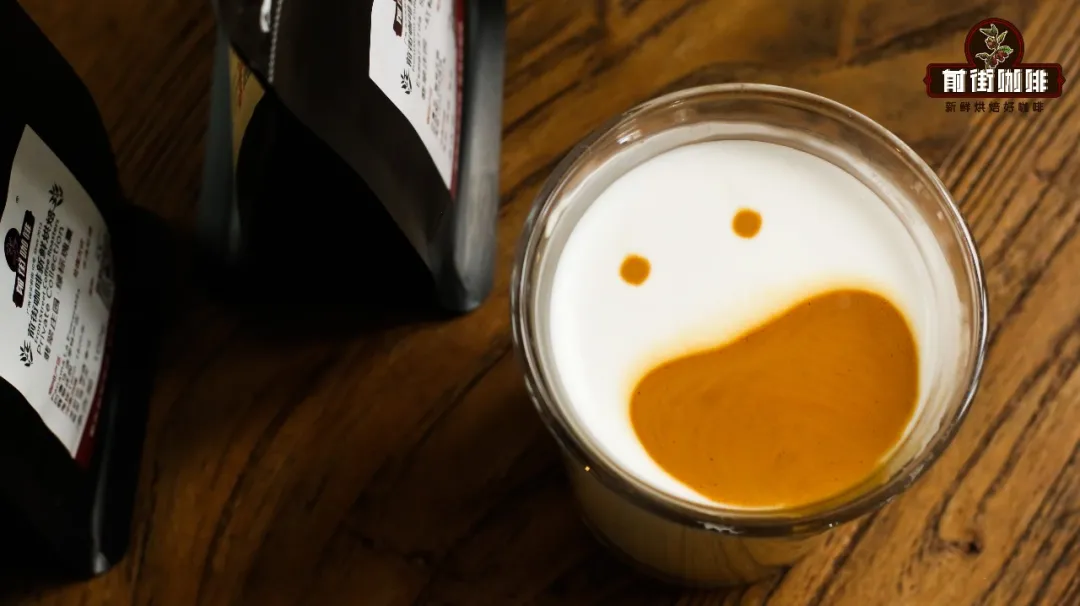
When many people see a smiling face flat white for the first time, they assume it’s just a matter of pouring espresso over milk and casually dotting two points, as simple as drawing a smiley face. However, only those who have actually tried it know that without sufficient practice and technical support, consistently creating a smiling face with clear shape and symmetrical proportions is far from easy. This involves not just technique, but also the physical properties of the milk foam, the fluidity of the coffee crema, and the choice of container size — every detail affects whether the final design can be perfectly presented.
First, let’s talk about milk foam thickness. This is the primary factor influencing whether a smiling face can form. Common drinks like lattes or cappuccinos rarely feature smiling face latte art, mainly because their milk foam is relatively thick. In contrast, the milk foam on a flat white is just right, typically around 0.5 to 1 centimeter thick, making it the most suitable for reverse latte art. Reverse latte art refers to slowly pouring the espresso onto the surface of the milk, then controlling the pattern’s formation through flow rate and angle. In this process, if the milk foam is too thick, the crema in the espresso will struggle to expand smoothly due to excessive resistance, causing the curves of the mouth area to become blurred or broken. Therefore,controlling the milk foam to around 0.5 cm in thicknesscan significantly increase the chances of successfully forming a smiling face.

Secondly, the thickness and quality of the coffee crema are also crucial elements that determine the clarity of the smiling face. Crema, the golden, fine, and elastic layer on the surface of espresso, is primarily composed of carbon dioxide and oils from the coffee. The richer the crema, the stronger its ability to flow and form on the milk’s surface. Therefore, using darker roasted coffee beans can accumulate more carbon dioxide, thereby enhancing the richness of the crema. Generally speaking, dark roasted beans not only produce more crema but also make it easier to achieve smooth patterns and well-contrasted designs during latte art. It’s important to note that while rich crema is desirable, flavor balance must also be maintained to avoid excessive bitterness affecting the overall drinking experience.
When selecting beans in practice, it’s recommended to choose a blend that combines characteristics from multiple regions, such as a classic mix of Mandheling, Brazil, and Vietnamese beans. Such blends often combine the rich aroma of Mandheling, the full-bodied taste of Brazilian beans, and the additional crema contribution from Vietnamese beans. They’re not only suitable for making Americanos and lattes but also extremely fitting for challenging the smiling face flat white latte art technique.
Lastly, cup volume is also an aspect that shouldn’t be overlooked. Even if you’ve mastered the techniques for milk foam and crema, using a cup that’s too large can still easily lead to failure. The reason is that a larger cup requires a greater tilt angle to bring the espresso close to the liquid surface for pouring, but such movement can cause the crema to disperse due to excessive impact, preventing it from concentrating into a clear pattern. Additionally, when the cup capacity is too large and the proportion of milk is relatively low, changes in the liquid surface during backflow can also distort or erase an already formed smiling face. Therefore,it’s recommended to choose a medium-sized cupwith a volume close to the standard flat white liquid amount (approximately 160–180 ml), which helps maintain a stable pouring angle and reduces the likelihood of mistakes.

In summary, to successfully create a clear, symmetrical, and aesthetically pleasing smiling face flat white, the key lies in the perfect combination of three elements: first,keeping the milk foam at a thinness of around 0.5 cmto allow the espresso’s crema to flow and form smoothly; second, selectingdark roasted coffee beans with rich cremato ensure a distinct and fluid crema layer; and finally, choosinga medium-sized cup that matches the flat white’s liquid volumeto avoid increased difficulty caused by an overly large cup. These three details are closely interconnected, and with step-by-step adjustments and practice, even beginners can gradually master this seemingly simple yet highly challenging coffee latte art skill.

The above content is compiled by CoffeeHunters, a coffee news website.


