







Introduction:Many coffee beginners are deterred by the high prices of professional pour-over kettles. However, as long as you master the right parameters and techniques, an ordinary electric kettle at home can also consistently brew single-origin coffee with clear flavors and a solid mouthfeel. This article delves into the challenges of using a regular kettle for pouring control and offers two practical solutions: filling the kettle to stabilize its center of gravity or adopting a pulse pouring method to lower the skill barrier. It also shares a complete pour-over process and precise parameters through a real-life example, helping you make professional-level coffee with the most basic equipment.
When many people first get into pour-over coffee, they are often discouraged by the price of professional pour-over kettles. On the market, a basic professional pouring kettle typically costs between 200 and 300 yuan, and if you add a temperature-controlled base, the cost doubles. As a result, many coffee enthusiasts wonder: since it’s just boiling water and pouring it into a filter, why can’t they use their regular household electric kettle to brew coffee?
The answer is yes. The flavor performance of a pour-over coffee doesn’t hinge on which pouring tool you use, but rather on the four key elements of the extraction process:Grind size, water temperature setting, coffee-to-water ratio, and extraction time.As long as these parameters are well-matched, even the most ordinary electric kettle can steadily brew clean and layered coffee.
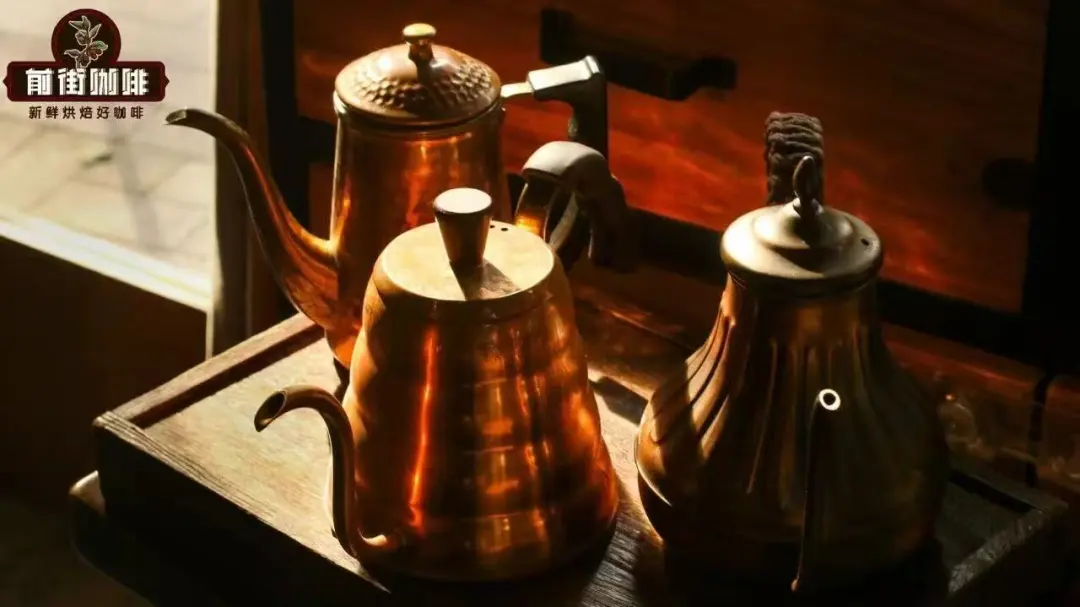
However, compared to professionally designed pour-over kettles, regular electric kettles do have clear disadvantages when it comes to “pouring control.” Professional pour-over kettles are usually equipped with slender, precisely controllable spouts that allow users to easily adjust the water flow speed and landing point, thereby evenly saturating the coffee grounds for optimal extraction. In contrast, typical household electric kettles often have shorter spouts and wider openings, resulting in inconsistent water flow that is hard to control steadily — a significant challenge for beginners aiming for precise pour-over.
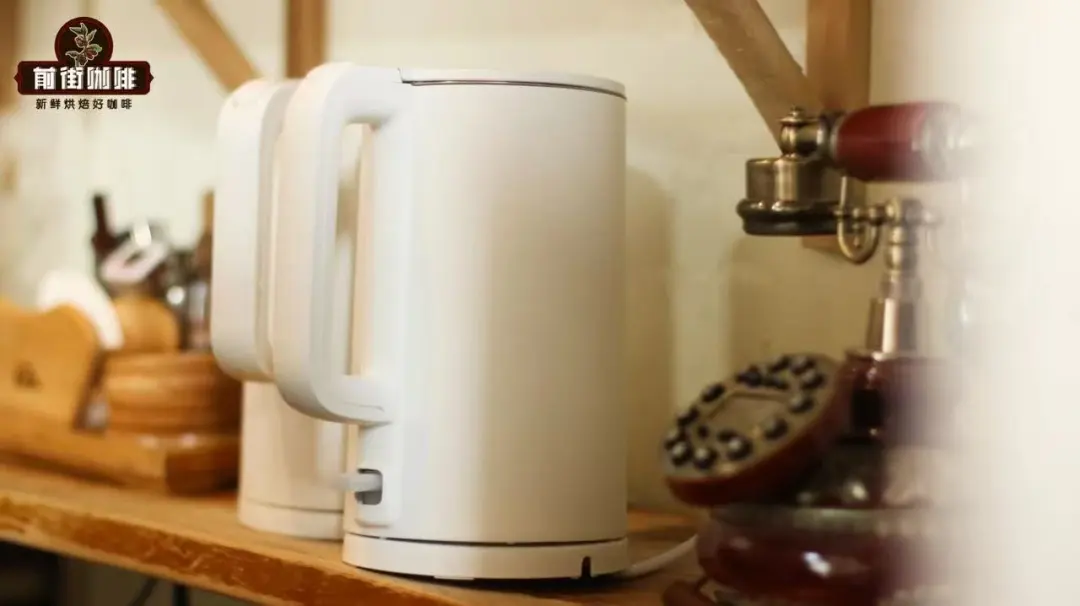
But the challenge is not insurmountable. If you want to brew a great cup of coffee with a regular electric kettle, the first step is to fully understand the characteristics of your kettle. Take a common 1.5-liter straight-type household electric kettle as an example: its spout is short and wide, causing the water flow to be erratic during pouring. Moreover, if the water level inside the kettle is low, you need to tilt the kettle significantly to pour, making it not only difficult to control the flow rate but also prone to instability in the center of gravity, which affects overall pouring consistency.
Faced with such a kettle, there are two practical methods you can try: one is to “fill the kettle” to stabilize its center of gravity and thus improve pouring stability; the other is to adopt a “pulse pouring method,” breaking the total water volume into multiple pours to reduce reliance on the stability of a single pour.
The principle of the first method is simple — when the water level in the electric kettle is close to full, even a slight tilt can produce a smooth flow. At this point, the change in the kettle’s center of gravity is minimal, naturally reducing issues with inconsistent flow and significantly lowering the operation threshold. However, note that if your kettle is around the common 1.5-liter capacity, continuously pouring for about two minutes after filling it to the brim can be quite a test of arm strength. Choose based on your physical condition.

If you find filling the kettle to be too demanding on your arm strength, or if the kettle’s capacity is too large to manage easily, the second “pulse pouring method” is a more user-friendly option. The key to this method is to divide the total water volume that would normally be poured in one go into multiple smaller portions (for example, three or five times), pouring gradually into the filter. Each portion is smaller, so there’s no need to hold the kettle for long periods or demand extremely stable water flow — just ensure that each pour of hot water evenly passes through the coffee grounds.
This technique is especially suitable for beginners using regular electric kettles. Not only does it lower the difficulty of pouring, but it also allows for indirect control over the extraction rhythm through segmented pours, further enhancing the balance of coffee flavors.
Here’s a real-life example: This time, we selected the classic pour-over bean “Yirgacheffe · Guddina,” grown in Ethiopia’s Yirgacheffe high-altitude region. Due to its long growth cycle, it accumulates rich sugars and flavor compounds. After medium-light roasting, it exhibits an enticing combination of floral-fruity aromas and tea-like qualities, making it perfect for practicing pour-over techniques. The parameters used are as follows:
Coffee dose:15 grams; Coffee-to-water ratio:1:15; Grind size: approximately 20-mesh sieve 75%~80% sieve retention rate(equivalent to medium-fine grind); Water temperature:90°C(due to the higher number of pours and longer total extraction time, the temperature is moderately lowered to avoid over-extraction).
Step one: Begin with a 30-second bloom to allow the hot water to fully contact the coffee grounds and awaken the aroma. After blooming, divide the remaining hot water into multiple pours — each pour should just cover the coffee bed, no need for strict measurement. Wait until the water has completely dripped through before proceeding to the next pour, repeating this process until the target total water volume (about 225 ml) is reached.
While pouring, you can gently circle the kettle (or at least ensure the hot water is poured from the center of the coffee bed if you’re not yet comfortable with flow control), which helps improve extraction uniformity and makes the coffee’s layers more distinct. The actual extraction time for this session was about 2 minutes and 35 seconds. Although slightly longer, the final cup performed excellently: the aroma was clear, featuring pronounced white floral notes, citrus acidity (like lemon), and a refreshing oolong-tea-like finish. The mouthfeel was clean and solid, not at all inferior to results from professional equipment.
In summary, whether you only have a regular electric kettle or already own a professional pour-over kettle, as long as you master the correct extraction parameters and techniques, you can consistently brew a single-origin coffee with vivid flavors and distinct layers. The equipment is not the limitation — the key lies in your understanding and practice of coffee.
The above content is compiled by CoffeeHunters, a coffee news website.


