







Introduction:Luckin Coffee, China’s leading chain coffee brand, is evaluating potential acquisitions of several specialty coffee brands through its major shareholder, Dazheng Capital. These include Blue Bottle Coffee, owned by Nestlé, and the Chinese operations of %Arabica. The market is watching closely how these moves might expand Luckin’s global visibility and challenge the landscape of the premium coffee market. Here's a look at the strategic layout and potential impact behind these developments.
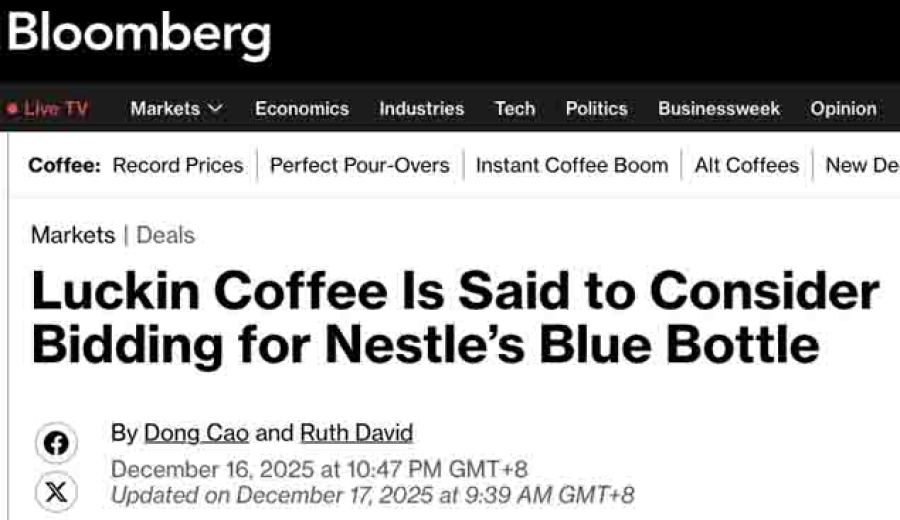
According to recent financial media reports, Luckin Coffee, the top domestic chain coffee brand by market share in China, is actively exploring a bid for Nestlé’s high-end specialty coffee brand, Blue Bottle Coffee, through its strategic investor, Dazheng Capital. This potential move is seen as an important step for Luckin to enhance its overseas presence and further penetrate the specialty coffee segment.
As early as two weeks ago, international media disclosed that Nestlé had partnered with the renowned investment bank Morgan Stanley to conduct a strategic review of Blue Bottle Coffee’s global operations, with the possibility of selling its physical retail assets. It is understood that Nestlé acquired Blue Bottle Coffee for approximately $700 million years ago, but the current market estimate suggests the final sale price may be significantly lower.
Notably, shortly after news of a possible deal involving Blue Bottle Coffee emerged, Luckin and Dazheng Capital also turned their attention to the Chinese distributor of another well-known specialty coffee brand—%Arabica. Known for its minimalist Japanese design and high-quality single-origin beans, %Arabica has a relatively focused market positioning and has built a loyal customer base in the Chinese-speaking market, making it one of the potential acquisition targets for Luckin.
In fact, Luckin’s interest in the specialty coffee market is not sudden. As early as mid-November last year, reports indicated that Coca-Cola was considering selling part of the assets of Costa, the UK coffee brand it acquired in 2018. At that time, it was reported that Luckin and Dazheng Capital had begun evaluating whether to participate in the bidding. However, a recent report by the Financial Times cited sources saying that the deal is currently at risk of falling apart, and Dazheng Capital may choose to withdraw in the later stages, failing to enter the final exclusive negotiation phase.
Industry analysts believe that although Costa’s brand positioning leans toward the premium segment, it still overlaps to some extent with Luckin’s existing product lines, which may be one of the reasons Luckin has opted to remain on the sidelines. Additionally, the specialty coffee market places high emphasis on brand image and consumer experience, where overly aggressive commercial operations can easily dilute the original brand identity.
Nevertheless, Luckin’s successive expressions of interest in acquiring brands such as Blue Bottle Coffee and %Arabica have sparked heated discussions among consumers and industry insiders. Many netizens jokingly compare Luckin to “Anta in the coffee world,” drawing an analogy to Anta Group’s strategy of acquiring international brands such as Arc’teryx, Fila, and Descente. Some even humorously suggest: “Why not just acquire Peet’s Coffee, Tims, M Stand, and Grid while you’re at it?”
However, some coffee enthusiasts have expressed concerns about the future direction of Blue Bottle Coffee if it falls under Luckin’s ownership, fearing that its original emphasis on pour over craftsmanship, low production volume, and high-quality sensibility might be compromised by commercialized operations. Online comments include phrases like “once it’s acquired, it’ll go low-end and I won’t drink it anymore” and “come on, are Blue Bottle cups going to be nine ninety-nine next?”, reflecting consumers’ emphasis on brand purity.
It is worth noting that all related acquisition discussions are still in preliminary stages, with no party confirming entry into substantive negotiations or signing any agreements. Industry insiders point out that the process from evaluation to final closing often takes considerable time, and there remain many uncertainties as to whether any deal will ultimately materialize. So far, Nestlé, PAG (the investor behind %Arabica), Coca-Cola, and others have not responded to market speculation, and neither Luckin nor Dazheng Capital have publicly clarified their specific intentions.
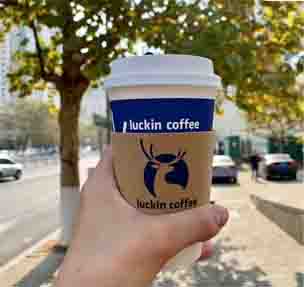
Overall, regardless of whether these acquisitions are ultimately successful, Luckin’s recent intensive focus on specialty coffee brands indicates its desire to break through existing market frameworks and further expand its brand influence in the premium and international markets. For consumers, such market dynamics may also bring more variety and surprises to future coffee choices.
The above content is compiled by CoffeeHunters, a coffee news website.


