








Introduction:The One Pour Dragon Tornado is a pour over technique that combines visual impact with technical challenge. By forcefully pouring water to create a high-speed, funnel-shaped vortex, it delivers a unique flavor profile. This article delves into its operational principles, detailing grind size, water temperature control, brew ratio, and multi-stage pouring techniques. It also offers filter cone selection advice and actual flavor experiences to help you master this advanced technique at home.
The One Pour Dragon Tornado is one of the most visually striking and technically demanding pour over methods. This technique involves rapidly pouring a large volume of hot water, using the force of the stream to create a high-speed, funnel-shaped vortex inside the filter cone. Not only is the visual effect stunning, but it also has a unique impact on coffee extraction.

The so-called "One Pour Dragon Tornado" is actually a variation within the One Pour pouring system. The term "One Pour" typically refers to dividing the pour into two main stages: one for blooming, with the majority of the water poured in the second stage. However, incorporating the Dragon Tornado element adds both challenge and visual intensity to the method.
The term "Dragon Tornado" describes the phenomenon where rapidly pouring hot water into the filter cone generates a high-speed rotation of liquid due to the force of the stream, forming a funnel-like vortex. While the effect is impressive, consistently achieving it requires precise pouring control and the coordination of multiple parameters.

In practice, successfully creating the Dragon Tornado effect isn’t simply about increasing water flow. The primary challenge lies in balancing extraction uniformity with stable water control within an extremely short pouring time. Since the overall pouring rhythm is accelerated, traditional multi-stage pouring methods that achieve stirring and extraction compensation are no longer applicable. Therefore, adjustments to grind size, water temperature, and brew ratio are necessary to compensate for reduced extraction efficiency.
The second major challenge lies in the conditions required for the vortex itself. Many people watching tutorial videos assume that simply speeding up or increasing water pressure will naturally form a vortex. However, in practice, they often find the water surface shows little reaction. This is because vortex formation depends not only on pouring speed but also on factors like pouring height, angle, direction, and even the starting position of the pour. Overlooking these details makes it difficult to "raise the wind," no matter how strong the stream.

Next, we’ll break down how to attempt this visually impressive and technically sophisticated pour over method at home—from parameter settings and pouring procedures to practical operational details.
First, let’s discuss the key brewing parameters. Because the Dragon Tornado technique involves less stirring during the entire pour and concentrates a large volume of hot water, the liquid’s concentration refreshes more slowly, resulting in overall lower extraction efficiency compared to multi-stage pouring. To compensate, adjustments need to be made in both grind size and water temperature.
It’s recommended to fine-tune the grind size approximately five settings finer—about double the original coarseness. At the same time, the water temperature should be increased by 3–5°C to enhance coffee extraction. For example, if you originally use an Ek43 grinder set to 9.5 and water at 92°C, when switching to the One Pour Dragon Tornado, adjust the grind to 5 and raise the water temperature to 95°C. Maintain the commonly used 1:15 brew ratio to ensure balanced overall extraction.
For filter cone selection, the V60 is the most common choice. However, if you wish to further stabilize extraction and flavor, consider using a cone like the Kono, which allows less bypass water. That said, for most home users, the V60 meets basic needs. Additionally, if using more than 20 grams of coffee, opt for a size 02 cone to ensure proper flow rate and even extraction.
Another practical tip is to fill your kettle to its maximum capacity that your arm strength can handle before pouring. Higher water pressure helps maintain a stable stream, aiding in quickly pouring a large volume and improving the chances of successfully forming the vortex.

In terms of actual operation, start with a basic bloom. Pour about twice the coffee’s weight in water and let it bloom for 30 seconds. After blooming, pour the remaining 195 ml of hot water in the second stage all at once, divided into two parts.
The focus of the first part of the pour is to raise the water level and coffee bed while gently agitating the coffee grounds to promote the release of flavor compounds. Use a strong stream and circle-pouring technique. Continuous circular pouring helps distribute water evenly across the coffee bed, preventing over- or under-extraction in localized areas. Once the water level rises to just over halfway up the filter cone, proceed to the next stage.
The second part is the actual Dragon Tornado formation stage. Here, fix the kettle spout at a specific point along the edge of the filter cone and pour a strong stream along the inner wall, slightly tilting the stream toward the center of the cone. Be careful not to place the spout too close to the edge, as the water may shoot straight into the wall, making it difficult to form a vortex and possibly generating excessive bypass water, which affects overall extraction.
With the right angle and water control, you’ll often notice the vortex beginning to form the moment you switch pouring methods. As you continue pouring, the vortex will become increasingly distinct, offering an impressive visual effect. But remember, while enjoying the spectacle, keep an eye on the total water poured. Once the target is reached, stop pouring immediately and wait for the coffee to fully drip through the filter.
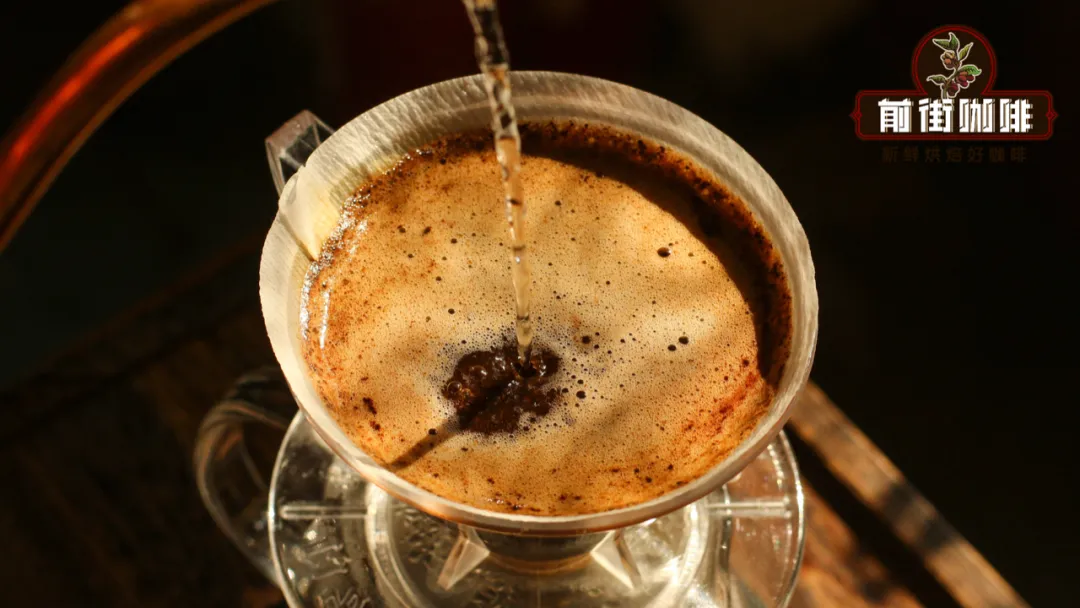
Coffee brewed with the One Pour Dragon Tornado technique usually presents a lighter mouthfeel than traditional three-stage methods, with an overall flavor profile that’s more balanced. Take the Fenjiele Estate · Geisha as an example—this technique distinctly highlights bright fruit and floral notes such as grape, passionfruit, floral, and apricot, with clear flavor layers that leave a lasting impression.
In summary, although the One Pour Dragon Tornado has a relatively high technical barrier, mastering key parameters like grind size, water temperature, and brew ratio—as well as familiarizing yourself with pouring angle, height, and rhythm—allows you to try this visually and flavorfully rewarding pour over technique at home. Why not give it a try and experience the unique flavor variations brought by different pouring methods?
The above content is compiled by CoffeeHunters, a coffee news website.


