







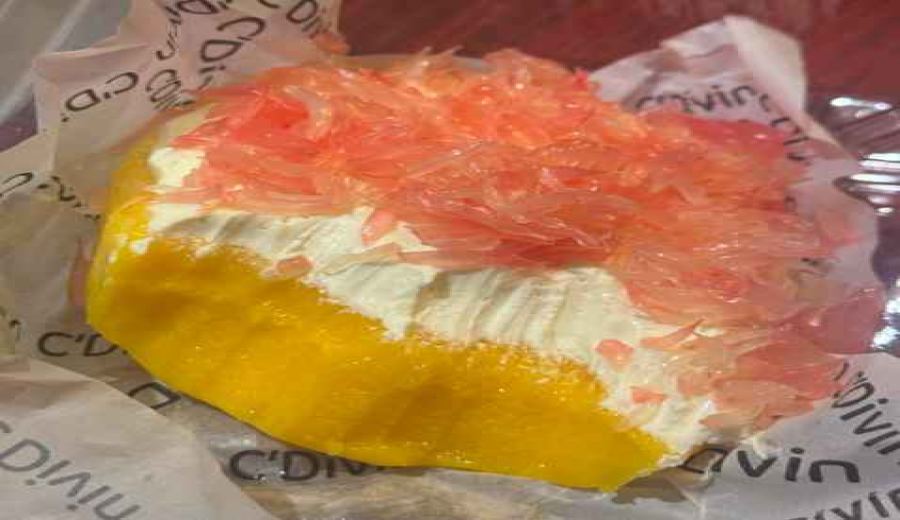
Introduction:Recently, Chinese tea chain Tim Hortons (Tea Bian Dao) launched a "solid mango sago pudding" priced at 19 RMB, blending characteristics of both a drink and a dessert. This new product sparked discussions on social media platforms due to its cost-performance ratio. While some consumers praised it for its affordability, others criticized it for discrepancies between its appearance, taste, and promotional images. This article provides a detailed analysis of the product's composition, market feedback, and employee responses to common issues such as it becoming watery upon delivery or using underripe fruits—helping readers fully understand the reality behind this viral dessert.
Recently, a creative dessert called the "solid mango sago pudding" has rapidly gained popularity on social media. This type of dessert is neither purely a drink nor a traditional dessert, but something in between. It commonly features ingredients like mango, sago, coconut milk, and yogurt layered together to form a structure resembling a "fruit-filled sandwich." Its unique shape and texture have quickly made it a favorite among social media influencers and netizens for sharing photos.
Riding on this wave of buzz, the tea chain Tea Bian Dao also launched its own version of the "solid mango sago pudding," officially priced at 19 RMB. With online order discounts, the actual price can even drop to single digits. Compared to other similar products on the market that often cost dozens of RMB, Tea Bian Dao’s pricing strategy is considered quite attractive by many consumers.
According to official information, this new product includes a variety of ingredients such as freshly sliced mango, yogurt, coconut milk, pudding, sago, and grapefruit segments. Overall, it appears to be rich in content and relatively substantial in portion. However, since its launch, consumer reviews have been distinctly polarized. Some users mentioned that the dessert has a sweet and sour taste with substantial ingredients, and eating it with a spoon feels like enjoying a dessert—offering a pleasant surprise.
However, many customers were disappointed with the actual product they received. Some posted "customer photos" that looked vastly different from the official promotional images, pointing out that the delivered "solid mango sago pudding" was thinner in texture, lacking the advertised thickness and layering. It looked more like a "fruit medley with extra toppings" and was even jokingly referred to as a "mango sago-flavored sweet soup" or a "fruit topping porridge."
In addition to issues with appearance and texture, some users also reported that the mango had an overly sour and firm taste, while the grapefruit had a noticeable bitterness—overall flavor performance fell short of expectations, leaving highly anticipating consumers deeply disappointed.
In response to these negative feedbacks, insiders from Tea Bian Dao revealed some of the underlying reasons. It was noted that some customers complained about the product becoming watery and mushy upon delivery. This was mainly because during transportation, the yogurt and coconut milk inside the cup were shaken and mixed together, causing parts that were supposed to have a smooth and thick texture to lose their original consistency—resulting in a visual and tactile difference that made it seem "thinner."
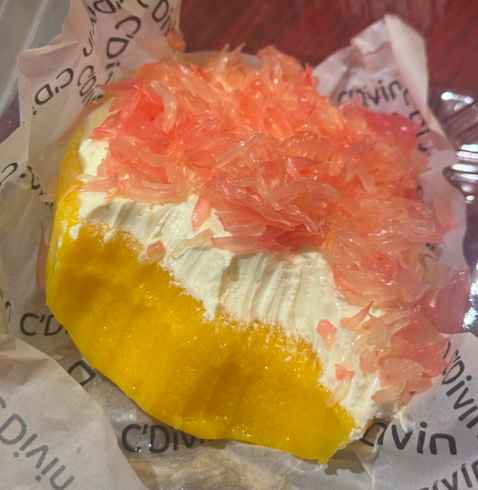
As for the issues with the taste of the mango and grapefruit, employees further explained that this was related to the procurement batches of the raw materials and the ripening process. Due to the high demand for the new product, some stores received mangoes that were not fully ripe. However, due to the large volume of orders, there wasn’t enough time to allow for adequate ripening before use, leading some customers to receive mangoes that were too sour and firm—impacting the overall eating experience.
Additionally, industry insiders analyzed that although innovative desserts like the "solid mango sago pudding" are attention-grabbing in terms of visuals and concept, maintaining the layering, texture, and freshness of ingredients during actual preparation and delivery remains a continuous challenge for brands. For consumers, if choosing delivery, it is recommended to prioritize stores that are closer and pay attention to delivery times to minimize texture changes caused by shaking during transit.
Overall, Tea Bian Dao’s 19 RMB "solid mango sago pudding" is fairly competitive in terms of price, but its product stability and quality control still need further improvement. When trying it, consumers might consider being a bit more understanding, and can also provide feedback based on their actual experience to help the brand continue improving.
The above content is compiled by CoffeeHunters, a coffee news website.


