







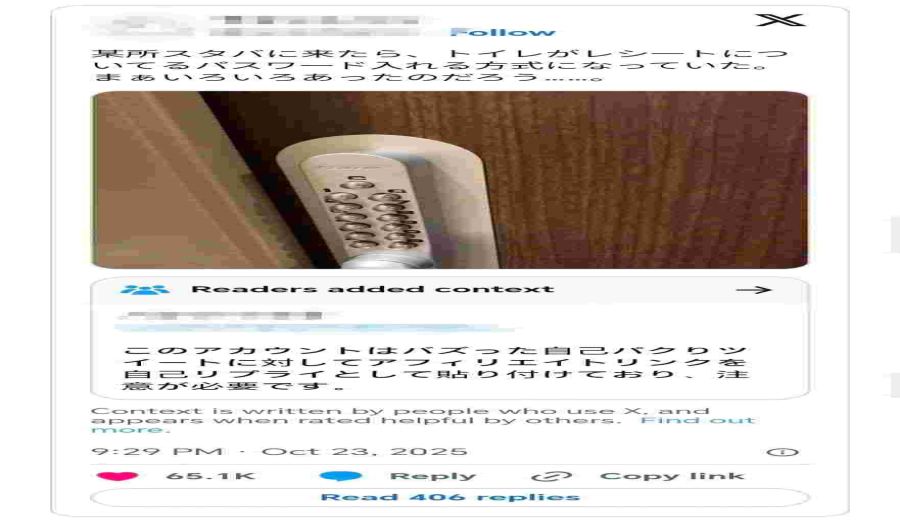
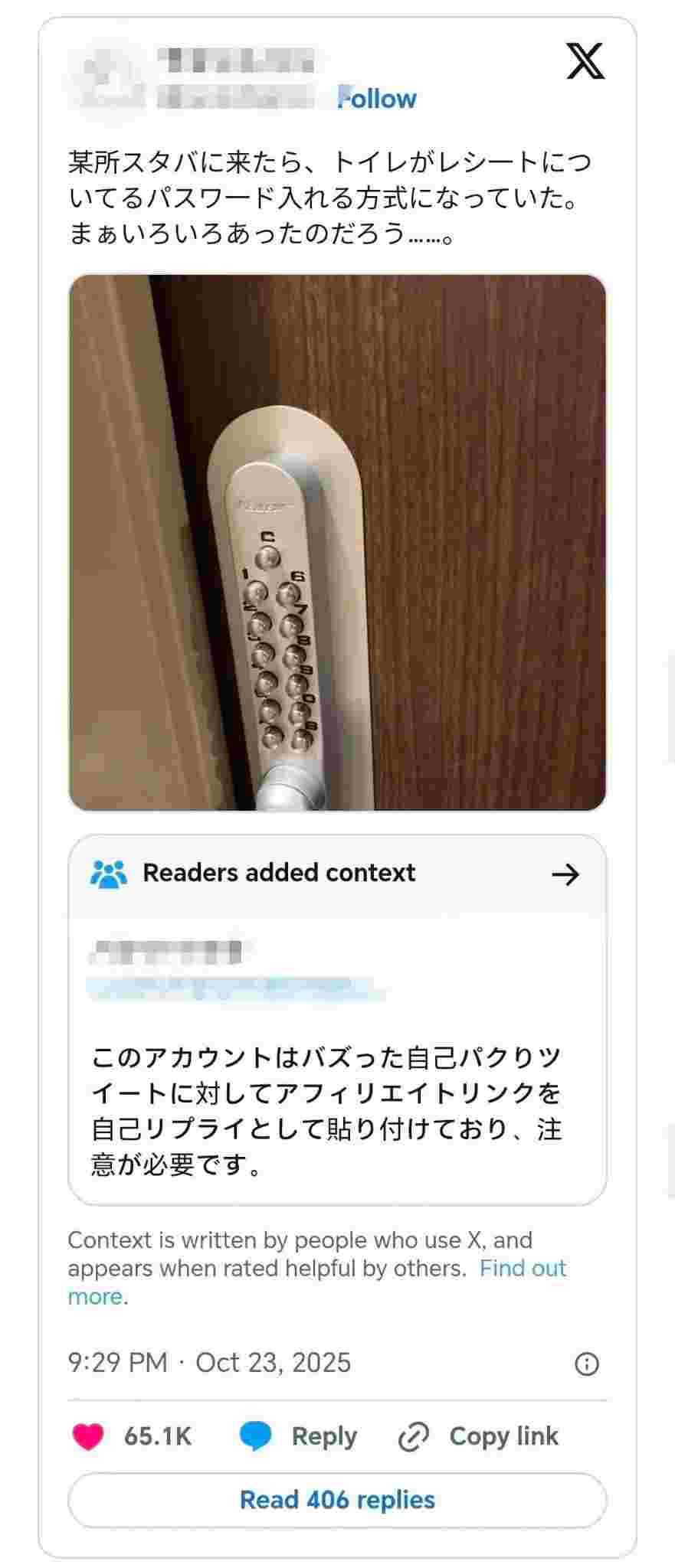
Introduction:A Starbucks outlet in Japan has recently started using a digital keypad lock to control access to its restroom. Customers must enter a code printed on their purchase receipt to gain entry. This measure immediately sparked heated online debate, with opinions sharply divided. This article delves into the background of the incident, various stakeholder positions, and compares restroom management policies at cafes internationally — helping readers understand the operational considerations and practical implications behind such decisions.
A Starbucks branch in Japan has recently revised its restroom access policy by replacing the traditional open-door lock with an electronic keypad, where the code is only printed on receipts after a purchase. This means only customers who make an in-store purchase can obtain the code to enter the restroom. This new measure quickly stirred widespread discussion on social media platforms.
Many netizens expressed understanding, believing that the store may have implemented this control to prevent non-paying customers from frequently using the restroom, or even to stop theft or damage to facilities. Some also mentioned having heard stories of entire toilets being stolen from Starbucks locations, making the addition of a keypad lock seem necessary.
However, many customers and netizens felt that, in practice, this move could cause inconvenience — especially in emergencies — as those who haven’t made a purchase at the store are unable to use the restroom, thereby adding stress and hassle during outings.
Supporters of the keypad system argue that it effectively protects the rights and convenience of paying customers, enhances the overall user experience, and prevents the restroom from becoming a public space frequented by non-customers. Some stores have gone further — even when using self-checkout, they do not print the code on the receipt, requiring customers to actively ask staff for it. This has led to some netizens voicing frustration, noting that it could pose problems in urgent situations.
In fact, this measure is not unique to Japanese Starbucks. Similar keypad lock systems have already been adopted by Starbucks outlets in countries such as Portugal, France, and Germany. In the United States, some cafes manage restroom access through coin deposits or by lending keys to customers upon request, with the primary goal also being to prevent non-customers — including the homeless — from occupying restrooms for extended periods or posing potential security risks.
Beyond international examples, some local coffee brands in Taiwan have also taken note of this global trend in cafe restroom management. Many operators increasingly believe that a certain level of access control helps maintain the cleanliness and efficient use of in-store facilities, ultimately enhancing overall service quality.
Taking all viewpoints into account, while the use of keypad locks does introduce some inconvenience for consumers, in practice across various regions, such measures have often proven effective in reducing unnecessary restroom usage and preventing facility damage. As societal expectations and safety management needs evolve, more cafes may adopt similar control strategies in the future — reminding the public that when in urgent need of a restroom while out, it is more practical to plan ahead or locate clearly designated public facilities.
The above content is compiled by CoffeeHunters, a coffee news website.


