







Introduction:When you walk into a corner café and your phone keeps receiving notifications about “nearby store promotions,” it’s likely that the app is using location data for targeted marketing. Recently, Starbucks faced user backlash for pushing real-time promotional offers, even prompting accusations of “tracking-based marketing.” Beyond the debate over whether the marketing tactics are excessive, this incident has also drawn public attention to how coffee brands legally use personal data—and how consumers can protect themselves.
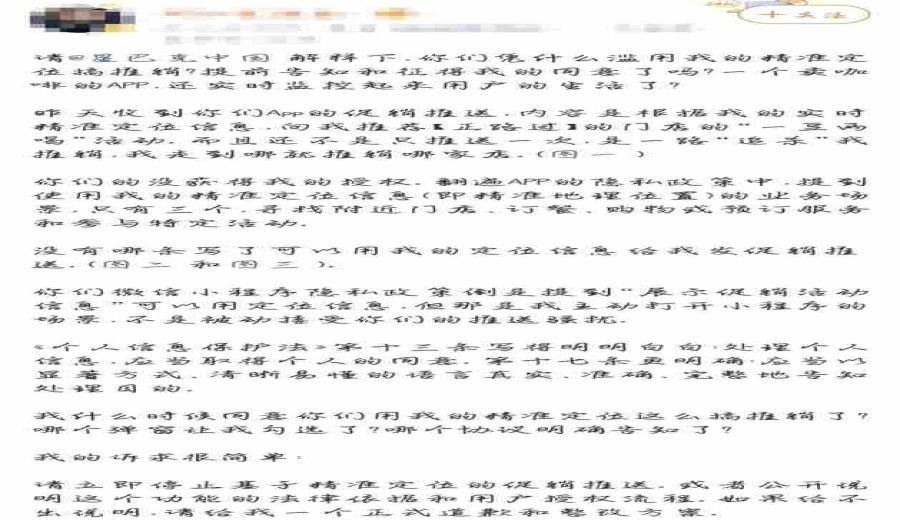
Recently, a netizen shared their experience on social media, pointing out that the Starbucks app seemed to continuously push promotional information from nearby stores based on real-time location. The user said that no matter where they went, their phone would receive a “one bean, two drinks” campaign notification from whichever Starbucks branch was nearby, feeling as if they were being “tracked by marketing.” This resonated with many other users and sparked widespread discussion.
According to the user, the content pushed by the Starbucks app wasn’t just a one-time reminder but rather a continuous update of promotional info based on changing locations—making it quite annoying. Although Starbucks’ privacy policy states that precise location data is only used for “finding nearby stores, ordering, shopping, booking services, or participating in specific activities,” the user felt that the constant barrage of ads went beyond the intended scope, causing inconvenience.
Additionally, the user noted that while Starbucks’ WeChat Mini Program privacy policy mentions using location data to “display promotional activity information,” this is only when the user actively opens the Mini Program—not when passively receiving push notifications. Therefore, they called on Starbucks to clarify the legal basis and authorization process for this feature. If no reasonable explanation can be provided, they urged the company to publicly apologize and propose improvement measures.
Regarding this incident, media outlets attempted to contact Starbucks customer service, who responded, “We’re not aware of the situation yet and have forwarded the complaints to the PR department”—indicating that the brand has not yet issued a clear response.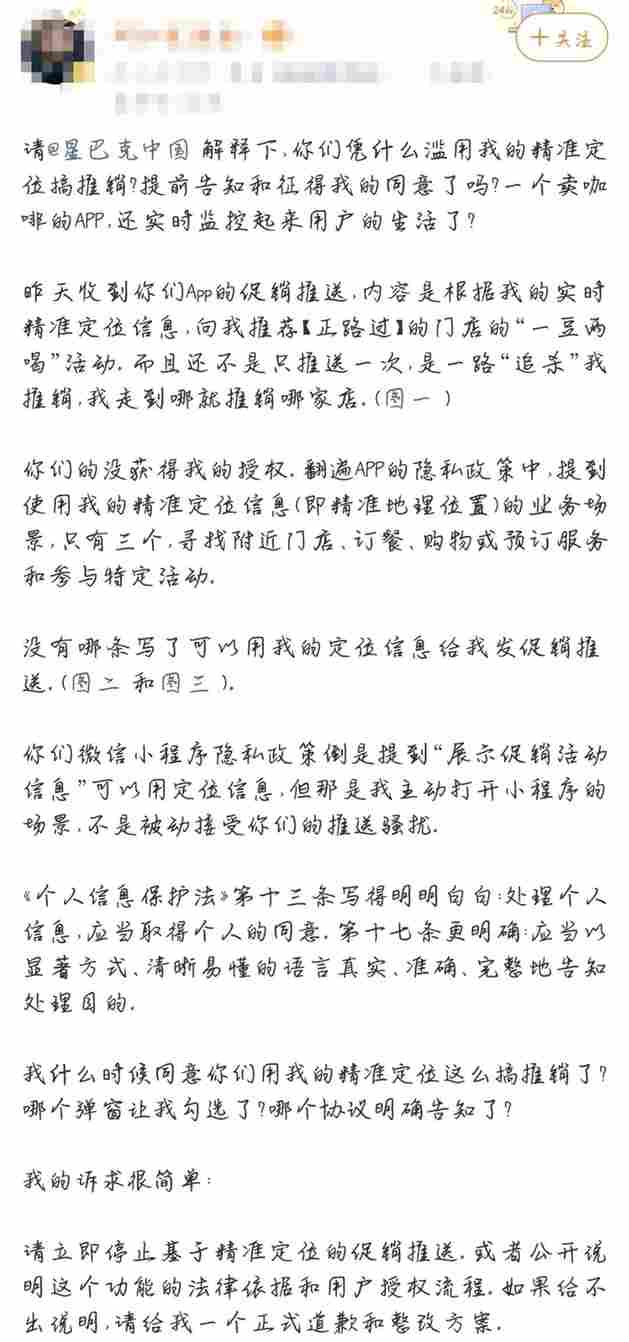
In fact, this isn’t the first time Starbucks has drawn attention in China over personal data issues. In June 2023, investigations by the Shanghai Cyberspace Administration and the Municipal Market Supervision Bureau found that Starbucks had frequently encouraged users to provide personal data and promoted following its official account, drawing regulatory scrutiny. In April 2025, Starbucks announced that it was actively cooperating with the “Special Enforcement Action for Personal Information Protection in Consumer Areas,” pledging self-inspection and adjustments. However, in June of the same year, the National Cybersecurity Notice Center still listed the Starbucks app and WeChat Mini Program under the category of “illegally or improperly collecting and using personal information.”
This incident highlights the tension between modern marketing techniques and personal data protection. Many apps use big data to analyze users’ locations and behaviors, pushing “personalized” ads that enhance convenience but may also make privacy-conscious consumers uneasy. Some netizens believe Starbucks’ marketing methods have crossed a line, while observers note that similar practices are already common in many services—and Starbucks is not unique in this regard.
For consumers, if they don’t want to be overly tracked, they can regularly review the location permission settings of their apps and disable unnecessary background location tracking. Additionally, when installing or using services, they should carefully read the privacy policies to understand how personal data will be used and the scope of authorization—so they can better protect their own rights.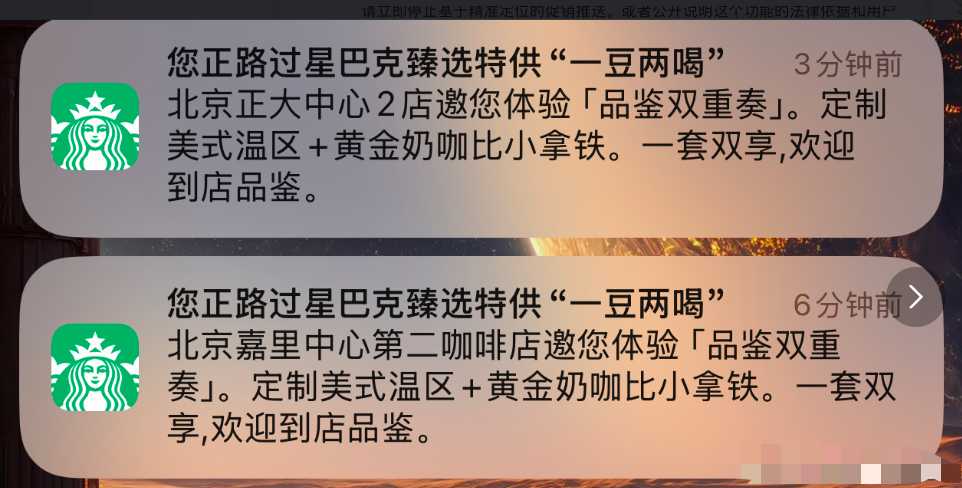
The above content is compiled by CoffeeHunters, a coffee news website.


