







Introduction:Do you often find your homemade espresso tasting watery and lacking aroma? This article will guide you through factors such as the coffee-to-water ratio, extraction time, flavor changes across different stages of the shot, and strategies for adapting to various roast levels — helping you uncover the real reasons behind a weak espresso. Master the correct espresso extraction method to ensure every cup is rich in layers and aroma.
When brewing espresso at home, many coffee enthusiasts often encounter a frustrating issue: despite following the steps precisely, the resulting shot is thin in flavor, overly watery, or even nearly devoid of aroma. In fact, the key to a delicious espresso lies in the performance of the shot itself — including its concentration, yield, and flavor balance. This article will take an in-depth look at the actual extraction process, helping you understand the impact of the coffee-to-water ratio, the flavor transitions during different phases of the shot, and offering adjustment suggestions for different roast levels to help you craft a more concentrated and layered espresso.
To understand why some espresso tastes bland, we can start with the basic principles of extraction. Generally speaking, only about 30% of the soluble flavor compounds in coffee beans are extractable — this includes desirable notes like sweetness, caramel, and fruit acidity, but also potentially unpleasant ones such as woody or overly bitter tastes. The Golden Cup Standard recommends maintaining an extraction yield between 18% and 22% for optimal flavor balance. Going beyond this range, especially over-extraction, can easily bring out undesirable flavors and negatively affect the overall taste.
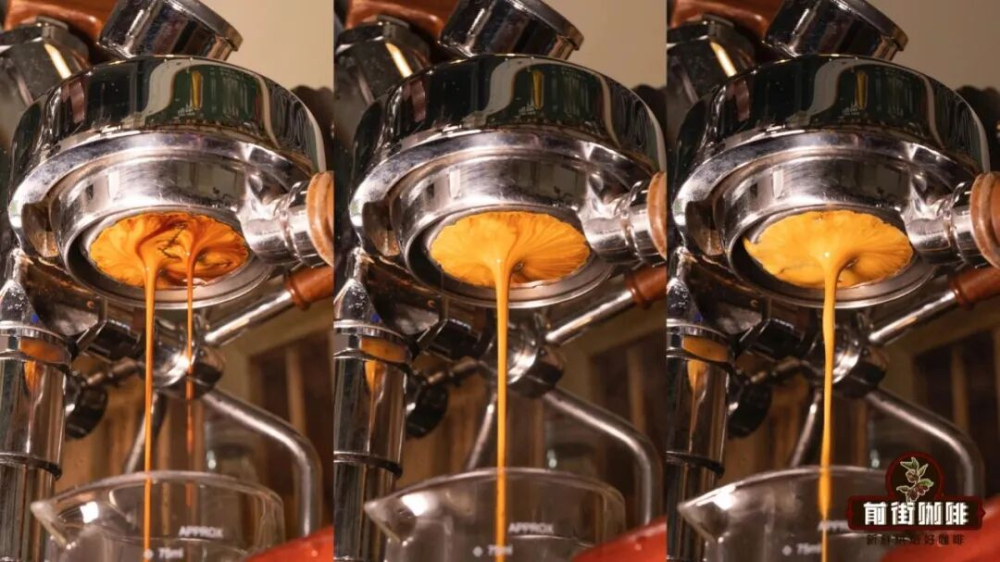
Observing the extraction process more closely allows for a more intuitive understanding of flavor development. Let’s take a classic Italian-style espresso blend as an example: using 20 grams of coffee grounds and extracting for 30 seconds, you get 40 grams of espresso. Divide the shot into three 10-second phases — the beginning (first third), middle (middle third), and end (last third) — and taste each. The first phase is usually the darkest in color, with dense crema, intense caramel and chocolate aromas, a rich mouthfeel, and a slight salty note. The middle phase tends to be more balanced, with nutty tones emerging and an overall smoother taste. The last phase, however, is distinctly different: the coffee liquid becomes lighter in color, the crema turns white-ish, the concentration drops, the aroma weakens significantly, and the overall flavor becomes thin and unremarkable.
At this point, you might wonder: if the coffee tastes too light, can’t you just extend the extraction time and pull more liquid to increase concentration? The answer isn’t that simple. While extending the extraction time does allow more soluble substances to enter the coffee, it also tends to release those unwanted off-flavors, resulting in a more bitter, hollow cup that loses its desirable flavor highlights. When you notice the crema color shifting from golden to grayish-white, it’s usually a clear sign of over-extraction — at which point you should stop brewing to preserve the overall quality.
So, what are the main factors affecting the concentration of espresso? One key factor is the “coffee-to-water ratio” — the proportion of the weight of coffee grounds to the final weight of the extracted coffee. A commonly recommended range is from 1:1.5 to 1:2.5, with 1:2 being the most versatile and beginner-friendly ratio. For example, using 20 grams of coffee grounds to produce 40 grams of espresso yields a cup with moderate concentration and relatively well-rounded flavors. For those new to espresso, starting with a 1:2 ratio and then fine-tuning based on actual flavor experience is a good approach.
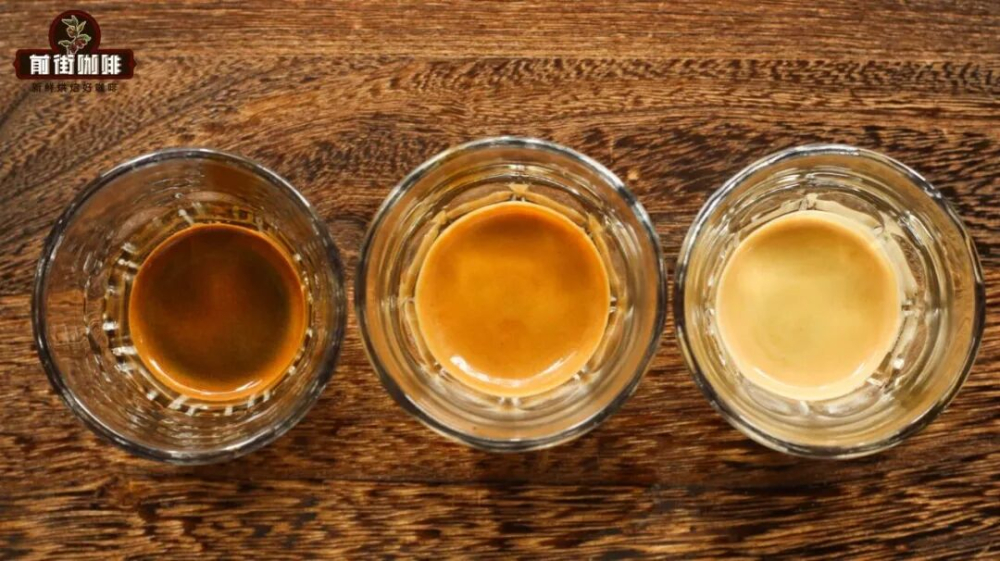
To verify the actual effects of different coffee-to-water ratios, we conducted tests under fixed conditions (water temperature 94°C, pressure 9–10 bar, grind setting at Galileo Q18, second notch, 20 grams of coffee grounds), extracting three shots with liquid weights of 40 grams (1:2), 46 grams (1:2.3), and 55 grams (1:2.75). The results showed that as the liquid yield increased, the overall concentration of the espresso dropped noticeably, the flavors became progressively thinner, and signs of over-extraction appeared. This further confirms that simply extending the extraction time or increasing the liquid volume doesn't effectively improve the quality of the espresso — in fact, it often disrupts the original flavor balance.
If you want your espresso to taste more intense, you can adopt different adjustment strategies depending on the roast level of the beans you’re using. For medium to dark roasted beans, where aromas are typically concentrated in the first and middle phases and the latter part often brings out unpleasant flavors, it’s advisable to go for a “high concentration, low extraction” approach — that is, shortening the extraction time and reducing the liquid yield. For instance, adjusting the ratio to 1:1.5 (e.g., 20 grams of coffee yielding 30 grams of espresso) helps preserve more of the rich caramel and chocolate notes while avoiding the watery texture and off-flavors from the later phase, producing an effect similar to a Ristretto.
Conversely, if you’re using single-origin beans with prominent fruity acidity (SOE) or medium to light roasted blends — beans that are generally brighter, more acidic, but may lack body — you might consider slightly extending the extraction time. For example, adding 0.5 grams of coffee and extending the extraction to around 33–35 seconds can help release more flavor compounds, making the coffee more layered and aromatic. This is especially useful when pairing with milk for drinks like lattes or flat whites, where a moderately higher extraction rate enhances the fruitiness and sweetness of the overall beverage.
In summary, to address the issue of weak espresso concentration, it’s not enough to adjust just one variable. Instead, you should take a holistic approach by considering the coffee-to-water ratio, extraction time, and the roast level of the beans. We recommend starting with a 1:2 ratio, observing how the flavors change across the beginning, middle, and end of the shot, and then fine-tuning based on your taste preferences. Through continuous experimentation and record-keeping, you’ll gradually discover the extraction strategy that best suits your palate, allowing you to enjoy a rich and layered espresso every time.
The above content is compiled by CoffeeHunters, a coffee news website.


