







Introduction:Starbucks' latest financial report shows that same-store sales in the Chinese market have seen positive growth for the first time in 18 months. The company headquarters has announced an acceleration of the "Green Apron Service Model" and adjustments to store layouts. This article provides an in-depth analysis of the reasons behind the revenue growth in the China region, the CEO's official response to equity sale rumors, and specific measures to reshape the customer experience, helping readers understand Starbucks' transformation direction in China and the details of service upgrades.
According to Starbucks' third-quarter financial report for fiscal year 2025, although global same-store sales have declined for six consecutive quarters, the Chinese market showed counter-trend growth. In this quarter, Starbucks China achieved a revenue of $790 million, up 8% year-over-year, with same-store sales rising by 2%, marking the first positive shift in 18 months, in sharp contrast to the 14% decline in the same period last year.
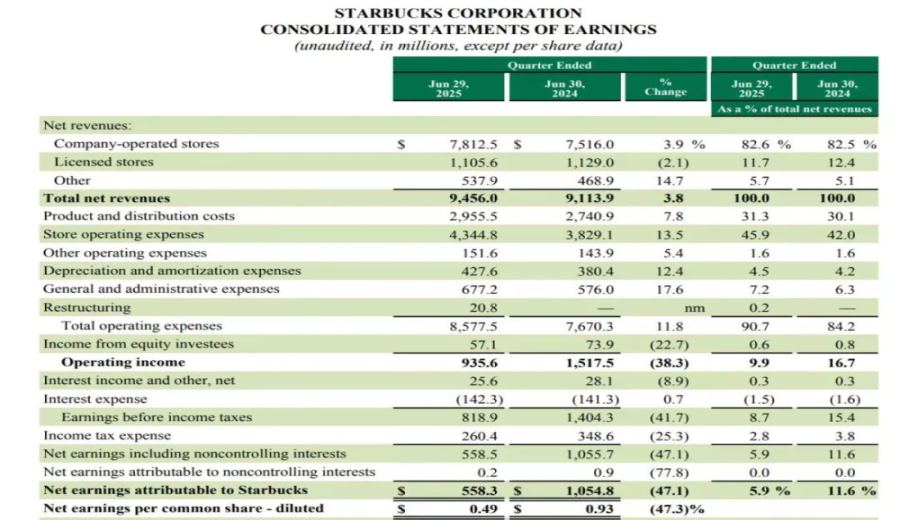
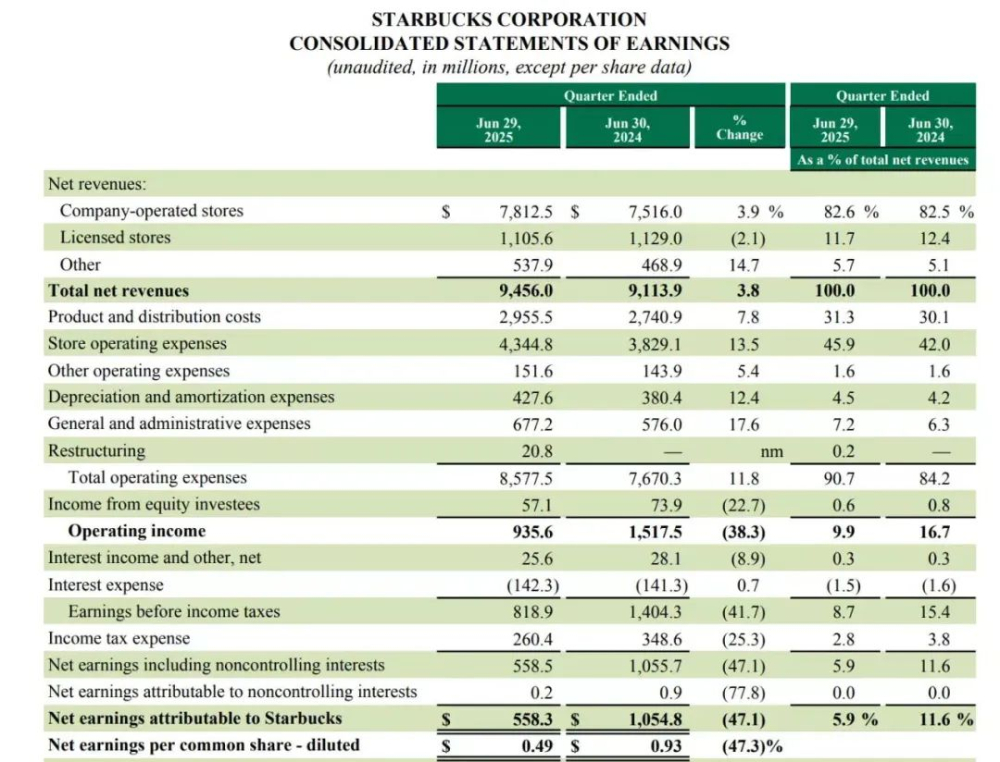
In terms of global overall performance, Starbucks reported total revenue of $9.46 billion in the third quarter, slightly above the market expectation of $9.445 billion, but global same-store sales fell by 2%, lower than the expected 1.3%, marking the sixth consecutive quarter of negative growth, raising concerns about the company's long-term development.
Regarding the rumors about the potential sale of its China business equity, Starbucks CEO Laxman Narasimhan responded that more than 20 potential partners have expressed interest, and the company is actively evaluating various proposals. He emphasized that Starbucks’ commitment to the Chinese market remains unchanged and that it hopes to retain a significant equity stake in the future.
Narasimhan further explained that the ideal partner should share common missions and values with Starbucks and be capable of achieving more efficient operations in the local market. Previous media reports indicated that more than 30 institutions, including Hillhouse Capital, KKR, and Luckin’s major shareholder Centurium Capital, had conducted valuations and submitted offers for Starbucks’ China business.
To enhance the customer experience, Starbucks announced that it will accelerate the rollout of the "Green Apron Service Model." This model is regarded as the company's largest investment in service standards and customer interaction in its history, focusing on five key service moments: welcome interaction, order intake, beverage and food preparation, order delivery, and follow-up engagement, emphasizing the connection between craftsmanship and customers.
It is reported that 1,500 stores have participated in the trial of this model, and within just eight weeks, they received very positive feedback, with improvements in transaction volume, sales, and service time. Therefore, Starbucks plans to fully implement this service model in all company-owned stores across the United States starting mid-August.
Additionally, Starbucks also announced that it will adjust its store types and gradually close locations that only offer pick-up services. Currently, about 90 stores in the U.S. do not have seating, where customers can only pick up online orders. Although this model is favored by some consumers, management believes it is too transaction-focused and fails to convey the brand's intended warmth and human interaction.
To address this, Starbucks plans to renovate at least 1,000 cafés in the U.S. by the end of 2025, redesigning space layouts, reinstalling thousands of seats that were previously removed, and phasing out some purely pick-up-only stores, aiming to create a more comfortable and socially connected consumption environment.
This strategic adjustment shows that Starbucks is not only focused on short-term sales recovery but is also aiming for a comprehensive improvement in long-term brand value and customer experience. How to strike a balance between expansion and service quality in the future will be a key challenge for the brand in both the Chinese and global markets.
The above content is compiled by CoffeeHunters, a coffee news website.


