







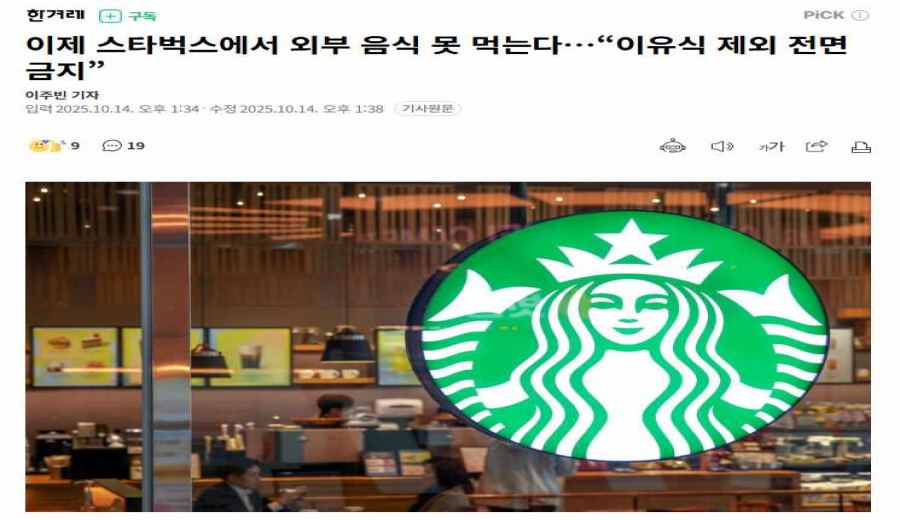
Introduction:South Korea’s Starbucks has recently introduced a nationwide new policy that completely bans customers from consuming takeout food within its stores, with the exception of infant and toddler complementary foods. This move has sparked considerable discussion. What exactly are the details of the new regulation? Is there any flexibility in its enforcement? This article provides an in-depth analysis of the key points of the policy, the actual situation of store notices, as well as feedback from customers and employees, to help readers understand the latest store regulations and their potential impact.
South Korea’s Starbucks announced that starting from the 13th of this month, a new regulation will be implemented across all stores nationwide, completely prohibiting customers from eating takeout food and drinks inside the stores. The main purpose of this adjustment is to maintain overall hygiene and the dining environment within the stores, ensuring that every customer can enjoy a pleasant and comfortable shopping experience.
According to an official statement from South Korea’s Starbucks, the new policy officially took effect at midnight on the 13th, and relevant notices have been gradually posted in stores across the country to remind customers to comply with the regulations. However,complementary foods for infants and toddlers are not included in the ban, allowing families with young children to continue shopping with peace of mind.
In fact, in the past, South Korea’s Starbucks had a relatively lenient attitude toward customers bringing in takeout food, only dissuading those with strongly scented meals such as fried chicken or pizza. However, over time, some customers began to exploit loopholes, bringing not only lunchboxes and stir-fried rice cakes, but even alcohol to consume inside the stores, leading to numerous controversies and inconveniences.
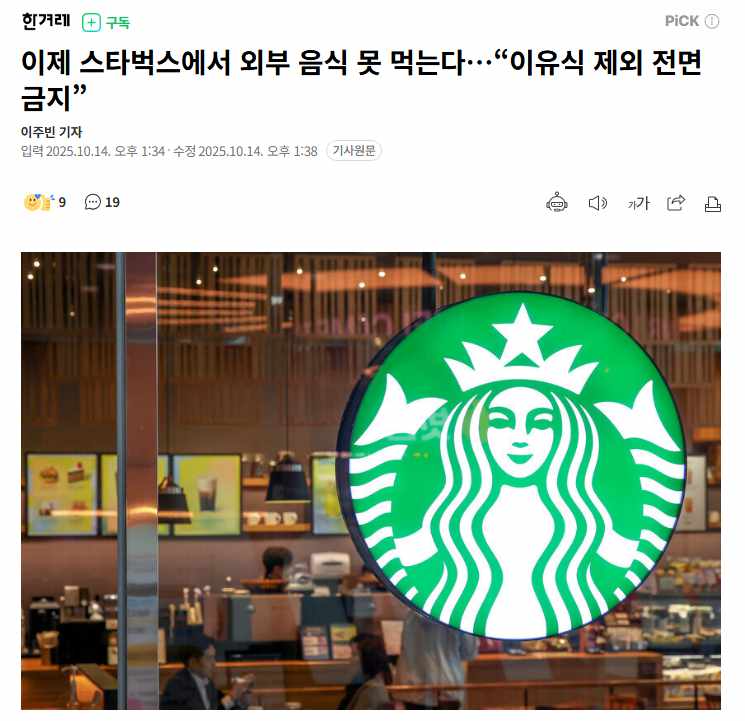
It is understood that in the past, Starbucks, guided by the concept of creating a cultural resting space, did not strictly regulate customers bringing in simple outside food. Many people were accustomed to buying takeout bread or sandwiches and enjoying them with coffee from the store. But recently, multiple cases circulating on social media platforms have shown that some customers ordered no drinks at all but ate large amounts of takeout food inside the stores. There were even instances where people brought in stir-fried rice cakes and fried items, causing dissatisfaction among other patrons.
One example involved a customer at a certain Starbucks outlet who brought in stir-fried rice cakes and other fried foods, eating them while drinking coffee. After related images were exposed on social media, it immediately sparked heated discussion about “public nuisance behavior.” Witnesses noted that although the staff approached and reminded the customer, who then left the seat, they did not clean up the used cups and trash, further fueling negative perceptions.
Many regular customers also shared their own experiences, saying they had felt uncomfortable due to other customers eating takeout food with strong odors. For instance, some mentioned encountering customers who brought in kimbap (seaweed rice rolls), whose intense smell made it difficult to stay for long. Starbucks employees also revealed that they had witnessed customers eating jjajangmyeon (Korean black bean noodles) inside the stores, situations that left a deep impression.
Even a veteran employee admitted that during their tenure, they had seen all kinds of takeout food, including alcoholic beverages such as beer, wine, and whiskey, as well as fried chicken, hot pots, sushi, and pork belly—extremely varied items. There were even cases where someone brought in a large cake, requested plates and utensils from the store, and left the area in complete disarray after eating, which the staff ultimately had to clean up.
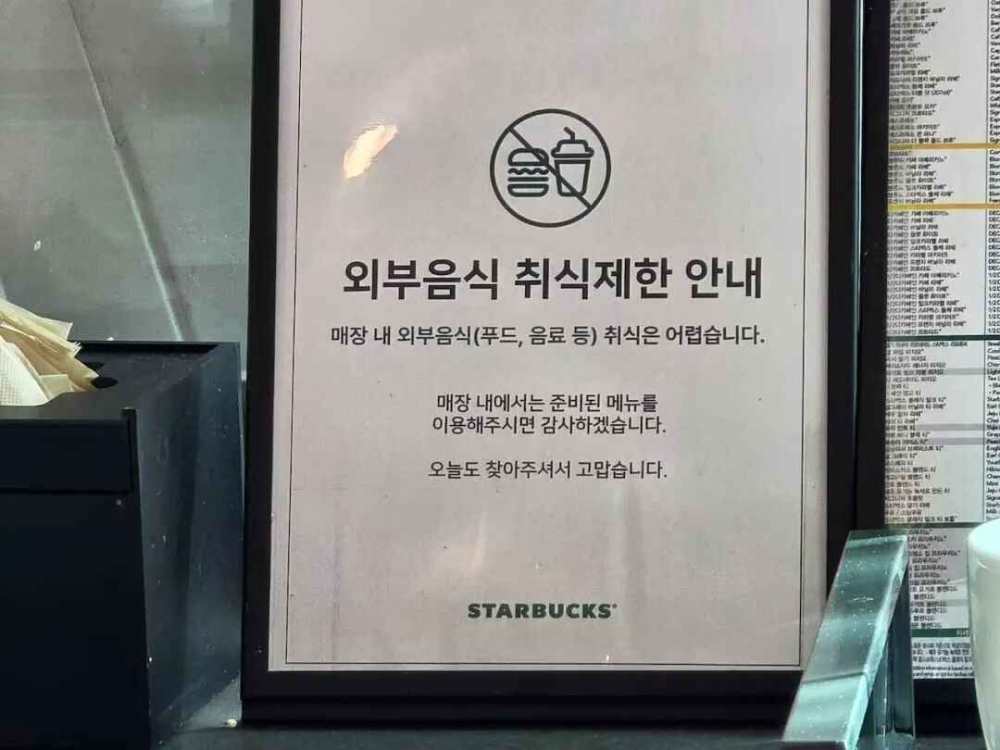
Given all these various issues, most customers expressed understanding of the new regulation, viewing it as a necessary measure to maintain order in public spaces. One netizen confessed that in the past, because many cafes did not allow takeout food, they would choose Starbucks when wanting a simple dessert. Although they are now somewhat unaccustomed to the change, they agree with Starbucks’ decision. Especially with recent online reports of customers only eating takeout food without making purchases, it makes the stores’ predicament more understandable.
Although the new regulation from South Korea’s Starbucks may cause inconvenience for some customers, considering the overall environment and the rights of the majority of consumers, it has still garnered considerable support. When visiting South Korea’s Starbucks in the future, it is recommended that the public pay attention to store notices and avoid bringing or consuming takeout food other than infant and toddler complementary foods, in order to jointly maintain a pleasant coffee experience.
The above content is compiled by CoffeeHunters, a coffee news website.


