







Introduction:A consumer in Hangzhou discovered what appeared to be insect remains in a takeaway KOI milk tea, sparking a legal dispute between the brand and the customer. This article provides a detailed account of the incident, highlights the differing accounts from both sides, examines potential hygiene issues in the tea beverage production process, and offers practical advice for consumer rights protection—helping you understand the hidden risks of freshly prepared drinks.
Recently, a consumer in Hangzhou, China, took to social media to accuse the well-known fresh tea brand KOI of serving a milk tea with an object resembling insect fragments in a takeaway order. The incident not only caused discomfort to the consumer but also ignited a dispute between the brand and the customer regarding compensation and apologies.
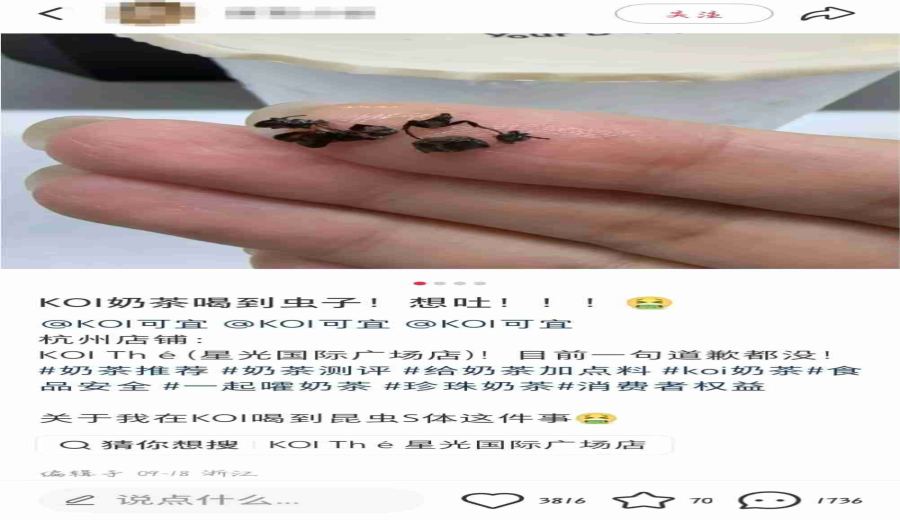
According to the consumer, on the afternoon of September 17, she ordered a milk tea through a delivery platform from a KOI outlet in Hangzhou. Finding the drink overly sweet at the time, she set it aside, planning to drink it once the ice had melted. About an hour later, when she took another sip, she sucked out what looked like a “steel wool ball.” Out of caution, she didn’t swallow it but spat it out and used her fingers to examine it—only to find it was a clump of insect remains, with clearly identifiable legs, head, and wings.
Photos provided by the consumer show the black foreign object breaking into four or five fragments after being pried apart, one of which had two serrated structures clearly belonging to part of an insect’s body. The post quickly went viral online, and the consumer immediately contacted the involved outlet, KOI’s regional manager, and the complaints department, hoping for a reasonable explanation and compensation.
However, the two parties could not reach an agreement on the amount of compensation or issuing a public apology. With negotiations reaching a deadlock, the consumer filed a complaint with the local 12315 consumer service hotline and continued to update the progress of her rights protection efforts on social media. As of September 28, she stated that mediation had failed and that she would “pursue legal proceedings” to safeguard her rights.
In response to the consumer’s claims, KOI offered a different account. Staff at the involved outlet told the media that, based on the photos provided by the consumer, “the black foreign object was large and obvious, and should have been hard to miss during preparation.” They also emphasized that local food and drug regulatory authorities had inspected the outlet but found no issues in the production process.
On October 9, a KOI brand representative further explained to the media that they had reviewed surveillance footage of the entire process—from brewing the milk tea to serving it—and had provided it to the supervisory authorities for review. The footage showed no signs of any foreign objects falling into the drink during preparation. The representative pointed out that the “Rose Galaxy” hand-shaken milk tea purchased by the consumer was made using a shaker cup with very fine filter holes. Due to the tiny size of these holes, even if a foreign object of similar size had accidentally fallen in, it would have been filtered out during shaking and should not have ended up in the final product.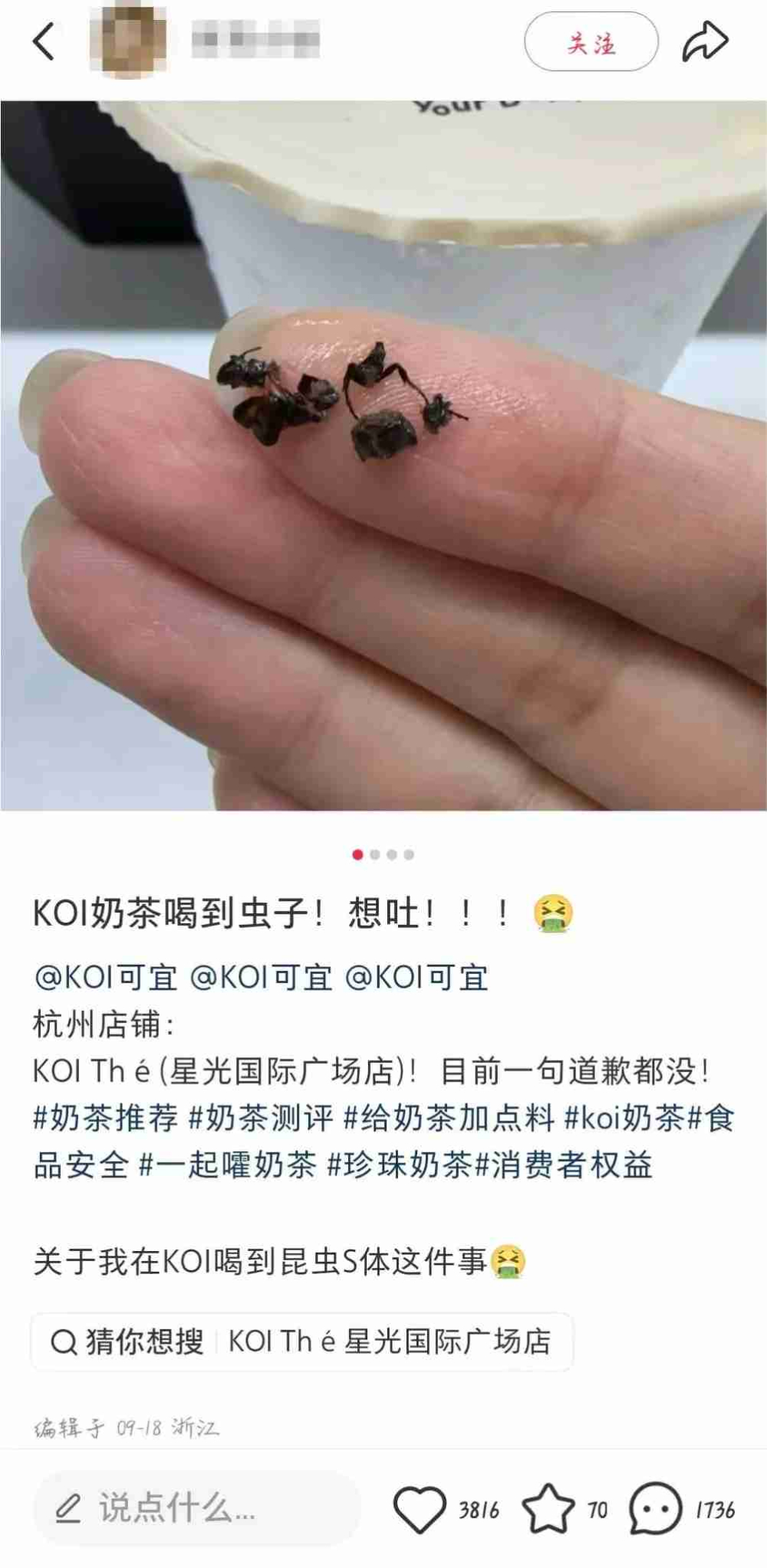
Additionally, the brand revealed that after the incident, they engaged in multiple rounds of negotiation with the consumer, and outlet staff expressed their apologies several times. However, the consumer insisted that the brand issue a public apology on social media and provide reasonable compensation in accordance with relevant regulations. In response, the brand stated that while they understood the consumer’s unpleasant experience and were willing to compensate according to the law and seek a settlement, they firmly opposed issuing a public apology on unverified platforms without concrete evidence proving the foreign object originated from the preparation process.
On October 11, reporters contacted the consumer again, who said there had been no new developments in the case. KOI reiterated that if the consumer decided to file a lawsuit, they would respond according to legal procedures. This dispute highlights the ongoing challenges faced by fresh beverage businesses in hygiene management and consumer communication, and serves as a reminder for consumers to pay closer attention to drink safety while enjoying their beverages.
The above content is compiled by CoffeeHunters, a coffee news website.


