







Introduction:The tragic incident in which a four-year-old boy choked to death after drinking bubble tea has drawn widespread public attention to the safety of beverages consumed by children. This article delves into the details of the event, explores the potential risks of bubble tea for children, and provides practical safety recommendations and preventive measures to help parents avoid beverage-related hazards and ensure their children can enjoy food and drinks safely.
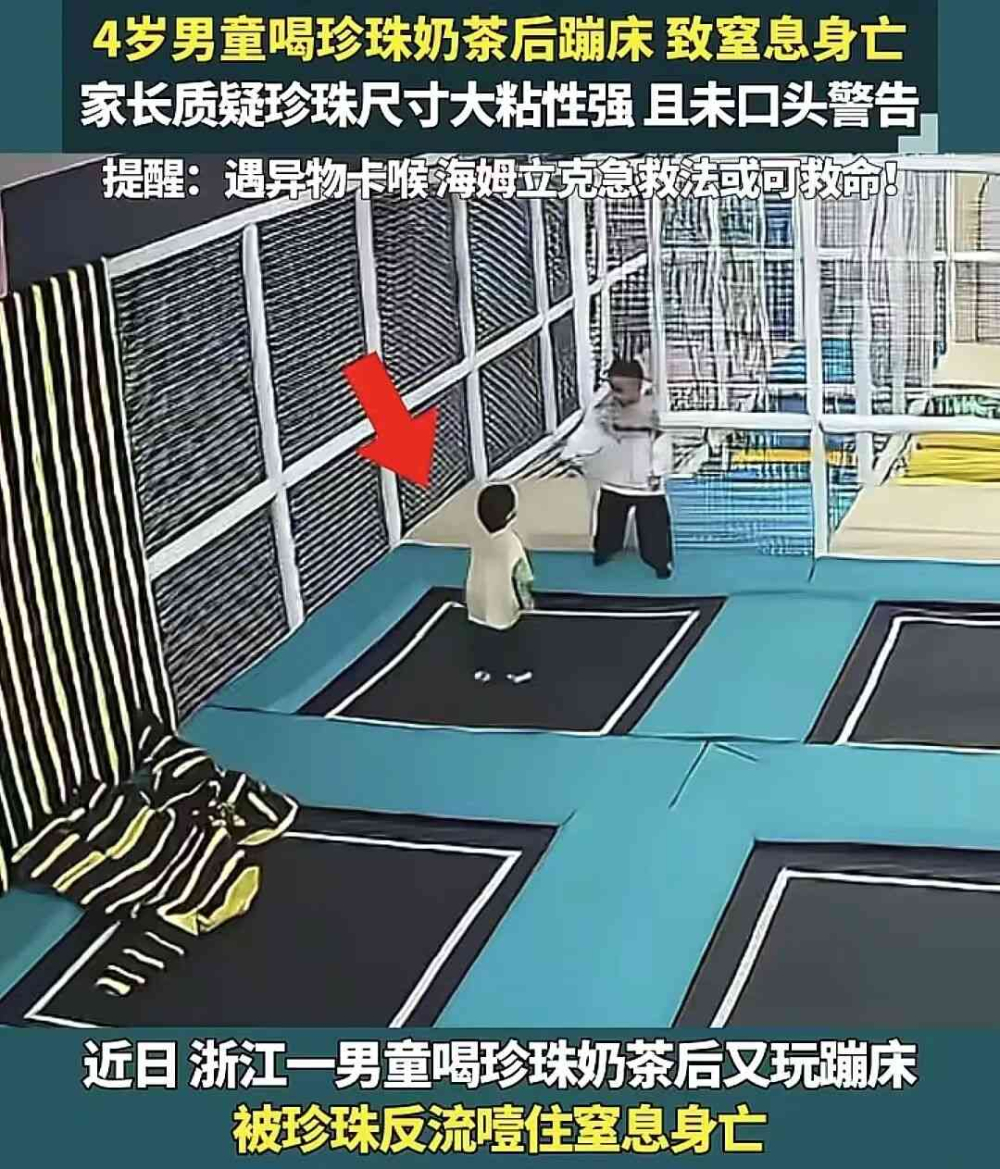
Recently, in Taizhou, Zhejiang Province, a four-year-old boy choked while playing in an amusement park after drinking bubble tea purchased by his parent. Despite being rushed to the hospital and receiving emergency treatment for an hour and a half, he tragically passed away. At the time of the incident, the boy was playing in the play area and later moved to the trampoline zone. He was soon found to be unwell, and despite being rushed to the hospital, his life could not be saved.
It is understood that the boy’s mother bought a cup of bubble tea from the Guming Tea Shop and brought it into the children’s amusement park area. The child drank the tea when he felt thirsty and continued playing on the trampoline. Soon after, he began to show signs of distress. Witnesses at the scene reported that the child appeared uncomfortable shortly after drinking the bubble tea, and was subsequently given first aid by his parent before being rushed to the hospital.
Regrettably, the boy died after the tapioca pearls in the bubble tea caused airway blockage due to reflux. Despite more than an hour and a half of emergency resuscitation efforts, he could not be saved. The parents were devastated and later posted several videos on social media platforms, questioning whether the tapioca pearls in the bubble tea were too large and sticky, which they claimed directly led to their child’s choking. They also demanded that the bubble tea shop take responsibility.
The parents also pointed out that the involved Guming store did not display any clear warning signs, and the staff did not verbally warn about the potential risks of children drinking bubble tea. In addition, they believed that the management of the amusement park failed to effectively prevent parents from bringing bubble tea inside, and that the mall lacked an emergency response plan, resulting in the child not receiving timely assistance after the accident occurred in the play area.
When interviewed by the media, a staff member from the amusement park stated that she was not present at the scene on the day of the incident and could not provide specific details about the handling of the situation, nor could she offer contact information for the person in charge. A relevant person in charge from Duqiao Baolong Plaza responded that after the incident, the town government and local police station had both stepped in to handle the matter. The mall is actively cooperating with the investigation, and relevant materials such as surveillance footage have been handed over to the police. However, the current progress of the specific handling is not yet convenient to disclose, and further details may be announced later.
Notably, on the ordering mini-program of the involved bubble tea brand, products such as bubble tea come with a “friendly reminder” stating clearly that “children under three years old should not consume [bubble tea], and the elderly and children should drink under supervision.” However, according to insiders, on the day of the incident, the order was placed via the mini-program and picked up by an adult, and the store staff never saw the child in person. The bubble tea shop only learned of the incident after the child had already developed problems.
In light of this tragedy, experts warn that although bubble tea pearls are generally considered harmless ingredients, their round shape and somewhat sticky texture pose a relatively high risk of choking for children whose swallowing functions are not yet fully developed. Especially for children under the age of three, it is recommended to completely avoid consuming pearl-like foods. Parents should exercise extra caution when choosing beverages for their children.
To prevent similar tragedies from happening again, parents should pay attention to the following points: First, children under three years old should avoid eating foods that pose a choking risk, such as tapioca pearls and jelly; second, when eating in public places, choose safe and open environments, and avoid eating near dynamic play equipment such as trampolines and slides; finally, parents should familiarize themselves with the ingredients and potential risks of beverages in advance and opt for vendors with clear warning labels.
Currently, multiple local departments have stepped in to mediate, and the incident is still under further handling. According to the latest updates, the mediation process has not achieved substantial progress in the first two rounds due to the emotional fluctuations of the parents. The third round of mediation is expected to take place on the 25th. Relevant departments will also continue to provide psychological counseling and coordination efforts, aiming to resolve the dispute as soon as possible.
The above content is compiled by CoffeeHunters, a coffee news website.


