







Introduction:During the National Day holiday, some branches of Changsha’s popular tea brand “Chayanyuesi” piloted fully automated bubble tea robots, sparking consumer discussions about production efficiency and beverage experience. This article delves into the robotic arm operation process, performance during peak hours, and real feedback from consumers regarding food safety and personalization needs—helping readers understand the current state and challenges of automation technology in freshly made tea beverages.
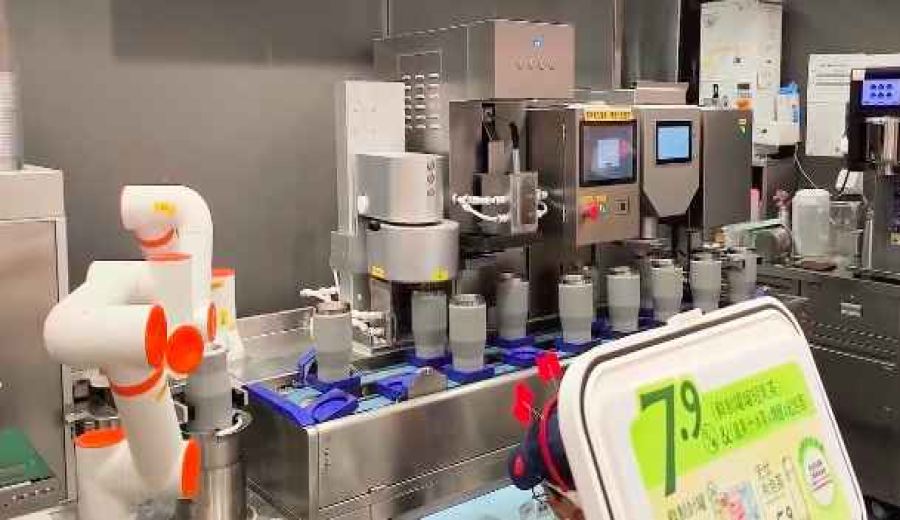
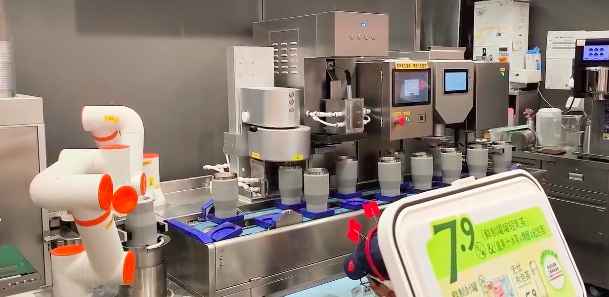
Over the National Day holiday, Chayanyuesi, a well-known tea chain in Changsha, introduced fully automated bubble tea robots in select outlets, quickly becoming a focal point for curious visitors. In this system, staff only need to place labeled drink cups in designated areas, after which robotic arms take over the main preparation steps, with employees later adding whipped cream and toppings to complete the order.
Footage from the sites shows that once an order is received, the robot can independently carry out steps such as stirring and adding ingredients. While the overall process appears smooth, actual experiences have been polarized. Supporters argue that this helps maintain consistent product flavor and reduces the physical strain of repetitive tasks on staff.
However, during the National Day travel peak, the actual performance at a pilot outlet in a scenic area fell short of expectations.Some customers reported that the robot’s drink output speed was only one-third that of human workers, leading to takeout queues stretching nearly 100 meters, with average wait times exceeding thirty minutes.This bottleneck was especially evident under sudden high-traffic conditions, exposing the load limitations of the automated system.
Food safety concerns are also not to be overlooked. Some consumers question whether long-operating pipeline systems might harbor contaminants, particularly raising concerns about hard-to-clean components such as liquid transfer joints. Moreover, the additional cleaning tasks resulting from robot operation actually increased the maintenance burden on employees—contradicting the original goal of reducing labor.
From the consumer experience perspective, many customers insist on the unique value of “handmade preparation.” They believe that mechanized production lacks the temperature control and rhythm variation involved in manual shaking, making the final product no different from factory-produced beverages. Comments such as “If you’re chasing efficiency, just buy canned drinks—it’s more cost-effective” reflect the market’s insistence on personalized service.
Regarding customization needs, current robotic systems also reveal limitations. When customers request adjustments to sweetness, ice levels, or special ingredients, the fixed-program devices often fail to respond flexibly, ultimately still requiring manual intervention. This semi-automated state significantly undermines the benefits of full automation.
Industry observers note that while automated equipment demonstrates clear advantages in stable quality control and basic preparation processes, fully replacing traditional manual operations still requires overcoming multiple hurdles. Future technological developments may focus on flexible programming, quick-change modules, and more robust hygiene management mechanisms.
The above content is compiled by CoffeeHunters, a coffee news website.


