







Introduction:A service dispute at a Starbucks outlet in Kuala Lumpur International Airport’s Terminal 2, involving staff using the Malay language to insult Chinese tourists, caused a huge uproar. The incident not only exposed sensitive issues in cross-cultural communication but also prompted a swift response from Starbucks. This article details the course of the event, the official handling approach, and analyzes the service and training reflections it brings to coffee professionals.
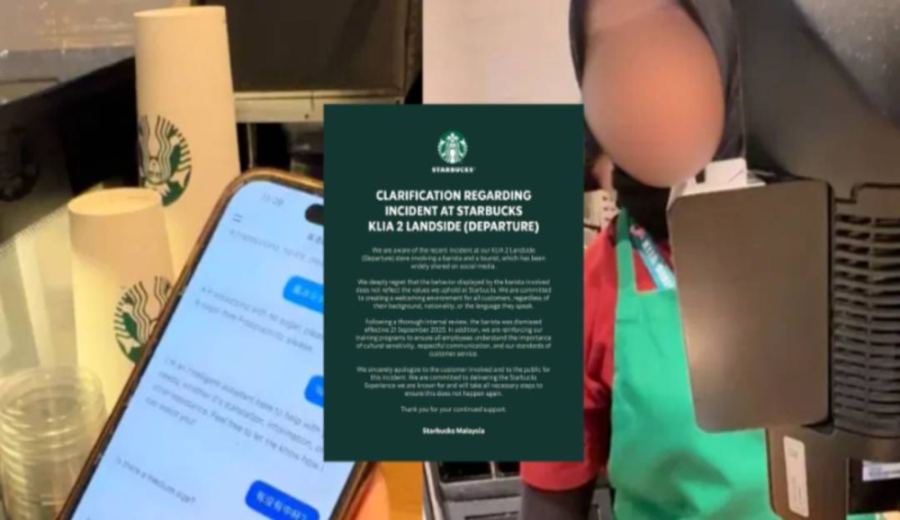
Recently, a widely discussed service controversy occurred at a Starbucks store in Kuala Lumpur International Airport Terminal 2 (KLIA2). A Chinese tourist, who was not fluent in English, reportedly used an AI translation tool to communicate with staff, and was allegedly insulted under the staff’s breath in Malay with the word “bodoh,” meaning “stupid.” After the related video was exposed on social media, it quickly sparked heated discussion among netizens and led to an official response from Starbucks Malaysia.
It is understood that during the ordering process, the Chinese traveler, facing a language barrier, tried to interact with the staff via a translation app, but the overall communication was not smooth. The footage shows the customer asking about drink options and prices in simple English, yet the staff member visibly grew impatient when informing the customer that one of the drinks was sold out. More controversially, the staff member was caught on camera muttering the offensive word “bodoh” under their breath without the customer noticing.
Although the customer did not understand the meaning of the word at the time and simply regarded the incident as a minor episode, sharing it on social media, local Malaysian netizens quickly pointed out the true meaning of “bodoh” after watching the video and expressed dissatisfaction with the staff’s behavior. Most netizens believed that even when faced with customers experiencing language barriers, staff should not display impatience, let alone use offensive language—an act that seriously violates basic service ethics and professional conduct.
Many netizens proactively contacted the video poster to explain the meaning of “bodoh” and expressed apologies for the discourteous treatment the Chinese tourist received. Some even said: “She called you ‘bodoh.’ Although I’m Malaysian, this attitude is really unacceptable... To call you bodoh to your face means you’re stupid. On behalf of all Malaysians, I apologize to you.” These voices also led more people to file complaints with Starbucks’ official channels, demanding the issue be taken seriously and a reasonable explanation provided.
Faced with public pressure, Starbucks Malaysia responded swiftly. According to the official statement, the involved outlet was confirmed to be the departure hall branch located in KLIA2 Terminal 2, and the barista involved was dismissed by the company on September 21. Starbucks emphasized in the statement that such behavior is completely inconsistent with the company’s core values and service commitments, and extended sincere apologies to the affected customer and the public.
Starbucks further stated that they are always committed to providing a friendly and respectful service environment for customers from diverse cultural backgrounds and those who speak different languages. This incident has once again made the company realize the importance of employees possessing a high level of cultural sensitivity in cross-cultural communication.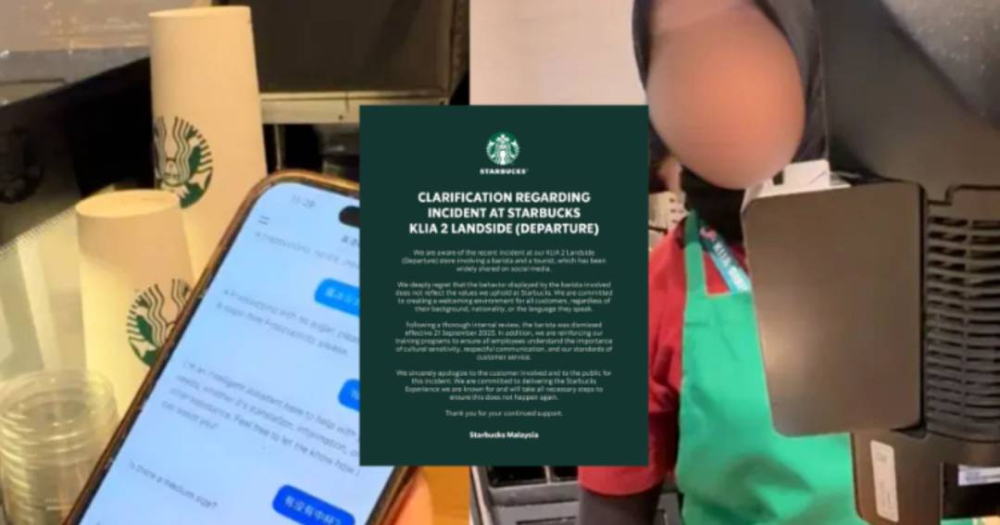 Therefore, in addition to taking immediate disciplinary action against the involved employee, Starbucks Malaysia also announced that it has strengthened training for all staff in areas such as cultural sensitivity, respectful communication, and service standards to prevent similar incidents from happening again.
Although this incident originated from a language misunderstanding and communication breakdown, it highlights the importance of staff education and service training for global chain brands when serving a diverse customer base. For professionals in the industry, it is not enough to have basic language skills—there must also be understanding and respect for different cultural backgrounds in order to truly uphold the service philosophy of “customer first.”
In summary, the incident of a Starbucks employee insulting a Chinese customer ended with the dismissal of the employee and an official apology, but it also served as a wake-up call for the entire coffee service industry. In the face of an international market and diverse customer needs, only by continuously strengthening staff training and improving cross-cultural communication skills can trust and positive reputation be earned in the global market.
The above content is compiled by CoffeeHunters, a coffee news website.


